19
19

Dr. Stephen Philip Cohen, a senior fellow at the Brookings Institute, Washington DC, is a respected authority on the Pakistani army and the country's politics. His book The Pakistan Army was published in 1998 and was translated into Urdu and Chinese. In 2004, he published another book The Idea of Pakistan. In an exclusive interview with Dawn.com, Dr. Cohen speaks about the Pakistan-US relationship and the future of South Asia after the Osama bin Laden crisis.
Q: Who do the Americans hold responsible for harbouring Osama bin Laden: The Pakistani civilian government or the army?
A: The US military respects the Pakistan army for its professionalism but they are angry with the Pakistani military for playing both sides against the middle. They are aware that if you're an American soldier and the Afghan Taliban who are shooting at you are actually the ones being supported and trained in Pakistan. So, there is real anger with the Pakistan army over this double game. I can understand why they are playing this double game as the Taliban are an asset for Pakistan but the Americans do not like this. There is also deep resentment over some of the policies the army has imposed on the civilian government.
Q: How old is the history of collaboration in the Pakistan army with the Islamic radicals?
A: It dates back to the Bangladesh separatist movement when the army recruited people for al Badar and its death squads. It became more systematic during Zia's government both in Kashmir and Afghanistan. Now, it is a full-fledged strategic alliance for the Pakistan military.
Q: The Pakistanis complain that dictatorship and Islamic radicalisation were actually gifted to them by the United States. What has compelled the US to support military rulers in Pakistan?
A: The US has needed Pakistan for strategic purposes. Our policies have done as much harm to Pakistan as they have helped the country. We could have supported them but put more pressure to liberalise and democratise the society. The Bush administration made a strategic mistake by supporting Pervez Musharraf and excluding the other politicians. We should have supported Benazir Bhutto or Nawaz Sharif. The US did support a deal between Musharraf and Bhutto but excluded Sharif. We should have come out and said publicly that we support all the legitimate politicians in Pakistan.
Q: Do you think the Pakistan army can ever overcome its obsession with India? How can the US help both the countries resolve this conflict?
A: I am writing a book about the India-Pakistan rivalry and calling it the "hundred-year old war". My prediction is that the India-Pakistan conflict, which includes Kashmir besides many other problems, will last for one hundred years or even more.
I am very pessimistic about a solution between the two countries. They should cooperate over trade, for instance. Kashmir will eventually find its way. The United States should have only a silent role which should be limited to providing ideas and suggestions as we often do in the Middle East peace process.
Q: Does Osama bin Laden's killing formally end the war on terror?
A: I don't know if it was a murder or not but maybe it was an extrajudicial killing. Yet, it does not bring the war on terror to an end. Al Qaeda is a large global movement and it will continue to operate. It has diminished not only in terms of its organisational capability but also in terms of its symbolism. There will be major terrorist attacks on Pakistan, United States, India and other countries.
The notion of having a global Khalifat, where the whole world is united under one Khalifa is fanciful. That was not popular in Pakistan some years back. The anti-Americanism popular in Pakistan is based on the misunderstanding of American policies and some of the things that we have done in the past.
Q: Is it anti-Americanism or anti-Indianism that motivates radical elements in the Pakistan army?
A: I don't have evidence of Pakistan army as radical in the extreme sense. However, it has become more anti-American. Some sections of the army are more anti-American than they are anti-India. The obsession with India, on the other hand, is weakening Pakistan rather than strengthening it. Pakistan has a huge list of reforms that it should have made.
In a talk at Quetta's Staff College, I said Pakistan should take a lesson from South Korea and Japan which had their own way of taking revenge through economic productivity. Pakistan should struggle to beat India in the software industry, modern agriculture and exports.
Pakistan has had natural advantages over India in many areas but it has failed to capitalise on those advantages. I do not know if it is too late to reverse that process but if Pakistan continues to make India the center of its foreign policy, the country will go nowhere.
Q: There is a lot of resentment inside Pakistan over the drone strikes which many view as a violation of the country’s sovereignty. Can anti-Americanism subside if these attacks stop?
A: We know from the WikiLeaks that the Pakistanis themselves are helping us with the targets. It's astonishing that the Pakistan government has not said this publicly. The government is too much of a coward to openly admit that some of the drone strikes have killed the enemies of Pakistan. If the Pakistani army and police had taken action against the terrorists, the drone strikes would probably not take place. Every state in the world has an obligation not to allow its territory to be used for terrorist attacks on other states. Pakistan has allowed groups to operate from its territory to launch attacks against the US, Afghanistan and of course India.
Q: How serious is the crisis in Pakistan and how can the world help Pakistan overcome this?
A: There are two things requiring attention: The State of Pakistan, which is mostly bureaucratic, and the idea of Pakistan. The United States can help the State of Pakistan in many ways by developing its organisational and budgetary procedures but we can't do much about the idea of Pakistan. Pakistanis themselves have to discuss and debate what it means to be a Pakistani. If being anti-India is being a Pakistani then you are taking the crisis deeper but if you are looking for a modern Islamic state that rest of the world should look upon then that is a different definition of Pakistan.
Q: Do you think the Pakistan army will eventually move with another coup?
A: I don't see a coup coming in Pakistan. There is this joke in America that when Obama got elected, some newspapers wrote: "Black man gets worst job in the US". Who wants to be the president of Pakistan? Zardari is doing a mediocre job. I doubt if General Kayani can do a better job as the president. Pakistan is currently pressed and embarrassed with many issues. Another military coup will simply make things worse for that country.
Q: How do you predict the scenario once the US withdraws from Afghanistan?
A: The US will stay in Afghanistan to a limited degree to make sure that al Qaeda does not show up again. A significant development program is going on in Afghanistan which is more effective than our development work in Pakistan. There is no economic and strategic interest for the US in Afghanistan. It is important because it is having a contaminating effect on Pakistan.
Q: How serious is the tug of war between Pakistan and India to gain political and economic influence in Afghanistan?
A: The good news I have heard is that both the countries are going to talk about Afghanistan. If both the countries can work on an agreement as to what role they should play in Afghanistan to help the Afghan people then that will be a role model for the United States and Iran. The four countries -- United States, Pakistan, Iran and India -- are critical for the future of Afghanistan. They should agree to have a non-aligned democratic, but certainly not a radicalised, Afghanistan. I am optimistic that the Indians and Pakistanis will work together in Afghanistan.
Q: The right-wing opposition leaders are suggesting that Pakistan should stop getting aid from the United States. Is that going to help Pakistan attain more prosperity and self-reliance?
A: Pakistan should develop its own strategy to develop its industry and agriculture. It has to work out with India on the agreements over Indus waters and also work among its provinces. I want to see a business-like transactional relationship between the United States and Pakistan. The Pakistanis should tell the US what and why they need assistance in certain areas. Once we commit our aid, the US should work as if we are under a contract and if the Pakistanis perform effectively, we should provide them further aid on time.
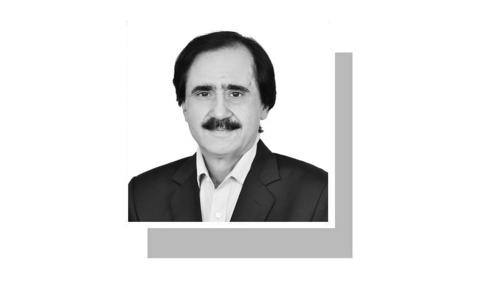
Malik Siraj Akbar, a Hubert H. Humphrey Fellow based in Washington DC, is a visiting journalist at the International Consortium of Investigative Journalists (ICIJ) of the Center for Public Integrity (CPI).