0
0

 SAQQARA (Egypt), Nov 11: Egyptian archaeologists have discovered a pyramid buried in the desert and thought to belong to the mother of a pharaoh who ruled over 4,000 years ago, Egypt’s antiquities chief said on Tuesday.
The pyramid, found about two months ago in the sand south of Cairo, probably housed the remains of Queen Sesheshet, the mother of King Teti, who ruled from 2323 to 2291 BC and founded Egypt’s Sixth Dynasty, Zahi Hawass told reporters.
“The only queen whose pyramid is missing is Shesheshet, which is why I am sure it belonged to her,” Hawass said. “This will enrich our knowledge about the Old Kingdom.”
The Sixth Dynasty, a time of conflict in Egypt’s royal family and erosion of centralised power, is considered to be the last dynasty of the Old Kingdom, after which Egypt descended into famine and social upheaval.
Archaeologists had previously discovered pyramids belonging to two of the king’s wives nearby, but had never found a tomb belonging to Sesheshet. The headless, five-metre high pyramid originally reached about 14 metres, with sides 22 metres long, Hawass said.
The pyramid, which Hawass said was the 118th found in Egypt, was uncovered near the world’s oldest pyramid at Saqqara, a burial ground for the rulers of ancient Egypt.
“This may be the most complete subsidiary pyramid ever found at Saqqara,” Hawass said.
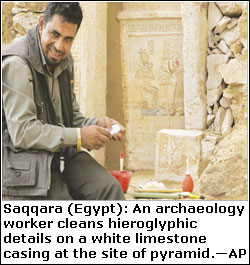
The monument was originally covered in a casing of white limestone brought from quarries at nearby Tura, Hawass said.
Archaeologists plan to enter the pyramid’s burial chamber within two weeks, Hawass said.
Artefacts including a wooden statue of the ancient Egyptian god Anubis and funerary figurines dating from a later period indicate that the cemetery had been reused through Roman times, Hawass said.—Reuters