



 0
0

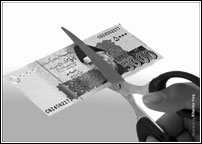 The persistent failure of successive governments to overcome budgetary deficit, remove fiscal imbalances and check the ever-increasing wasteful expenditure has put the very viability of the economy at stake.
Budget deficit rose to Rs777.2 billion (7.4 per cent of GDP) during fiscal year 2007-08. It was met through the highest-ever borrowing of Rs625 billion and over Rs75 billion cut in development expenditure. The deficit showed increase of 95 per cent over the budgetary target of Rs.398 billion; it was 106 per cent higher than previous year’s deficit of Rs377 billion or 4.3 per cent of GDP.
The most lamentable act on the part of economic managers was cutting of development spending under the Public Sector Development Programme to Rs451 billion against the budgetary allocation of Rs520 billion to contain the deficit partially.. They claimed that it became unavoidable in the wake of massive reduction in revenue receipts that declined to 14.3 per cent of GDP compared with 14.9 per cent in 2006-07. In absolute terms, however, the total revenue increased by almost Rs200 billion and stood at Rs1.499 trillion compared with Rs1.297 trillion in 2006-07.
Tax revenue declined to 10 from 10.2 per cent in 2006-07. Non-tax revenue dropped to 4.3 from 4.7 per cent in 2006-07. In contrast, the total expenditure in 2007-08 increased substantially to 21.7 per cent compared with 19.2 per cent a year before. In absolute terms, the total expenditure amounted to Rs2.276 trillion against Rs1.675 trillion in 2006-07, showing an increase of more than Rs600 billion or 36 per cent. Current expenditure amounted to Rs1.858 trillion against Rs1.375 trillion in 2006-07, showing an increase of Rs482 billion.
The total gap between current expenditure and tax collection is over Rs400 billion. We cannot overcome the budgetary gap unless rulers drastically cut non-developmental waste expenditure and increase tax collection. They will have to show political will in collecting taxes wherever due.
An unshakable determination is required to curb the 61-year-old habit of defying tax laws along with complete purge in tax machinery. Do the fiscal managers really know why our total revenues have fallen from 18 to 10 per cent of the GDP during the last 20 years?
Presently, the collection of taxes by Federal Board of Revenue (FBR) is mainly based on imports and export as well as extraordinary profits by banks (who claim they have profit sharing accounts yet deny due share to deposit-holders!). Importers, contractors, retailers and even service providers are, in fact, passing on the tax burden to consumers and clients, courtesy presumptive tax regime introduced in income tax in 1991-92 and widened manifold since then. This faulty taxation is at the expense of equity and poor people are the real victims of this fiscal highhandedness.
Despite resorting to high-handedness, illogical policies and unjust withholding taxes, FBR has failed to improve the tax-GDP ratio, hovering around at 10 per cent for the last five years. The burden of a number of presumptive taxes levied under the income tax law (which are nothing but crude forms of indirect taxes) has been shifted from income earners to consumers and clients. These presumptive taxes have not only distorted the whole tax system, destroyed economic growth and made the consumer/client ultimate sufferers but these short-term, myopic and figure-oriented measures have even failed to bridge the fiscal deficit, which soared to Rs777.2 billion in 2007-08.
Those in power say that 60 years of problems cannot be solved in a few months or even in a five-year term for which they have been elected. Their main problem is how to deal with powerful tax machinery, which is inefficient and corrupt. On the recommendation of tax bureaucracy, successive governments have been announcing unprecedented concessions for the tax-evaders in the form of tax amnesty schemes, the latest one being, the “investment tax scheme” which is the worst of all.
The rulers admit massive tax evasion through these schemes and no further proof is required of culpability of tax officials in the entire episode. If elected representatives are sincere in mending the situation, they should pass asset-seizure legislation and confiscate all the ill-gotten and untaxed assets for the benefit of have-nots. In the wake of such a bold step, resource mobilisation will not be a problem any more.
If the present government brings big absentee farmlords into the tax net, manages to get taxes from the influential ones and succeeds in imposing sales tax across the board (preferably with a low rate of two per cent at one single point), there will be no budget deficit.
This goal can only be achieved if the government simultaneously tackles issues related to tax evasion and corruption in the tax machinery by not just throwing them out of job but rather, making the system workable.
Pakistan is quite capable of substantially reducing or even eliminating its fiscal deficit provided that a comprehensive programme, a well-designed work plan, scientific approach and multi-dimensional strategy is adopted for tax reforms and resource mobilisation.




























