0
0

Passing the baton
ONCE again the constitution has come to grief under the state of emergency imposed on November 3, making passing the political baton in our country, again another destabilising affair.
The imposition of emergency together with the controversy surrounding the presidential election and the uncertainty regarding the general elections are all reminders that our politics continue still to be plagued by the lack of institutionalism and democratic transitions of power, 60 years after independence.
What is the flaw in our society that always makes passing the baton such a tumultuous event in our country, whether or not we have a constitution and whether or not we have a military ruler at the helm of affairs?
The answer: lust for power and lack of respect for established institutions, whether it be the constitution, the judiciary, the executive, the legislative, or for that matter even the media. Instead of coming into power through established channels, i.e, elections, and seeking the support of the public or voters, greed prompts us to start seeking power directly from the institutions themselves. And when we fail to get or hold on to that power, we then misuse these institutions and try to change them, thus weakening the very foundations upon which nations draw their strength and stability.
The years 1947 and 1973 were milestones in the political history of Pakistan. But neither those who inherited the mantle of leadership in the new nation after 1947 nor those who inherited its constitution after 1973 have been able to ensure regular transitions of power through elections.
One thing is quite apparent, a constitution alone with its respective institutions is not enough to ensure democratic transitions in Pakistan. Despite such a constitution since 1973, it has not ensured us smooth democratic transitions of power, with martial law having been imposed twice after that, in 1977 and 1999.
Even during the period of civilian rule between 1989-1999, emergency was imposed four times in nine years all of which toppled the sitting governments in power and their assemblies, the animosity between the two major political parties viz., PML and PPP, being the root of our political problems then.
It is not so much a question of who or which political party the coming general elections will pass the baton on to but a question of how long the new government that will emerge in the coming general elections will be able to survive before the usual round of political strife and chaos starts all over again.
Twice in Pakistan’s political history, the PPP had succeeded in winning elections and forming the government soon after rule by military leaders ended, in the early 1970s after Generals Ayub Khan/Yahya Khan’s rule and in the late 1980s after General Ziaul Haq’s rule. If this pattern is anything to go by, little wonder that the PPP is now in a buoyant mood.
Regardless of who or which party comes into power next, so long as the major parties continue to be poisoned by implacable animosities exacerbated by ever-ready opportunists and turncoats, our political problems will remain deep and divisive, with passing the baton likely to remain problematic.
What is likely to compound our political problems further hereafter are two related factors which emerged in our political scene after 9/11, viz., the combined religious parties as represented by the MMA which came into power for the first time in NWFP in 2002, and the religious militants, who after establishing themselves in the Tribal Areas are now going for Swat in NWFP. In the Capital itself, the religious factor has also managed to make its presence felt through the Lal Masjid affair.
We are a hardy people with enough of the talented and well- educated among us to build a modern Muslim nation. However, unending political strife caused by the lust for power and its consequence, i.e., disrespect for institutions, has been a major factor in not only denying us political, economic and religious stability and thus smooth transitions of leadership, but worse it has also been a major factor in draining our resources and stunting our potential, politically, economically and socially.
The result is that although we have 60 years of nationhood building and are blessed with much greater resources than many other countries, yet we have not been able to give our people a system of political stability and a standard of living which could be the envy of any nation, Muslim or otherwise.
Khawaja Moinuddin’s political satire
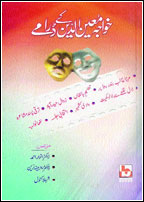
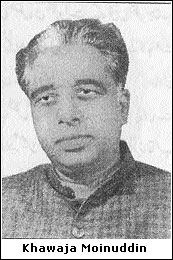 MULTAN’S Bahuddin Zakaria University is amongst those universities of Pakistan where the Urdu department has done quite well. The pace and quality of research activities and research publications is one yardstick by which the performance of a university is measured. Bahauddin Zakaria University’s Urdu department has produced quite a few good research works and has carried out research on vital aspects of Urdu literature and language that had otherwise been ignored. Khawaja Moinuddin Ke Drame, a collection of Khawaja Moinuddin’s plays published by Beacon Books, Multan, is the result of a research project undertaken by Shehla Kanwal under the auspices and supervision of Bahauddin Zakaria University’s Urdu department.
Though Khawaja Moinuddin became a well-known playwright in his own lifetime and some of his plays are still hugely popular, the authentic text of his plays, except for a few, was not available. Courtesy Prof Dr Moinuddin Aqeel, the young researcher Shehla Kanwal was able to reach Khawaja Sahib’s widow and obtain from her the scripts of Khawaja Sahib’s five unpublished plays.
Guided by Dr Anwaar Ahmed and Dr Rubina Tareen, Kanwal in her foreword gives Khawaja Moinuddin’s biographical sketch and an evaluation of his works.
Khawaja Moinuddin was born on March 23, 1924, in Topran, a city in the state of Deccan. He had a deep interest in the dramatic arts and during his student days wrote and produced many plays. After graduating from Usmania University in 1946, he wrote and broadcast a satirical programme ‘Gunbad Ki Awaz’ from Deccan Radio.
Of his 17 plays, Khawaja Moinuddin wrote seven during his stay at Hyderabad (Deccan):‘Taraqqi Pasand Mushaera’, ‘Sarkari Zuban’, ‘Anjuman-e-Satta Bazan’, ‘Purane Mahal’, Jashn-e-Azadi’, ‘Intekhab’ and ‘Nannha Nawab’.
In his plays and radio programmes, he would criticise the Indian government and its policies towards the princely state of Deccan. After the Indian attack on Deccan and its forced annexation with the Indian Union in 1949, Khawaja Moinuddin feared the persecution from Indian authorities and had to migrate to Pakistan.
In Pakistan, he began life from scratch. He did his masters from the University of Karachi and initially he got a job at the Naval Pay Office at Karachi, then started teaching at a school. Khawaja Moinuddin was instrumental in founding a school in Karachi, named after Bahadur Yar Jang. In 1949, he wrote and staged the play ‘Zawal-e-Hyderabad’ to raise funds for the project.
In 1951, Khawaja Sahib wrote and produced a play ‘Naya Nishan’, written against the backdrop of Kashmir’s struggle for freedom. Later, it was renamed and was staged with the title ‘Wadi-e-Kashmir’.
 Anjuman Taraqqi-e-Urdu was to celebrate its golden jubilee in 1952. On Baba-e-Urdu Moulvi Abdul Haq’s recommendation Khawaja Sahib wrote a satirical play ‘Lal Qile Se Laloo Khet’ for the occasion. This tragicomedy reflects the agonies people went through during and after migrating from India to Pakistan.
In 1954, he wrote ‘Taleem-e-Balighan’, a hilarious play with pinching satire, for college students and its theme was Quaid-e-Azam’s motto of ‘Faith, Unity, Discipline’. It was a smashing success and was staged many times over. PTV televised it and now it enjoys the status of being a classic in the history of teleplays.
One of Khawaja Sahib’s hits is his play ‘Mirza Ghalib Bunder Road Par’, written in 1956. Like his other works, this satirical comedy is based on social and political problems and has a nationalistic approach. In this play, later televised, Ghalib meets on Karachi’s Bunder Road (now M.A. Jinnah Road) many characters that portray Karachi’s milieu and Pakistan’s many problems in the early years of independence.
His other plays include ‘Jail Ko Kahain Susral’, ‘Saawan Ka Andha’, ‘Intekhabi Jalsa’ and ‘Jo Chamke wo Sona’.
It is interesting to note that his plays rarely, if ever, had a female character because they were written in an era when it was taboo for women to perform on stage. But it is to his credit as a dramatist that one does not feel this absence of female characters.
Khawaja Moinuddin’s love for Urdu knew no bounds. In his plays when his characters talk about Urdu’s plight in India after independence, they usually become emotional. In ‘Mirza Ghalib Bunder Road Par’ Ghalib meets Mir Taqi Mir and what they say about Urdu in India and the sub-continent’s Muslim culture is a moan from Khawja Sahib’s heart.
The revival of drama in Pakistan owes much to Khawaja Moinuddin. At a time when drama in Pakistan was nothing more than low jesting, Khawaja Sahib made it an instrument of subtle political satire, although his political jabs made him very unpopular in the corridors of power and he was denied any government encouragement till quite late.
His plays, full of originality and humour, were not published in his lifetime. After his death, the Drama Guild, Karachi, published ‘Mirza Ghalib Bunder Road Par’ in 1973 and ‘Lal Qile Se Laloo Khet’ in 1975.
It is heartening that eight of his plays have now been published. Publishing the remainder is a task that must be taken in hand.
Khawaja Moinuddin died on November 9, 1971, in Karachi and was buried at Karachi’s Sakhi Hasan Graveyard.
drraufparekh@yahoo.com
| © DAWN Group of Newspapers, 2007 |