



 0
0

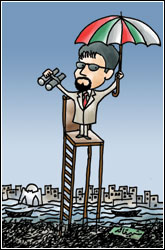 While the harassed consumers of Karachi were distressed by the new wave of price spiral, the business of the city claims to have incurred heavy losses during August because of the administrative mismanagement during the wet spell.
When markets managed to open after the rains, sellers demanded higher rates. Old, soggy fruits and vegetables fetched fresh increased rates. Poultry and meat prices shot up on the pretext of short supply. People driven to the wall by unending problems of dirty tap water, load shedding and steep power fluctuations frying their electrical appliances and bulbs, etc, etc, opted not to make an issue out of it. “When you have stinking sewage- mixed rain water entering your home with all those electronic gadgets lying around, you tend to loose nerves and attend to it instead of worrying about paying a little extra for edibles”, a lady from a posh locality grumbled when asked to comment on a sudden increase in prices of edibles.
Business community of the city was furious as unplanned urban growth and persistent official neglect took a heavy toll on their businesses this monsoon season. Some noted businessmen of the city told Dawn that loss to their community during the month that closed two days back runs in hundreds of millions.
“This is our peak business season both locally and internationally. Locally pre Ramazan shopping has not been able to pick up because half the city has yet to recover from havoc let loose by rains in Karachi (stagnant water, dysfunctional sewerage system, collapsed electric poles and dead telephones). Over the last 20 days of mayhem, we lost many international orders and opportunities because potential buyers in the West are in the market looking for suppliers for the Christmas”, a frustrated businessman who operates from his office in the yarn market told Dawn.
The wholesale market in the old city (Kharadar and Jodia Baazar) that serves as a nerve centre of commercial activity for the entire country, was completely paralysed for almost two weeks. The stagnant rain water and overflowing sewerage rendered the roads not serviceable for vehicular traffic. “I have opened my shop today after 20 days”, said Saqib Naseem on Thursday last, a leader of cloth merchants association. “Doing business in this city is becoming increasingly difficult. Who is going to compensate for the loss we have incurred for no fault of our own”, he said referring to administrative failure to cope with the situation after rain.
There is said to be a daily turnover of about Rs100 million in the wholesale market alone. Yarn Merchant Association President Shahabuddin Badela confirmed the figure and said that currently market is hardly operating at 20-30 million levels. According to these numbers, business of Rs1400 million was lost in the wholesale market alone over the last 20 days of August.
There were reports of stagnant rainwater in several localities. The road development work on main arteries in a number of areas compounded the traffic situation after rain. This created bottle necks and led to massive traffic jams creating serious problems in movement of men and material. “We have deadlines to meet but high rate of absenteeism because of non- availability of public transport led to a slow down in industrial activity”, Jamshed told Dawn from site industrial area.
There were reports of disruption in timely delivery of raw material and supply of products to the market. Many exporters missed their shipment deadlines and had to air lift their merchandise that is said to be ten times costlier. “In international trade, competition is so intense that exporters sometimes work at a very narrow margin. An unexpected sudden increase in cost renders the supply order uneconomic; still trade commitments have to be honoured to avoid disrepute and penalties. How can traders are expected to deliver in this situation?” whine Saquib Naseem, a leading merchant. Asif Balwani another big merchant endorsed these views.
The situation was worse in certain areas where water entered into godowns damaging the stored merchandise or raw material. Several micro units located in low lying areas had to be closed down. Many business leaders believe they may never open again.
Prolonged unannounced power outages and collapsed telecommunication system in the city because of water-logged cables and cluttered telephone lines further complicated the situation.
“The 271 mm of rainfall exposed the fragile foundation of Karachi. It dealt another blow to the quality of life in the city. Water clogged lanes, extended traffic jams and power outages left Karachiites in deep distress. It is not just the tangible cost that needs to be looked into, but also the intangible cost which is believed to be higher and is more difficult to assess”, said another leader expressing the fear of shifting businesses out of Karachi.
This year skilled manpower and even professionals residing in posh localities were grounded. Submerged manholes and dangling electric wires converted many lanes in Phase IV, V and VI into death traps. There were reports that families were shut in their homes for four to five days. High placed sources in DHA were unable to explain why the area was developed without any rain water drains.
“This year rains shattered the myth of efficiency of army personnel. The situation in the housing society developed by them reflects not only their lack of vision, a necessary ingredient in town planning, but exposed their greed and irresponsibility to cash on property demand without providing even the very basic infrastructure that include rain water drains and an effective sewerage disposal network”, commented a frustrated resident of DHA.
“Does anyone has any idea or cares about how many precious man hours were lost over the past 20 days?” another industrialist from Korangi industrial area questioned. "They keep assuring us, but every season proves to be worse than the earlier one for the business community", Majyd Aziz, President Karachi Chamber of Commerce and Industry commented.
Quality of life is essential to a city's business climate. By some estimates, two-thirds of investors decide first where to live, then where to invest. The civic life in the cosmopolitan will have to be improved if Karachi wishes to maintain its status of most dynamic city and commercial capital of the country.
The government and those agencies that control different localities of Karachi (KMC, Cantonment boards, Defence Housing Authority, etc) are rightly blamed for the mess. However, the elite of the city have business or professional interest that are linked to ruling coterie. They often use their leverage to enhance their own business interest at cost of the community. They cannot be absolved of the responsibility of turning the city of lights into one of the worst places, impairing the quality of life of citizens.
It would only be through more active participation of the community in city affairs that irresponsible elements can be sidelined and more accountable efficient system of administration of civic amenities put in place.




























