



 0
0

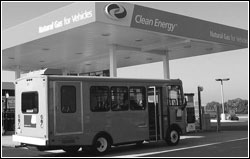 MUSHROOM growth of compressed natural gas (CNG) stations in Peshawar in violation of safety standards and government bye-laws is posing serious threat to precious lives and billions worth investment.
Interviews with operators and officials agencies, which regulate this thriving sector, suggest that frequent increase in oil prices is pushing owners of petrol vehicles to shift to natural gas.
The number of gas stations is increasing fast and ,according to a conservative estimate, the sector has attracted more than Rs62 billion investment country-wise during last nine years in which the share of NWFP is Rs25 billion.
The Oil and Gas Regulatory Authority (OGRA) has issued more than 5,000 provisional licences for setting up CNG stations across the country, of which around 2,000 are operational, while the rest are in the pipeline.
In Peshawar, which has a population of two million people, 68 gas stations provide fuel to more than 15,000 vehicles, whereas more than a dozen stations are under-construction.
The CNG station operators in the province, who are beneficiaries of the boom, are worried about their future in the backdrop of unabated increase in the number of operators.
The fate of CNG sector, they say, would not be different from flour mills industry, if the prevailing pace of setting up of new stations without caring for safety standards and bye-laws continue.
Their worries also led to a protest and strike in Peshawar last week that compelled the owners of 15,000 vehicles to opt for petrol, which increased their financial burden owing to closure of 68 gas-stations.
However, the strike was later called off following the intervention of NWFP Chief Minister Akram Khan Durrani. Mr Ghiyas Paracha, an office-bearer of the association, said that the district Nazim Haji Ghulam Ali had assured the association that a committee would look into the issue and prepare its report within 15 days.
Ikhtiar Wali Khan, president of the All Pakistan CNG Association, NWFP chapter, says that being a cheaper alternative to oil, consumption of CNG is increasing in the city rapidly, but the demand can be catered with the existing number of gas-stations.
He argues: "The OGRA, provincial and district governments have formulated certain guidelines to ensure safety of consumers and operators besides the business interests, which needs to be implemented in letter and in spirit.
But, unfortunately the City District Government, Peshawar, has violated its own bye-laws time and again just for the” vested interests."
The existing bye-laws for the district governments for regulating CNG stations were formulated by the provincial government and were first implemented in Peshawar and later adopted in other parts of the province.
According to the original guidelines, the minimum distance between two gas-stations was determined at 300-meters inside and 1000-meters outside the city. This condition was put in place to ensure safety of the public and also discourage mushroom growth of gas stations.
However, the district government, which issues final No Objection Certificate (NOC) for setting up a station, has deliberately been violating such guidelines particularly those relating to the distance just to oblige some elements, remarks Mr Khan.
The distance for outside the city has now been reduced up to 200-meters which led to appearance of new stations within short distance contrary to safety standards.
Under the guidelines no gas station can be set up near bridges, schools, hospitals, parks or any other public place to avoid any damage to public.
But in a number of cases, the district administration has allowed the setting up of gas stations close to sensitive locations in violation of bye-laws, he says.
These locally-manufactured sub-standard gas cylinders, being installed comparatively at cheaper rates than its certified versions, are a serious threat to consumers’ lives and property of gas-stations, it was stated.
Operators say that at least four explosions have occurred in Peshawar, Mardan and Nowshera during last one year because of sub-standard gas kits. The matter was taken up with the district administration some one-and-half-year back, but to no avail.
However, Nazim of Peshawar, after the protest of the operators, assured the association office-bearers that action would be taken against workshops installing sub-standard CNG kits, Mr Paracha said.
He, however, explained that the bye-laws are made to protect public interest and they could be amended by the district council.
About the distance issue and operations of un-authorised workshops, the Nazim says: "The district administration did not want to create any unrest in the city. However, if the gas station operators have any grievances they can come to me and a strategy can be evolved to deal with it."
The Sui Northern Gas Pipeline Limited (SNGPL) has recently devised a strategy to counter the mushroom growth of CNG stations in urban areas, which according to the operators of Peshawar, will greatly help in obstructing the prevailing trend.
Under the new plan, the SNGPL will restrict provision of new connections to CNG filling stations to six inches and above diameter pipelines. In addition to this, the SNGPL has also set a new distance-limit for installation of stations from random to two kilometres.
Ghiyas Paracha, former president of the association, believes that the new strategy will stop the mushroom growth of gas stations in congested areas in Peshawar, where mostly four-inch diameter pipeline is used for gas supply.
This small diameter pipe suits pipe network in relatively smaller localities linked through branch roads. Whereas, the large diameter pipelines are laid on major roads within the city and on the inter-city highways.
According to SNGPL estimates, connections will be provided to CNG stations from six, eight, 10, 12, to 16 inches diameter pipelines that have approximate length of more than 5000km across Punjab and the NWFP.
"If implemented in letter and in spirit, public utility will give connections to gas stations to be installed on major roads rather than narrow streets," Mr Paracha maintains.





























