



 0
0

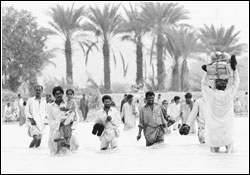 Balochistan is reeling under the devastating impact of the recent heavy rains and flash floods which have caused widespread destruction, leaving hundreds of dead and missing, besides displacing over 400,000 people.
Almost the entire life-supporting system has been disrupted. The present disaster has also thrown up issues relating to the planning, management and the need to integrate disaster prevention and mitigation efforts with development programmes.
The cyclone, more devastating than the torrential rains of 2005 has exposed some serious flaws in designing at some locations of Mekran Coastal Highway where it was washed away by floods. It seems that coastal highway project had been undertaken without proper planning. According to an estimate, the rehabilitation cost of the coastal highway will be in the range of Rs250-300 million.
Makran Coastal Highway was considered to be a marvel of road engineering when it was inaugurated in December 2004. It was first damaged by floods in 2005 and the National Highway Authority had carried out a detailed survey of the entire area. Satellite images of catchment areas were studied and a number of measures taken to improve the drainage system in the event of another monsoon catastrophe. But all efforts fizzled out last month when cyclone hit the coast.
After 2005 rains, Rs150 million were spent on repairing the highway, plugging of breaches and adding new culverts at various locations. Re-designing of the coastal highway will now need more funds. The communication ministry had reportedly allocated an additional amount of Rs850 million for re-designing and to construct more culverts.
Hill torrents triggered by heavy rains wreaked havoc in 15 districts, disrupting rail and road communications between Quetta and Zahidan and causing breaches in the main railway line. The Mula River was also in high flood following intermittent rains in its catchment area of Khuzdar and Kalat districts. Paddy and cotton crops were under more than two feet of water in Jhal Magsi and Jaffarabad. Hundreds of electricity poles have either fallen or have been swept away plunging almost the entire province into darkness. The worst-affected area was Turbat in Mekran.
The disaster posed new challenges to sustainability and viability of the development process being carried out at a cost of Rs140 billion in the calamity-hit province. The worst aspect of the situation is that the most impoverished and the least developed areas like Jhal Magsi, Kalat, Awaran, Ormara, Pasni, Gwadar and Jiwani along the coast have been the worst hit.. Heavy losses have been suffered by the people whose crops had been destroyed, homes washed away and cattle perished. .
Agriculture in Balochistan has always remained exposed to the threat of natural calamities like drought and eavy rains. The monsoon rains in July 2003 had damaged 34 per cent of standing cotton crop, killed 49 people, damaged 30,000 houses, resulted in a loss of 38,000 livestock and washed away dams in several areas.
Before 2003, the eight-year long spell of drought had brought disaster to agriculture and livestock in the province. All the districts except two were officially declared calamity-hit regions. Agriculture and horticulture received a disastrous blow increasing the rate of unemployment in the rural areas. Nearly 1.2 million fruit trees were totally destroyed and 0.8 million dried up partially. The population in rural Balochistan living below poverty line has gone up from 50 to 70 per cent after the drought.
In 2005, the provincial cabinet asked the federal government to declare province a calamity-hit area. In 2003, Balochistan Assembly had passed a similar resolution.
Suggestions: The economic planners and policy-makers should include disaster prevention and mitigation in the development agenda. The federal government should help the province build a permanent technical and operational capacity to manage risk reduction more effectively. The government’s disaster-related policies mainly focus on emergency response, which results in a serious under-investment. What is needed is a more strategic and rapid response to disasters.
A `national disaster management fund needs to be established for financing relief work. The degradation of natural resources increases the risk of disaster. The current increase in the frequency of disasters may reflect changing climate pattern. It is a short term-approach to merely treat its symptoms when disasters happen. There is a need to break the cycle of destruction and reconstruction and address the root causes of vulnerability.
Key issues related to the disaster management include lack of strategic directions, inadequate infrastructure to handle disaster and lack of coordination of different agencies. What is needed is a more pro-active and comprehensive approach encompassing both pre-disaster risk reduction and post-disaster recovery.
It has been observed that poor households and communities are more vulnerable to natural hazards, and they take a long period to recover from them. The government must take special steps for supporting the poor affected by the disaster.




























