



 0
0

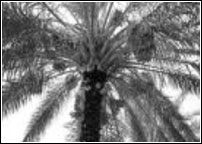 DATE palm is well known for its nutritional and therapeutic qualities. It has very high fruit contents of carbohydrates (about 65-75 per cent). On the basis of nutritive value, it may yield three times more food per unit area than wheat.
One kilogramme of date can supply human body with 2500-3000 calories of energy. In addition, the fruit is easily digestible, promotes more blood formation and also possesses protein, fat, salts, carbohydrates and vitamins in an easily assimilative form.
The fruit is a good source of vitamin A, B and C and has high mineral contents. According to a bulletin on food composition issued by the US Department of Agriculture, dried date contains 1.9 per cent protein, 70.6 per cent carbohydrates, 2.5 per cent fat, 13 per cent water, 1.2 per cent minerals and 10 per cent fibre.
Pakistan is the fifth largest producer of dates in the world, with an area of about 82,000 hectares and a yield of 427,000 tons. Balochistan is the major date-producing province providing 225,000 tones of dates from an area of 46,000 hectares and contributing 53 per cent to the total national output.
At present, 54 date processing units are working in the country.. The most important processors are Pak-Iran International (Pvt) Ltd and Panama Impex Agency in Karachi; Panjgur Date Industries and Pullain Baloch Zamindar Zara in Panjgur; Prime Dates Products (Pvt) Ltd., Sham Traders, Shama Fruit Co. and Syed International in Sukkur. Other processing units located in Lahore, Turbat, Quetta and D.I.Khan.
The export of dates almost exclusively takes place from Khairpur in Sindh (Assil date) where processing facilities exist. In addition, three dates processing plants, one each in Khairpur, D. I. Khan and Turbat along with cold storage facilities are also being developed under the Trade Policy 2003/04 Initiatives.
Pakistan exports fresh dates to Bangladesh, Canada, Denmark, Germany, India, Indonesia, Malaysia, South Africa, Sri Lanka, USA, UK and dried dates to Afghanistan, Bangladesh, Canada, Denmark, Germany, India and Japan. Dates have sufficient shelf-life and are thus shipped by sea. Annual export of fresh dates is 12,000 tones and that of dried dates is about 255,000 tones..
Being the most nutritious and medicinal fruit, date palm is the most potential horticultural commodity. Relentless efforts are required to harvest nature blessed fruit by applying post-harvest management and processing techniques and ultimate qualifying the international standards. A number of countries have formulated and applied date standards at the national level (e.g. USA, Canada, Israel, Algeria, Tunisia and Oman) both for locally produced and imported dates. Unfortunately, Pakistan is lacking such type of systems and standards.
research: For better growth and yield of dates there is a need of detailed research studies based on larger sample size; adoption of better crop husbandry and improved production technology; provision of financial facilities at the door step; use of up-to-date infrastructure, committed and strong organisational set-up; development of defined methods of operation and pre- and post-harvest care.
Needed are procedures to match with international requirements of sanitary and phyto-sanitary (SPS) measures; selection of disease-free plants; screening out of bad varieties pre- and post-harvest management; processing and behavioural trainings of the employees/staff for their role in the system; integrated supply chain (from farm to fork) for handling, processing, packing, marketing and export of dates and date products. Other measures include setting up of advanced date processing and preservation units, improved/standardised packaging and presentation, national branding and promotion and market diversification (access to new markets) and establishment of modern marketing system.





























