0
0

ISLAMABAD, Feb 5: The government is expected to extend the scope of Zakat deduction to real estate assets to generate additional resources to fund its poverty alleviation programmes, Dawn has learnt.
Currently, Zakat is levied on accounts and financial instruments. The ‘nisab’ (minimum amount) for Zakat deduction, presently, is a deposit of Rs8,500, but real estate assets having much higher values were exempted from Zakat deduction by the government.
A senior official said Zakat collection was static for four years owing to lack of trust of people on the existing Zakat collection system.
The growth in economy was also not reflected in collection of Zakat, mainly because people preferred to pay Zakat themselves, the official added.
The government raised more than Rs5 billion revenue annually under the Wealth Tax Act, 1969, from property assets before it was annulled in 2002. Under the Zakat and Ushar Ordinance, 1980, the levy of Zakat was exempted on property because of the already collection of wealth tax.
This means that the levy of Zakat was limited only to saving accounts and saving instruments. And the rate of Zakat and wealth tax was also the same, which stood at 2.5 per cent.
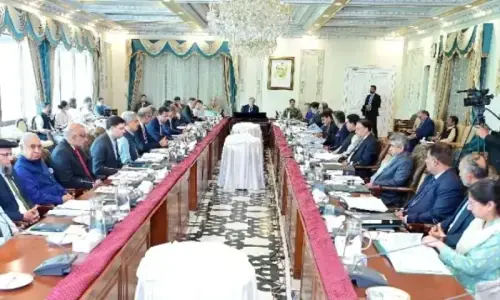
According to the official, the proposal of bringing property assets under the Zakat net was sent to the federal cabinet for consideration. The proposal, he added, was likely to be taken up in the coming cabinet meeting.
The official was of the opinion that expanding of the Zakat net was necessary because annual Zakat collection was about Rs4 billion and Zakat disbursement for five years had been more than Rs9 billion per annum. The additional money is being funded through the accumulated balance of Zakat, which stood at Rs22 billion in 2000.
The official said the accumulated balance was almost depleted now and if immediate steps were not taken to increase Zakat collection, disbursement of Zakat would have to be curtailed.
Moreover, the government needs to take some practical steps to revive confidence of people in the Zakat system by making amendments to the law.