



 0
0

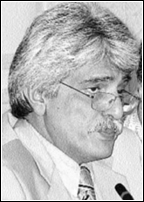 ISLAMABAD: Prime Minister’s Adviser on Finance Dr Salman Shah has said that the government has identified a number of sectors and areas to increase the tax-to-GDP ratio in the country.
“It is a fact that the tax-to-GDP ratio is low in Pakistan and we have undertaken a comprehensive study on this issue with a view to further increase our revenues,” he added.
In an interview with Dawn, he, however, said that the simple cross-country comparison of tax-to-GDP ratio tended to be misleading because it was not a comparison of likes with likes. For example, he said, in most of the developed economies, social security deductions and similar other levies are considered as tax deductions, whereas in Pakistan, these levies are not included in tax revenues.
He said that the Central Board of Revenue (CBR) has identified various sectors whose contribution in GDP was much higher but they used to pay very little tax. In literature, these are classified as ‘hard-to tax’ areas, especially in developing economies.
“We are conscious of this fact and are trying on scientific grounds to bring these difficult areas into tax net”, the adviser to prime minister on finance emphasised.
Responding to a question, he said that traditionally the share of direct taxes in total tax receipts had ranged between 15-18 per cent in 1980s and early 1990s. However, with the introduction of various reform measures in direct tax structure, the contribution of direct taxes has improved to 30 per cent in recent years. Efforts are being made to further broaden the tax base, he added.
For this purpose the income tax NTN database has been reconciled with the computerised national identity cards (CNIC) database of NADRA.
This, he said, was a major effort to the clean database for identification of non-filers and other delinquent taxpayers. Besides, improvement in tax base on a strategy on the revision of corporate tax structure is already in place.
By next year, he said, a parity in tax rates at 35 per cent will be attained between public, private and banking companies. To further improve the corporatisation, the rate of income tax for SMEs has been reduced to 20 per cent. “We believe that this combination of policies would be rewarding in terms of higher tax receipts. It is important to add that the corporate sector has maximum contribution in income tax receipts throughout the world,” he said.
Therefore, the taxation policy is giving due importance to the corporate sector in Pakistan. “We believe that the revised design of taxation structure will be tabled to favourably address the issue of tax incidence on various segments of the society.
In reply to a question he said resource mobilisation played an important role in poverty alleviation through direct fiscal transfers (i.e subsidies and transfer payments) and by providing fiscal space to the government. During the last few years, the CBR has not only achieved the assigned revenue targets, but also surpassed them. As a result, additional resources were available for social sector needs and infrastructure development.
Additional government spending has generated economic activity in the country, more job opportunities have been created. “This is reflected by the fact that there has been a reduction in unemployment,” he added. The growth process is now yielding dividends in terms of improved distribution also, as poverty has also started to decline.
He said the CBR has undertaken a detailed sectoral analysis and has identified the mismatch between sectors whose contribution in the GDP is significant but not in taxes. “We have identified areas with considerable tax potential. The taxation policy in coming years will focus on these areas,” he said.
Asked whether he saw any indication of people’s willingness to pay tax voluntary, the adviser on finance said that the CBR had initiated wide-ranging tax administration reforms in recent years that include simplification of rules and procedures. The introduction of the Universal Self Assessment Scheme (USAS) in income tax structure has been an effort to repose confidence in taxpayers. This scheme alone has improved voluntary compliance significantly. The latest available information indicates that the number of returns and payments have increased considerably. “We plan to extend the concept of self-assessment across the board.” The other side of the coin relates to facilities provided to the general public to improve its perception towards the government.
“You are aware that the government is giving priority to improve upon the existing infrastructure, whether it relates to roads and highways or to education and health facilities. We are now approaching the remote areas of the country,” Dr Shah said.
The mega projects initiated in Balochistan, he pointed out, was a clear evidence of the government efforts to provide quality life to its citizens. This, in turn, should provide motivation to the public to honour its tax obligations.




























