



 0
0

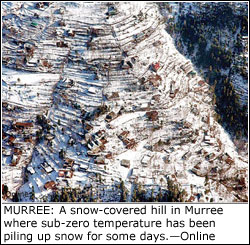 ISLAMABAD, Jan 8: Many communities hit by the October 8 quake still remain cut off despite resumption of helicopter flights on Wednesday and the clearing of some main roads, a UN agency official told Dawn here on Sunday. “Bad weather and snow last weekend, which caused landslides, had impacted on relief work,” the official said. In addition to snow, a cold snap meant earthquake survivors and aid workers had to cope with abnormally low night-time temperatures and chilling winds, he said.
“More snow has been forecast for early next week,” he added. With many tents collapsed under the weight of snow, the International Organisation for Migration (IOM) was coordinating with shelter assessment teams from other NGOs as well as sending its own staff to evaluate the tents and distribute additional plastic sheets, blankets and tarpaulins, an IOM official said.
“Collapsed tents will be re-erected and 20,000 handouts in Urdu, English and Pushto about proper tenting techniques will be disseminated by the UNHCR to all the camps,” he said.
Next week, spot checks would also be carried out in villages at higher altitude to provide similar assistance, the IOM official said.
“The snow storm has been very hard on the people living in tents, and very frustrating for our staff, who have been unable to distribute critically needed relief items when their need was the greatest,” said IOM’s chief of mission in Pakistan, Hassan Abdel Moneim Mostafa.
“This winter will be a struggle for everyone,” he added. The IOM had shipped 8,000 shelter kits from Islamabad to its forward distribution bases over the past 10 days. An additional, 6,000 kits (along with 3,000 sets of jackets, socks and gumboots for children aged six to eight) had been purchased and would be arriving after the weekend, he added.
The IOM and other agencies have now wrapped up major operations in Forward Kahuta, Haveli district, which has received sufficient shelter material for the winter.
The organisation has crafted a multi-group response to the shelter needs in the area. A shelter cluster assessment had found that the quake had affected 170,000 people, many of them living between 5,000-9,000 feet high up.
On 27 December, 50 elders from five regional tribes met in a Jirga with IOM’s Mary Guidice, the emergency shelter coordinator for the region, and other key international NGOs leaders.
The tribal leaders promised security measures for the international aid workers and IOM, ACTED, World Vision and Church World Service agreed to send in assessment teams to the five represented tribes and begin relief deliveries.
Other agencies have also agreed to assist in the relief operation. The first shelter kits have already been delivered and more will follow according to the ongoing assessments in the region.





























