



 0
0

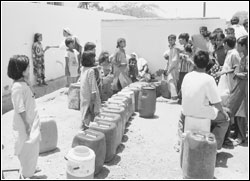 LAHORE: People are confused. They are not sure what position to take on the question of privatization of the public utilities. Should they support the lobby advocating privatization of the public assets or side with the groups opposing it? On the one hand consumers are terribly sick of the poor quality of services provided by the inefficient and corrupt public utilities, which they are forced to finance by paying high tariff rates and through taxes, while on the other hand they are scared of the likely implications of privatization of these essential services — job loss, tariff hikes, cartels, etc.
On their part, the successive governments have been conveniently choosing to pursue a hands-off approach and toe the directions of international finance institutions (IFIs), promoting privatization as the only answer to inefficiencies and corruption of public service providers since mid-1980s. No government has ever shown determination to address the question of inefficiency and corruption at the public utilities.
Proponents of privatization of public services like electricity, water, gas, and drainage defend privatization as being the only alternate to an inefficient, corrupt state. For critics, it means a substitution of corporate profit for public corruption, higher cost of utilities, impoverishment of majority of the population and delayed economic and social development. “What’s the use of improving efficiency if tariffs go up, jobs lost and poverty increased after privatization?” asks economist Dr Faisal Bari. He is of the view that the government should first determine its social objectives for which it wants to work and then decide to privatize or not the public sector utilities in line with those objectives.
Most consumers, including influential industrialists, are outraged at the inefficient way most public utilities function, make losses, and transfer this burden on the taxpayers in the form of higher tariffs. They are also annoyed that the management of the public service providers is in the hands of those who can do nothing to stop their functionaries from fleecing the users, forcing them to pay bribes to get an electricity, gas or water connection.
What alternate do we have to these inefficient and corrupt public service providers? “Privatize them,” many users of these services would respond. Even those who comprehend the likely implications of privatization of these services for consumers isn’t much different, though they would like the government to put in place certain safeguards to protect the interests of the users in the form of independent regulatory structure.
The idea of privatization of the public sector utilities has been propagated with such a force that most people have stopped questioning it.
“Most public utilities like Wapda should be privatized forthwith because their inefficiencies and corruption are hurting both the industry and the common man. The current level of tariffs is due to their inefficiencies whose burden is being shared by the industry and the common consumers,” asserts former Aptma chairman Abid Farooq. Economist Shahid Kardar agrees with him.
“You tell me, what other solution do we have? How can they be improved? Consumers are being made to pay for the inefficiencies of public utilities in the form of high tariffs. The government has to finance huge losses of these utilities from the taxpayers’ money. Wapda and KESC alone are getting Rs30-35 billion a year to finance their losses,” he says.
Mr Farooq insists that if the cost of the utilities goes up after the induction of private sector, it would be “genuine” and not because of the inefficiency andcorruption. “That increase shall be based on sound economics,” he says.
IFIs like the World Bank, the IMF and the ADB maintain that privatization will not only improve efficiency and eradicate corruption, but also foster competition, create jobs, bring down prices, ensure faster and greater investment, and ameliorate the quality of services. Aside from attaining these objectives, the successive governments have consistently been advocating privatization also for slashing their debt burden, reducing fiscal deficits and releasing greater funds for social and physical infrastructure development. For the governments it also means “integration of the national economy into the global economy through the sale of public assets to foreign investors”.
The idea of privatization, as often stated by Prime Minister Shaukat Aziz, is based on the premise that only the private sector should own and operate industrial enterprises and utilities and that the government should limit its role in providing an enabling business environment and regulation.
Former finance minister Dr Mubashir Hasan, who oversaw nationalization of private businesses during the 1970s, strongly differs with this approach. “Privatization of the public utilities is a disastrous policy. Such an action will impoverish the poor, who would be forced to pay whatever price of essential services like water electricity is demanded from them as well as speed up transfer of capital (to be accumulated by foreign buyers and local investors in the name of profit) from the country.”
Dr Hasan, who strongly believes in the state ownership of utilities, says the state-ownership shouldn’t mean ownership of the federal or provincial governments, but ownership of the institutions of the people. “When the institutions of the people control utilities, they would ensure that those are run efficiently and economically and scope for corruption is much reduced. The privatization of public service suppliers is a sure way of delaying development. The good of greatest number can only be achieved through public ownership of services like water, electricity, drainage, gas, etc.”
To prove his point, he cites the instance of Cuba. “The UNDP Human Development Report, 2005, proves that even a poor country like Cuba with public ownership offers better quality of life (comparable with the US’s indicators),” he says.
Dr Hasan does not agree with the suggestion that the government has no funds for providing the people with essential services.
“The government doesn’t have money for these services because it doesn’t want to have these services. The government’s allocations are high for debt servicing, defence expenditure, big buildings, cars, almost free utilities in Islamabad, DHAs, and Gulbergs, and other luxuries. From where will the private sector get money for offering for public utilities? The money with the private sector will not be brought from abroad; it will also be collected from the people. The money available with the private sector will be less than the money available with the government,” he argues.
The experience of privatization of the public sector in various economies, including Pakistan, has shown that it does not necessarily bring advantages for the consumers or ends corruption, although it may improve efficiency. But it has definitely resulted in layoffs, increased costs of utilities and services, and reduced governmental controls on the markets leading to the formation of cartels by the private sector. Take the example of the cement sector. After the privatization of state-owned cement factories, the private owners formed a cartel to raise their prices in the mid-1990s. The government could not do anything to break up this cartel or bring down the prices in spite of a ruling against the private manufacturers by the Monopoly Control Authority (MCA). This goes to show that privatization empowers minority private sector, weakens the government controls and plays havoc with the consumers if it is done mindlessly without studying its pros and cons as has been the experience so far.
Multilateral institutions insist that even the poor should pay for services like piped water, etc., thereby “giving suppliers a financial stake in meeting their needs”. In its water policy, which is a part of the ADB’s poverty reduction strategy, the Manila-based donor argues: “Water must be utilized by those who render the most economic advantage. As a consequence, those who can afford the cost will be prioritized over the poor who have least purchasing power.”
What does this policy imposed by the IFIs on developing countries mean for their poor populations, whose majority already doesn’t have access to safe drinking water, electricity, drainage, and other essential services? It will certainly prevent their access to these services, resulting in worsening of poverty.
Shahid Kardar, who stands for privatization albeit with strong governmental regulations, admits that the poor of the country, especially those living in Sindh and Balochistan will suffer the most. “The private sector will not finance provision of infrastructure to the poorer areas because it is not profitable due to involvement of enormous cost. There is every chance that the federal government would also pulls itself out and tell the provinces to bear the costs.”
He agrees that the private sector won’t be able to improve efficiency in the short-term and will have to increase tariffs or ask for government subsidy to become profitable. In case of foreign buyers, a new East India Companies will emerge on the scene that will raise funds for the purchase of public assets from the local banks and repatriate their profits abroad, affecting the country’s precarious balance of payment situation. Still, he says, utilities like Wapda and KESC should be sold to the private sector because their performance cannot be improved in the present system.
But, Mr Kardar says the government will have to take certain basic policy decisions before moving ahead with privatization. “The government has to decide whether it wants to continue with its policy of subsidizing the loss-making utilities or not. If it wants to do away with subsidies, it means it is willing to raise the tariff rates. Thus it should be ready for the immediate impact of privatization, which will be very strong due to increase in tariffs.”
Dr Bari is of the opinion that it is the responsibility of the state to provide essential services to the people irrespective of the fact whether someone can pay for them or not. “Whether utilities are managed by the private sector or the public sector, the government must devise some efficient mechanism to subsidize the poor who need these services but just cannot afford to pay for them. It must be ensured that subsidy given to support the poor is actually used for this purpose.”
Both Mr Kardar and Dr Bari agree that privatization does not help alleviate poverty. In fact, if privatization is done without putting in place independent and powerful regulatory structure and mechanism, it may cause poverty to increase and hurt the interests of the users as has been the case with cement. “Even sophisticated economies like the UK had to face numerous difficulties (after privatization of utilities like energy and railway). Thus, it would be wrong to assume that we can privatize without facing fallout of this policy on our society,” says Dr Bari.





























