



 0
0

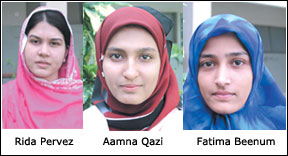 KARACHI, Sept 20: The top position holders in the HSC Science (Pre-Medical) Part-II Annual Examinations 2005 have disliked the government’s decision to separately merge classes IX and X, and classes XI and XII, for annual examinations, saying it would not only overburden students but cause other problems as well.
When their attention was drawn towards the federal government’s decisions regarding holding of composite examinations from 2007 onwards throughout the country, they said that in a system of exams, which compelled students to go mostly for memorization, it would be inappropriate to have two composite exams at the intermediate and matriculation levels once in a two years’ time.
The government’s decision for holding a combined examination for classes IX and X was tantamount to ordering educational boards to take a U-turn. These boards had adopted the yearly system of exams and were looking for a further split of courses with the objective of somehow providing students a chance with learning-based and knowledge-oriented exams.
The position holders expressed these views at a ceremony organized by the Board of Intermediate Education, Karachi, on the occasion of announcement of results of the HSC Pre-medical annual exams on Tuesday.
According to the data released by the BIE, the pass percentage of candidates was 50.78, 11 per cent less than that of the last year’s 61.65. It was 52.91 in the case of woman candidates and 44.11 in the case of male candidates.
As many as 14,016 candidates, including, 10,616 women, appeared in the exams, and 7,111 including 5,614 women were declared pass.
As many as 332 candidates have been placed in A-1 grade, 586 in A grade and 2,170 in B grades.
The breakdown of successful candidates is as follows: A-1 grade, 42 males and 290 women; A grade, 260 males and 326 women; B grade, 338 males and 1,832 women; C grade, 404 males and 2,079 women; D grade, 416 males and 1,058 women; and E Grade, 26 males and 18 women.
It is likely that the entire lot of merit seats for first year MBBS programmes at the two government medical colleges in the city would be occupied by fresh A-1 graders this year, leaving hardly any room for A graders.
When asked for the decline in pass percentages, the BIE Controller of Examinations, Prof Mohammad Amin Khalid, said there was nothing new as far as the system and pattern of exams were concerned, but he would say that it were the teachers who taught, examined and assessed the scripts of students.
A slight increase or decrease in the percentage happens in results, he said. This reflected the fact as to how students were being taught and what they delivered in exams, he added.
The first five positions in the consolidated merit list, as prepared by the board, were secured by woman students, all from government colleges.
The first two positions were clinched by two students of the St Joseph’s College for Women, then a government one, while the third position went to a student of the PECHS College.
Rida Pervez, roll no 343890, bagged first position by securing 982 out of 1,100 marks, while the second and third positions went to Aamna Qazi, roll no 343801, and Fatima Beenum, roll no 343452, respectively.
Responding to questions from journalists, the BIE chairman Prof Syed Iftikhar Zaidi said that enquiries into certain allegations of irregularities in exams were in progress, and findings would be made public in due course of time.
He said that St Joseph’s College, now a private entity, had applied for a fresh affiliation with the board for running HSC programmes.
He said the college would be asked to fulfil all related formalities, including strengthening of teaching faculty with recruitments of qualified and experienced teachers in line with the board’s formula, prior to any grant of affiliation.
The EDO (Higher Education), Prof Mohammad Rais Alvi, said students of government colleges would continue dominating the board’s merit lists in the future as well. He said that about 500 teachers were still needed for recruitment at various old and newly colleges in the city.
The first position holder, Rida Pervez, said the composite examination system would make the SSC study more lengthy and time consuming. She said that she took private tuition as it helped prepare from the exams’ point of view.
She called for changing the syllabus and pattern of papers, and for induction of more conceptual questions, including MCQs. The entry test system for medical and other professional colleges was good, as it determined the aptitude of candidates, she, wishing to become a doctor, added.
Aamna Qazi, securing second position, said she wanted to do specialization in neurology or cardiology as it were promising and challenging.
She opposed the working of students’ unions in educational institutions as those affected the academic activities of students.
The third position holder, Fatima Beenum, said traffic problems and improper working of other amenities like electricity also affected students, particularly in the days of exams.
The use of internet by intermediate level students was a mere waste of time, she said, adding that it could; however, help university students a lot.
The position holders also expressed their views on government efforts of providing modern day education to madressah students, saying it was good to have religious and contemporary education simultaneously.
However, they also called for provision of sound religious, ethical and cultural bases to students in schools and colleges as well.





























