



 0
0

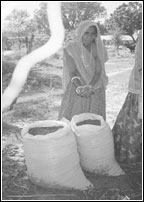 PULSES play an important role in agriculture due to their ability to grow on marginal and rain-fed lands and the same is the case of Pakistan. As a cheap source of protein, the poorer sections of the society consume pulses. Traditionally, meat, milk, egg and fish are protein sources but these can be hardly afforded by the low-income groups.
Among pulses, gram is one of the most important pulse crops. Gram possesses high diet value, especially having high contents (21-24 per cent) of protein and plays a significant role to balance the common man’s diet. It is used for human consumption as such or in crushed form in a variety of ways. It is often eaten as raw and green before ripening. In addition, significant quantities are used as feed for livestock.
Gram is cultivated on about 1,038,000 hectares with an annual production of 761,000 tones or 67 per cent of total pulse area grown during the winter season. Gram is grown all over the country, but mostly in the Thal zone of Punjab.
The supply of gram must increase with the growing demand of rising population. For example, in 1991 total population was 112.61 million and in 2005 it has reached to 152.53 million.. The area under gram decreased from 1092 thousand hectares in 1990-91 to 1038 thousand hectares in 04-05. The production of gram increased from 531 in 1990-91 thousand tones to 761 thousand tones in 04-05.
This crop has not received due attention of the policy makers which has resulted in higher prices (retail price of gram increased from Rs7.85 in1990-91 to Rs34.07 per kg in 04-05) due to supply not keeping pace with demand. To meet the demand, the government has to import pulses from abroad. The import of grain, pulses and flours has increased from Rs3,855 million in 1990-91 to Rs4,960 million. This puts an unnecessary pressure on foreign exchange reserves.
Gram is a unique crop in the Thal area, having the characteristics like bushy plant type with small leaflets and long taproot systems, required for arid zone. It plays a significant role in livelihood of the people in areas where it is cultivated. Water requirements of gram are low.
The barani conditions of Thal are most suitable for gram production. So far, little research on economics of gram production had been conducted. To focus on gram production in Thal areas of the Punjab, a study was carried out on the cost of production, the net returns, problems faced by producers and to suggest the policy measures to increase its productivity.
According to the study, major varieties of gram grown in the area were old ones. A few farmers also grew new varieties. A majority of farmers used their own seed or purchase seed from private seed dealers, which was uncertified and of old varieties. The main varieties grown in the study area were C-44 and Bittel-98 and were cultivated on 69.4 and 26.5 per cent of the total gram area respectively. The improved varieties like Punjab-2000, Vnhar-2000, CM-98, Bittel-98, Punjab-91, and Noor-91 were grown on very small area.
A majority (69.1 per cent) of the farmers used their own seed while almost one-fourth (24.1 per cent) farmers purchased seed from dealers. Improved seed of new high yielding varieties was not available to gram producers. They had to rely on their own seed, which results in low yield. The improved varieties of gram like Punjab 2000, Vanhar 2000, CM 98, Bittel 98, Punjab 91 and Noor 91 may be made available to the farmers at sowing time.
Organic matter as well as synthetic fertilizers is used in very small amount. The reasons for less fertilizer were, less fertilizers requirements of gram crop and risky nature of the crop. The gram crop is grown in rain-fed conditions. The yield mainly depends on the suitable weather conditions.
Farmers usually do not take much risk of using high doses of inputs. Overall yield as well as total revenue and net profit (180 kg, Rs2977 and Rs1646) remained low during 2003-04 in the study area due to seasonal factors (less rainfall and pest attack).
Severe weather conditions and pest attack were mainly responsible for reduction in the yield. The other problems that hindered in good gram yield were high input costs, non-availability of good variety seed, low quality sprays, weeds problem, no soil testing facility and the lack of information.
Lack of information about improved gram production technology and gram marketing was one of the major factors contributing in low profitability of gram. No affective source of information for gram production technology and marketing was available to the producers.
The results of the study showed that per acre yield of gram is very low. The problem of low yield is attributed to poor quality seed, weeds, pests, diseases, and less use of inputs. Most of these problems can effectively be solved by creating awareness among farmers. The extension workers can provide improved knowledge on gram production technology for higher yields.
Farmers were shy to approach ZTBL and other commercial banks for obtaining loan. They were afraid that in case of crop failure they will be unable to bay back the bank loan and hence they will be in trouble. They mainly depend on village level dealers for obtaining seasonal agricultural production loans. Most of producers do not take their produce to the formal grain market. Most farmers (90 per cent) sell their produce to village beuparies at village level or nearby small town.
The important reason for selling produce to village beuparies is the outstanding loan that farmers had taken for use of inputs and for other domestic needs. They have to sell the produce to the same dealer from whom they have taken loan. These village beuparies exploit farmers by giving low price of their produce and by recording less weight.
Major problems relating to gram marketing were collusion of dealers, price fluctuation and wrong mode of weighing by village beuparies. There was great fluctuation in gram prices. Prices of gram were very low at the time of harvesting while prices were quite high after farmers had sold their produce. Major portion of marketable surplus was sold immediately after harvest.
The basic reasons were the non-availability of proper storage facilities, loan repayment and socio-economic problems. The farmers who have taken loan from dealers are urged to sell the marketable surplus to the same dealers at low price just after harvesting of the crop. As at the time of harvest, prices were very low, hence gram producers generated less income. Following measures may be adopted to solve these problems:
Price fluctuation can effectively be controlled by establishing processing plant in the gram producing area; establishment of warehouses and storage facilities by private and government agencies; loans may be provided by ZTBL and other commercial banks with soft conditions and repayment may be in easy instalments. In case of crop failure, farmers may be given extra time for loan repayment.
One of major problem in marketing of the gram was illegal deduction from farmers’ produce. Local governments can stop these illegal deductions through market committees.





























