



 0
0

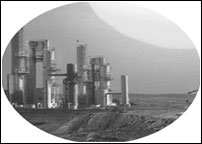 SOARING international oil prices are only succeeding in giving a false sense of comfort to Indian consumers, even as four state-owned giants are haemorrhaging as the government is reluctant to hike the price of petrol, diesel, kerosene and LPG (liquefied petroleum gas).
With international oil prices trying to pierce the $70 per barrel mark, Indian oil companies are having to pay a heavy price, as the government – under pressure from its leftist supporters – is not allowing the firms to raise the price of their products.
India’s Petroleum ministry earlier in the month warned the government that if the retail price was not hiked, most of the giants would turn sick. They include Indian Oil Corporation, Bharat Petroleum Corporation, Hindustan Petroleum Corporation, and IBP Ltd. A company turns sick when 50 per cent of its net worth gets eroded, and IBP might have to be declared sick by as early as next month.
The other three giants – once the most profitable of public sector companies – are likely to turn sick between the next one and three years. This could have calamitous effect on the oil industry, as these companies would not have funds to invest in new refineries and projects, and their international credit ratings would also tumble.
Though the administered pricing mechanism (APM) – in which politicians decide the retail price of petroleum products, and not the oil companies, who would naturally link it with international prices – was dismantled, successive governments in India have been reluctant to let go of control of the pricing mechanism.
The BJP-led National Democratic Alliance government would not do so, as allies including the Telugu Desam Party, Shiv Sena and the Trinamool Congress did not want petroleum prices to go up. The Congress-dominated United Progressive Alliance government is being prevented from hiking oil prices by the leftist supporters, who will be facing elections in two key states, West Bengal and Kerala, next year.
State-owned oil companies have to take on an additional burden of a huge Rs400 billion annually because the government does not want to pass the load on to consumers. Economists have said that if consumers were to take on the burden, many would cut down on unnecessary wastage, keeping costs within their budgets.
The two products whose prices are the most distorted are diesel and kerosene, which totally account for Rs300 billion of the subsidy. Incidentally, many of the luxury cars – including Mercedes Benz – that are made in India have diesel engine options, so the affluent are being subsidized by the oil companies. Likewise, luxury coaches (which transport the rich) built by the likes of Volvo are also fuelled by diesel.
Large quantities of kerosene are sold in the black market by traders to the poor at much higher costs, and in cities like Mumbai, the commodity is diverted for mixing with diesel (causing pollution and damaging the engines of auto rickshaws and commercial vehicles). Kerosene prices were last hiked in 2002, and LPG marginally last year. Petrol and diesel prices were also raised in June, but by just Rs2 to Rs2.5 a litre.
It has been suggested to the government that if it was seriously concerned about the well being of the poor, it could issue stamps and coupons to people in the ‘below-the-poverty-line’ category, targeting its subsidies so that only genuine people can claim the benefits of cheaper petroleum products.
But the truckers and traders lobby is powerful in many parts of the country, and they bring pressure on the government, preventing a sensible oil pricing policy.
India’s oil import bill this year is expected to soar by 50 per cent to Rs1.8 trillion (nearly $42 billion). India’s basket of crude import, which was around $22 a barrel in 2002-03, shot up to $38 last year, and is expected to almost touch $60 by the end of this fiscal.
Fortunately, the country has foreign exchange reserves of about $140 billion, and inflation is also under control. But with elections looming around the political horizon (in left-dominated states of West Bengal and Kerala) and also perhaps in Bihar, the government does not have the courage to go ahead with a price hike.
The heavy rains that crippled life in Mumbai and the coastal parts of Maharashtra from July 26, resulting in over 1,000 deaths and losses estimated at over Rs50 billion, have shattered the image of the country’s financial and commercial capital.
The apparent impotence of the authorities to face a major disaster has led to a growing demand to make Mumbai an autonomous union territory, or for allowing it limited statehood, as enjoyed by Delhi, the national capital.
The city, headquarters for most industrial houses, multinationals, financial giants, and other corporates, contributes nearly Rs600 billion to India’s exchequer.
Maharashtra’s finances would crumble if Mumbai businesses and residents stopped paying their taxes. While both the central and state governments depend on Mumbai for funds – even political parties incidentally raise most of their funds from businessmen in the city – there is nothing much they do in return for the metropolis.
Federal ministries like the railways, shipping, and civil aviation are loath to provide a degree of autonomy to their divisions in Mumbai, though they generate the maximum revenue. Mumbai airport is the busiest in the country, the city’s suburban rail network – which carries 6.5 million commuters daily – is also the most profitable, but neither of the two organisations are willing to invest funds in upgrading infrastructure, or allowing their local managers to take investment decisions.
Politicians in Maharashtra milk Mumbai for revenues, siphoning off billions of rupees earmarked for the development of the city to their respective constituencies. Maharashtra’s politics is dominated by feudal lords and affluent farmers from western Maharashtra, who have bankrupted the sugar industry and the co-operative banking sector in the state.
These politicians, who dominate the current ruling parties – the Congress and the Nationalist Congress Party – have held sway over state politics for the last 40 years (except for a short period when the BJP-Shiv Sena combine contributed its share to mismanaging the state).
Vast sums of money are diverted for mega projects, especially in irrigation, but rampant corruption results in the looting of the state treasury by unscrupulous politicians, bureaucrats and contractors. Maharashtra, once the most well managed state, has today run up a hefty debt of over rupees one trillion, and Mumbai’s businesses and citizens have to foot the bill of servicing this debt.
Except for cities like Mumbai, Pune and Nagpur, in the rest of the state the government finds it difficult to collect power dues, local taxes or other utility charges. So when residents here talk of autonomy and statehood, politicians of all hues get together and try to exploit bogus chauvinistic sentiments.
WHILE most of the state electricity boards (SEBs) in India are hugely inefficient and loss-making units, one state-controlled power firm that has had a good track record over the years is National Thermal Power Corporation (NTPC).
With India’s power sector undergoing major changes, NTPC plans to leverage its expertise by getting into the distribution business. It also has plans to acquire coal mines to ensure uninterrupted supply to run its power plants.
NTPC, which accounts for nearly 20 per cent of the installed capacity of power in India, is in talks the Japan Bank for International Co-operation for a $130 million loan, and with Indian financial institutions and banks for loans worth $1 billion, says C.P. Jain, chairman of the corporation.
According to Jain, NTPC hopes to raise its capacity to 45,000 MW over the next seven years. It would put up new power plants, expand existing units, and even consider taking over some of the units from SEBs.
The federal power ministry, which has been pushing for reforms, has urged state utilities to go in for unbundling, establishing separate units to generate, transmit and distribute power. NTPC is keen on diversifying into the distribution sector, and may even consider acquiring some of the existing networks.
It is looking at states like Maharashtra, Gujarat, Uttar Pradesh, Rajasthan and Orissa, and has also set up a separate unit, NTPC Electric Supply Company Ltd, for the new business. Besides SEBs, the other major power distributor is the Reliance group, which a few years ago acquired BSES Ltd, which supplies power in Mumbai’s suburbs. Reliance Energy now supplies power in Mumbai and Delhi, and has aggressive expansion plans.
Distribution of power is one of the stickiest of jobs in India, as many powerful constituents – including small-scale industries, farmers, sick units, and politically-connected businesses – refuse to clear their dues. Many SEBs, including those in Maharashtra, report hefty losses in distribution, as slum-dwellers, hawkers and squatters illegally tap into their power lines, apparently in league with some officials.
SEBs have been slow at providing meters to consumers, and many of the boards are incapable of doing even simple tasks such as reading the meters, despatching bills to consumers, and ensuring that the payments are made.




























