



 0
0

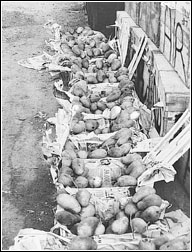 THE agribusiness is notably growing in food processing industries but is confronted with several Issues to realize its full potentials. The opportunities in agro-food sector include: (a) priority activities such as seed development, machinery and fertilizer manufacture, and food distribution; (b) trade-related businesses such as wheat flour, soybeans, meat, eggs and (c) investment activities such as dairying, feedlots, flour milling and sugar production and (d) consultancy services.
To realize these opportunities, there is a need to enhance the production capabilities of agribusiness enterprises, provide adequate infrastructure, effectively identify markets and develop the required skilled labour. In addition, efficiency of the distribution system needs to be improved.
The food industry is projected to continue growing at the rate of more than 10 per cent. The demand for quality food will become much stronger as the middle income group grows. With improvement in the quality of agribusiness products, the agro-industry sector is expected to expand further.
Other developments that will contribute to its growth will be: (a) modernization of traditional food business; (b) establishment of joint ventures and strategic alliances with world-class companies; and (c) improved collaboration among the government, industry, and research and development institutions in the production of quality seeds, processes and technologies.
Marketing promotion for agribusiness: Marketing is defined as the “performance of all business activities involved in the flow of agricultural products and services from the point of initial production until they are in the hands of consumers”. Hence, marketing is a productive activity that creates utilities. i.e., form utility, place utility, time utility and possession utility, in the process of bringing the products from farmers to consumers.
Promoting agricultural/agribusiness marketing means, therefore, improving utility creation throughout the marketing chain or channels, through all marketing functions, considered necessary to the marketing processes.
Marketing promotion of agribusinesses will improve operational and pricing efficiency. This will, in turn encourage markets and institutions, prices and marketing costs, and the functional and organizational aspects of agribusiness enterprises.
The government should not undertake activities that it is not good at. It is good, for instance at providing public goods, avoiding inequality, ameliorating monopolies and monopolistic markets. Therefore, the government should establish marketing infrastructure, improve market information system and develop rural market facilities and expenditure on food.
It may be noted that of the total price paid by a consumer for an agricultural product, only a small percentage accrues to farmers. To gain more bargaining power, farmers should be organized. Strong farmers’ organizations are important in balancing the monopolistic or oligopsonic structure of buyers (mostly large enterprises.)
The government should provide training for small-scale enterprises in order to help them understand the market and quality requirements as well as improve their product quality.
The promotion of farm and processed products through advertising and public relations appears to be effective in creating demand, especially for processed products.
On the other hand, advertising works through creating product differentiation of farm products and processed products should be carried out by the government. This can be done through electronic media.
Policies and programmes for promoting the development of agribusiness: Agribusiness remains crucial in terms of labour absorption and export earnings. Promotion of agribusiness enterprises by the government is essentially required.
As a result of economic globalization and market liberalization, market opportunities for agricultural products are now greater for the country having competitive advantage in many agricultural products.
However, a more open market has created more competitors and more complex quality standards, imposed by many countries. It is therefore, important for agribusiness firms to explore the possibilities for improving competitiveness. The government should devise policies that are conducive to agribusiness development.
Among common problems faced by the agribusiness enterprises are: (a) international trade barriers; (b) limited access to credit, high interest rates and fluctuating exchange rates; (c) poor trade policy; (d) export and import taxes on raw materials; (e) bureaucratic practices; (f) high transportation costs; (g) raw materials of poor quality and unreliable supply; (h) lack of support facilities; and (i) lack of professional managers.
From a macro perspective, a prudent macroeconomic policy should be pursued. This will ensure that the agribusiness sector remains healthy. In trade policy, all export barriers such as export taxes for agricultural products and high import tariffs on inputs should be withdrawn.
In addition, public policies and programmes need to emphasize: (a) creation of conducive business climate and a level playing field for small-scale agribusiness ventures; (b) strengthening of resource supplies and support institutions in rural areas; the provision of needed investment in infrastructure and other public goods; and (c) provision of training for agribusiness enterprises.
At the micro level, emphasis should be placed on creating entrepreneurs, ensuring competitive products, stimulating local investors and human resource development, supporting business partnerships, and developing agribusiness terminals.
In the area of trade, non-tariff barriers have also been put up by importing countries in the form of packaging and labelling requirements, certifications for non-genetically modified products (GMPs), hazard analysis critical control point (HACCP) and environment-friendliness etc. These requirements, as a pre-requisite for exports, have resulted in additional costs for the producers, which are now passed on to consumers and absorbed through higher prices.
The following policies and programmes might be necessary for coping with the globalizing trend of the economy: (a) promotion of greater cooperation for mutual benefits between local farmers and related small and medium-size businesses; (b) establishing of a regional framework for greater integration of production activities among countries, (c) development of supporting and related industries, (d) development of basic social infrastructure to keep up with economic development; (e) adequate supplies of basic food requirements for the increasing population; (f) development of common inspection standards for the safety of good products; and (g) conservation of resources and effective protection of environment.
In short, the major problems and challenges confronted in the development of agribusiness enterprises in Pakistan are (a) a lack of good infrastructure, i.e., roads, telecommunication and market information networks. (b) Unreliable supplies of raw material in terms of quality and quantity. (c) Obsolete and inefficient equipment and technologies. (d) Poor marketing facilities and sales networking. (e) Lack of managerial skills. (f) Fluctuating foreign exchange rates and high interest rates. (g) High product looses due to inadequate post-harvesting facilities. (h) High transportation and distribution costs. (i) Difficulty in accessing financial support due to bureaucratic and biases against small-scale entrepreneurs who are usually considered to be high-risk borrowers. (j) Unresponsive or inappropriate government policies and (k) lack of sufficient data and statistics on the industry.
Pakistan would continue to be highly dependent on its agriculturally based economy in near future. The options outlined should be adopted in order to achieve the goal of food self-sufficiency, increased competitiveness in the global market, less dependence on imported inputs and technology, and alleviation of poverty and unemployment in the rural areas.





























