



 0
0

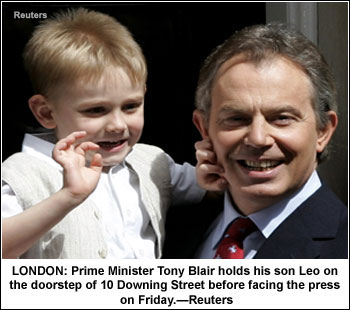 LONDON, May 6: Tony Blair has only just walked back into No 10 Downing Street — but already Britons are asking when he will be out the door. Voters handed the prime minister a historic third straight term but with a potentially career-threatening handicap. His parliamentary majority was more than halved and he won what looks like the lowest share of the vote for a ruling party in modern times — denting his authority when he needs it most.
Powerful finance minister Gordon Brown, 54, is hungry to take over as leader of the centre-left Labour party and Mr Blair has said he will not stand again, a dynamic that risks turning him into a lame duck leader, analysts said. Defeat in a planned referendum on the European Union constitution next year could trigger the end of the Blair era. Mr Blair shows no sign of quitting but few analysts expect him to be in power more than two years.
“If that goes very badly then his authority will be fairly damaged and he could go after that. Otherwise I would expect him to go within two years,” said Wyn Grant, politics professor at Warwick University.
“Once people become aware he is being seen as a lame duck, they will start positioning themselves behind Gordon Brown.”
Mr Blair’s return on Friday to the prime minister’s London home and office was relatively sombre and a stark contrast to the euphoric scenes of 1997 when he swept to power in a landslide as the youngest British leader since the early 19th century.
Protests over his integrity and support for the Iraq invasion, combined with disillusionment after eight years under Labour, prompted many voters to switch allegiance.
By historical standards, the Labour’s 70-seat lead is a respectable margin in the 646-seat parliament, but next to the party’s last two landslides it is modest.
PARLIAMENTARY HANDICAP: Mr Blair was once Labour’s best electoral asset but critics say he has become a liability. Many in Labour are itching for Mr Brown to take the helm.
Credited with Britain’s long stretch of economic stability, Mr Brown is also viewed as more in tune with Labour’s traditional values, many of which Mr Blair snubbed in the 1990s when he dragged the party to the political centre to make it electable again.
Tony Blair and Gordon Brown, whose rivalry dates back years, united for the campaign, putting the economy at the heart of Labour’s bid for re-election. But pundits said the truce would not last.
Bookmakers William Hill on Friday were already offering odds of 2/1 on Mr Brown becoming prime minister in 2007.
Thursday’s election has clipped Mr Blair’s wings and ensured Mr Brown now has a firm hold on policy direction, analysts said, although Mr Brown too has said there will be no backtracking on reforms.
A hard core of up to 40 Labour rebels slashed Mr Blair’s handsome majority to a slither on a number of key votes in the last parliament and many of the hardliners have been re-elected.—Reuters





























