0
0

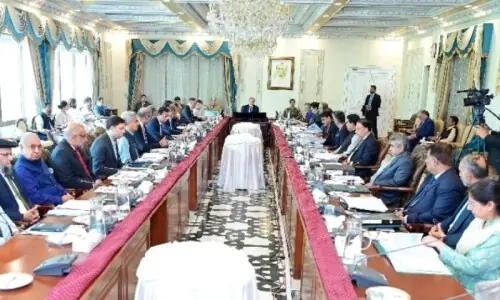
NAIROBI, Aug 22: Somalia's new parliament, approved by all the main warlords in the Horn of Africa country, was inaugurated on Sunday in a major step towards ending 13 years of anarchy.
"Today is an historic occasion, an occasion which I believe will assure in a lot of hope for the people of Somalia in peace and tranquillity," said Kenya's Regional Cooperation Minister John Koeck, head of a regional mediation team for Somalia.
"You are going to be peacemakers, you are going to insure that your country regains its past glory," he said at the UN office in Nairobi, capital of neighbouring Kenya, the host of protracted peace talks among Somalia's warring factions.
The lawmakers, who were sworn in groups of 20, pledged to "promote justice ... defend my country and my religion, and ... work honestly for the Somali people." Somalia's clans chose 275 deputies for the assembly - the first recognized by the country's main warlords since the ouster of the dictator Mohamed Siad Barre in 1991 - but several dozen stayed away.
"We still have some disputes," Mr Koeck explained. The main problem concerns the breakaway territory of Puntland, according to Italian Ambassador to Kenya Carlo Calia, who represents the European Union in the inter-Somali talks.
Puntland, in northeastern Somalia, declared autonomy in 1998 but has not formally seceded from Somalia. Also conspicuously absent were representatives of Somaliland, a breakaway territory in the northwest of the country that unilaterally proclaimed independence in 1991 without gaining international recognition, and refused to participate in the talks.
The inauguration of the Transitional National Federal Assembly, which will sit for five years, had been put off three times since July 31 because of inter-clan disputes.
After the 1991 toppling of Barre, Somalia plunged into anarchy and bloodletting, prompting botched military and humanitarian intervention by the United Nations and the United States from 1992 to 1995.
More than a dozen previous attempts have been made to negotiate an end to Somalia's anarchy and restore a functional government. The current round of peace talks, which started in October 2002, is in its final phase, with delegates trying to forge a power-sharing deal among five major Somali clans before electing a transitional president. -AFP