0
0

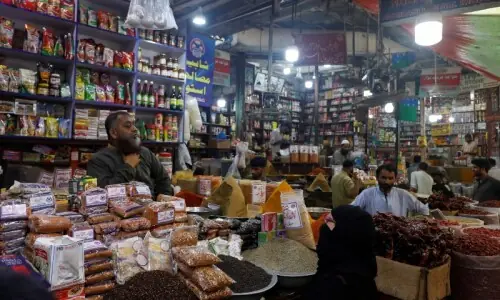
PESHAWAR, May 16: Speakers at a seminar have asked the government for facilities to promote the use of iodised salts in certain districts of the province.
The one-day seminar was arranged by the nutrition section of the health department in collaboration with the Unicef to review the annual Iodine Deficiency Disorder (IDD) scenario in the targeted districts here on Saturday.
The executive district officer (EDO), health, cited the restructuring of the IDD Committee, lack of logistic support for monitoring, supply of drip feeders and potassium iodate, test kits and training of new salt processors and updating and printing training manual as reasons for hindering their progress.
According to them, supply of the potassium iodate directly to the salt processors, support to salt processors, standardization of packing and marketing, process of registration, training and management and organizational development, independent audit of the activities and expenditure could improve the situation regarding the universal salt iodisation programme.
EDOs, salt processors, officials of the Unicef and health department attended. The EDOs of 12 districts who carried out the IDD activity gave an overview regarding their districts. The districts are: Swat, Tank, Bannu, Peshawar, Charsadda, Kohat, Mardan, Dera Ismail Khan, Haripur, Nowshera, Lakki Marwat and Swabi.
Dr Mohammad Rafique, chief of Health Sector Research and Reforms Unit, discussed the major problem caused by iodine deficiency. According to him, it caused goitres, still births, low IQ, cretinism and weakness.
"Since 1920 major world states have been using iodine and so far 28 countries have achieved the Universal Salt Iodisation level," he added. A research study in Peshawar revealed that 59.8 per cent children had visible goitres, he further said.
A blood test on new born babies found that 72 per cent of them had got IDDs where 14,000 dead children were born every year. "Iodine can be found in deep sea water fish or can be taken as injection or capsule or can be used as food fortification," he said.
Dr Moazzam Hussain of the Unicef announced that DCOs would head the committees, and extended his cooperation regarding provision of the required equipments to the EDOs. He also hinted at printing the training manual, provision of 150 drums of potassium iodate to the salt processors in near future and expansion of the IDD programme to the rest of the 12 districts.
The Unicef-USI programme had achieved 71 per cent iodization in the last three months. A total of 1,596kg (32 drums) of potassium iodate have been distributed among 130 salt processors while 135 of them have been trained in the 12 districts, including Karak and Lakki Marwat.
A total of 163 drip-feed plants have been provided to 14 districts within last three months. The programme, besides the existing 12 districts, has been launched in Khyber Agency and Hangu district this year, Dr Moazzam said.
The IDD control activities in Mardan, Charsadda, Tank and Hangu had been effective followed by Peshawar and Bannu, while Swat, Nowshera, Khyber Agency, Karak, Lakki Marwat, Dera Ismail Khan, Swabi and Kohat are lagging behind.
The health department and the Unicef play a very important role in increase of about five-fold (from 14 per cent to 71 per cent district average) iodised salt production with in three months.