0
0

Promising start to dialogue
Following the landmark agreement between President Pervez Musharraf and Prime Minister Atal Behari Vajpayee on January 6, India and Pakistan have started yet another dialogue that promises to be different from those held in the past. There is purposefulness, and a resolve to achieve a modus vivendi, to end the 56-year history of conflict and confrontation.
This writer has been associated with many of the past dialogues, dating back to the six rounds of Bhutto-Swaran Singh talks in 1962-63, the Tashkent Conference of 1966 and the Shimla Conference of 1972, that followed the conflicts of 1965 and 1971 respectively. Their impact on bilateral relations was transient, or as in the case of the 1962-63 talks, even negative.
The Tashkent Conference represented an effort to return to the status quo before the 1965 war, so that the territories occupied were returned, both in Kashmir and along the international border. The political issues between the two were hardly tackled, nor was there any follow-up, so that the two countries drifted into war within six years. to cut the Muslim state to size.
The Shimla Agreement can be regarded as a diplomatic success for Pakistan, because though negotiating under the shadow of military defeat, and with 90,000 prisoners in Indian custody, we got a document that safeguarded our position on Kashmir, and specifically called for a settlement of the dispute.
India has been emphasizing the clause that calls for bilateral negotiations, which it interprets as ruling out a role for the UN, whereas the very first clause states that the relations between the two will be governed by the principles of the UN Charter.
The bilateral relations remained correct without being cordial from 1972 to 1989, with only routine references to Kashmir. This was a period dominated by two concerns. India having carried out a nuclear test in 1974, Pakistan felt that its security and survival demanded either international effort to prevent the acquisition of nuclear weapons by India, or the acquisition of nuclear deterrence by Pakistan.
The second major development was the Soviet occupation of Afghanistan in December 1979. Pakistan, which had been placed under sanctions for its nuclear programme by the Carter administration, became a frontline state in the last proxy conflict of the cold war.
As the Soviet Union withdrew from Afghanistan in 1989, which also marked the end of the cold war, Pakistan witnessed new challenges, as the US imposed sanctions on it under the Pressler Law in 1990, while the conflict and instability developed both in its west and east.
An indigenous movement broke out in Kashmir in 1989, and while Pakistan avoided direct involvement, it could not deny moral, political and diplomatic support to the struggle of the Kashmiri people, that began in the "year of democracy" all over the world.
When India adopted a threatening attitude after its nuclear tests in May 1998, Pakistan responded by demonstrating its own nuclear capability through tests later in the same month.
The asymmetry that had existed on the basis of imbalance in conventional weapons was virtually replaced by strategic parity, since the number of nuclear weapons is not relevant to deterrence. The fact that the two hostile neighbours were now nuclear armed led the international community to call for the solution of their disputes notably Kashmir, as reflected in UN Security Council Resolution 1172.
Efforts to start a dialogue with India were made by Pakistan even before the BJP assumed power, notably during the prime ministership of Messrs Gowde and Gujral. An eight-point agenda had been agreed between the foreign secretaries in June 1997.
With the major powers, notably the US, urging confidence building measures to reduce risk of a nuclear showdown, Prime Minister Vajpayee paid a dramatic visit to Lahore in February 1999, when he used the initiation of a bus service from New Delhi to hold a summit with the then Pakistan premier Nawaz Sharif.
Three documents were, signed at the conclusion of the 'bus summit': the Lahore Declaration between the prime ministers, that calls for intensive efforts to resolve all issues including that of Jammu and Kashmir, and for action to implement the composite agenda agreed between the sides; a joint statement by the two foreign ministers on follow-up action, and a memorandum of understanding between the foreign Secretaries, calling for joint measures to promote nuclear risk reduction.
Expectations were aroused of a transformation of bilateral relations through further meetings. However, an unexpected development reflecting lack of coordination between the civilian and military components of the Pakistan government, turned the tables.
Prime Minister Nawaz Sharif took only casual note of an operation planned on the defence side in the Kargil sector in Kashmir, which called for allowing Mujahideen to cross the Line of Control to occupy certain heights. This was expected to provide leverage for settling the Siachen issue.
The plan resulted in a major military clash between India and Pakistan, that threatened to escalate to all-out war, but for the good offices of US President Clinton as a result of which the forces on both sides withdrew to their sides of the Line of Control.
As elections were pending in India, the BJP took full advantage of what was viewed as bad faith on the part of Pakistan. Bilateral relations deteriorated sharply, and it took another two years before the dialogue was resumed. In May 2001, Mr Vajpayee invited President Musharraf to Agra in July 2001. This time, a nine-point document was agreed between the two sides, but the hardliners in the Indian cabinet vetoed it.
The terrorist outrage of September 11, 2001 changed everything, as the US declared war on terror, with the Taliban-held Afghanistan as the first target. The role of Pakistan was crucial and as any response other than yes would have been considered as support to terrorism, President Musharraf decided to join the anti-terrorist coalition.
India had hoped to profit from the war on terrorism since Pakistan had been the main backer of the Taliban regime. India staged some incidents to get Pakistan branded as terrorist, and after the alleged terrorist attack on the Indian Parliament in December 2001, concentrated most of its forces along the Pakistan border.
The eyeball-to-eyeball confrontation continued until October 2002, but though it was called off, it was not until April 2003, that Prime Minister Vajpayee took his third initiative in favour of resuming the dialogue which the international community had been pressing for.
Continued Pakistan support to "cross-border terrorism" was made the excuse for not implementing the decision. Another six months passed, and with the Saarc summit, to be hosted by Pakistan, approaching, India had to decide whether to move forward or to obstruct a process the entire international community wanted to be resumed.
This lengthy historical background of the attempts at making peace is designed to put the recently started dialogue in perspective. There are lessons to be learnt from past efforts, and reasons for their failure to be analyzed.
The Shimla Accord will remain a point of reference, since it marked the last time a commitment was made by both sides to resolving the dispute over Jammu and Kashmir. It was also a peace agreement signed after the last war fought by the two sides.
The documents signed at Lahore in 1999, and the points agreed at Agra would also continue to figure. The Agenda for a composite dialogue was agreed in 1997, and is being adhered to since the issues and goals have not changed.
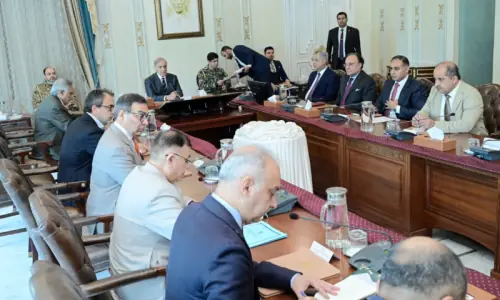
What will be eventually called the first or opening round of this dialogue was preceded by the agreement between President Musharraf and Prime Minister Vajpayee in Islamabad on January 6, 2004. The Indian foreign secretary Shashank referred, on his arrival in Islamabad, to the "comprehensive" document prepared by them on the basis of the agreement reached by the two leaders. The credit for the success of the first round is also being given to the political will and thrust of the leadership that led the participants to agree to a "roadmap" of negotiations to follow.
The main components of the roadmap are a meeting between the foreign secretaries in May or June this year to take up the issues of peace and security, including CBMs and Jammu and Kashmir. These are the two top issues in the agreed agenda.
The talks on the remaining six items, covering Siachen, Wular Barrage/ Tulbul Navigation Project, Sir Creek, terrorism and drug-trafficking, economic and commercial cooperation, and promotion of friendly exchanges would be taken up at the technical level in July.
The heads of the border security forces would meet in April, while nuclear CBMs will be taken up at the expert level in May. Bodies dealing with drugs and smuggling would meet in June. A meeting of foreign ministers is planned in August, to be preceded by a meeting of foreign secretaries.
Both foreign secretaries, in briefing the press, were cognizant of the fact that the Islamabad meeting had shown limited results. Mr. Riaz Khokhar urged that this should not breed pessimism. From the very beginning, both sides have stressed the need to proceed cautiously, and step by step, in order to achieve "a peaceful settlement of all bilateral issues, including Jammu and Kashmir, to the satisfaction of both sides".
We can derive satisfaction from the fact that the first round of what will be a prolonged and structured dialogue, has got off to a promising start. The people on both sides of the border are ready for peace, and look to the leadership to demonstrate the vision and statesmanship to lead this region to prosperity and peace.
The writer is a former ambassador of Pakistan.
Bangladesh learning democracy from the undemocratic
Kahlil Gibran once said that he learnt "silence from the talkative, tolerance from the intolerant, and kindness from the unkind". Yet, the poet preferred to remain "ungrateful to these teachers".
Similarly, the people of Bangladesh are learning democracy from political parties like the Bangladesh Nationalist Party (BNP) and the Awami League (AL) by way of the parties' ceaseless autocratic practices. The Bangladeshis, however, are yet to pronounce loudly that they are not grateful to the political parties in question for teaching democracy in such a negative manner.
Democracy is something simply opposite to what these political parties practise, especially in terms of the coercive power that they regularly exercise over the people.
Let us take the example of the ruling BNP's reaction to the extra-judicial killing of a nephew of a deputy minister of Khaleda Zia's government. Sabbir Ahmed Gama, nephew of the Deputy Minister for Land, Ruhul Quddus Talukder Dulu, was killed by a gang of armed assailants in the district of Natore on Feb 7.
The premature death of any person, be it a minister's nephew or an ordinary person, is of course very tragic. The rule of law and democratic principles have the remedy: bringing the perpetrator/s of such crimes to book and ensuring punishment through fair trials in the courts of law. But what did the deputy ministers' men do in the case in point?
A gang of 30 burst into the village concerned at the dead of night on Feb 8 and burnt down the houses of 16 AL adherents to avenge the murder. The next day, on February 9, the BNP youth front, Jatiyatabadi Juba Dal, enforced in the district a dawn-to- dusk shutdown, a political programme that Prime Minister Khaleda Zia finds destructive when enforced by the opposition.
On Feb 10, the BNP men again torched 15 more houses at the village-this time spreading gunpowder before setting thehouses on fire that forced over 200 hungry women and children of some 40 families to spend sleepless nights under the sky for about a week.
The principles of democratic justice do not allow one to be punished for a crime perpetrated by another. But the state minister says otherwise. When his attention was drawn to the hell his men raised in the village in question, Dulu reportedly told journalists on February 10 that it was only a natural reaction to the loss of a life.
Exercising the power of organized muscle over the people is, however, not the BNP's monopoly. Take the example of the last nationwide general strike on February 16, called by opposition AL's youth front Awami Juba League and endorsed, as well as enforced, by the parent organization. The AL enforced a shutdown across the country, the third in five days, to protest against police action on Juba League chairman Jahangir Kabir Nanak.
The idea of strike as a political means of mounting pressure on certain authorities for realizing certain demands, or registering protest against any particular authority, remains politically legitimate as long as callers of strikes allow people to observe them freely, without being coerced by callers. Callers of strikes, however, reserve the right to propagate freely their cause/s to convince people of the necessity of joining them.
But enforcement of a strike by coercive means, which include generating fear among people by explosion of bombs or torching passenger buses, the methods usually resorted to by political parties like BNP and AL, does not allow people to pass judgment for the causes a strike is called for.
Besides, one can spread fear only by infringement of the principles of basic human rights, as the freedom from fear is the essence of the whole philosophy of human rights.
The AL's February 16 strike, like many others enforced by the party and its power contender BNP in the past by means of generating fear among citizens, was therefore illegitimate, in the first place. In addition, the party disrupted the country's social, cultural and economic activities for the silliest cause the nation has ever been forced to swallow: police action against its youth front's chairman.
The physicians attending the Juba League leader in the city's Shamarita Hospital reportedly told the press on February 15, the day before the strike was enforced for him, that 'he is suffering from chest and back pain. "It could be due to muscle pain following blunt trauma," a doctor said in the evening. "His condition is not so serious."
Nanak's 'not so serious' condition after the police action raises the serious question of the 'politically organized muscle' the entire people are now hostage to. Had there been no organized muscle of the Juba League or Awami League behind him, there would have been no strike imposed on the people for such a silly cause.
The same is the case with the February 10 strike in Natore, enforced by Dulu's relatives. Had there been no Juba Dal or BNP behind him, there would have been no such 'punishment' imposed on the villagers concerned.
The year of Mirza Dabeer
The supreme sacrifice of Hazrat Imam Hussain along with close members of his family and his devoted followers in Karbala shall always be remembered in history and is solemnised year after year with the utmost reverence.
The recital of elegiac poetry - marsias based on that great historical event - during the days of Muharram in majalis immediately brings to mind the name of Mir Anis, that unrivalled elegist. But Syed Taqi Abedi, master collector and researcher of marsias, expressed a different view in a seminar held in Karachi recently. He thought Mirza Dabeer, supposedly Anis's archrival, had qualities lacking in the latter's poetry.
Comparison between the two in literary circles is not new. It began perhaps with the publication of 'Mawazna-i-Anis-o-Dabeer' around a century back. Leaving aside the issue for a while, let me recall that there was another side of the Mawazna.
Mir Anis was born in the year 1802 and died 72 years later in 1874. Mirza Dabeer was born in 1803, a year later than Anis, and died in 1875, also at the age of 72. This chronological closeness is amazing.
To return to the comparison theme, two masters had much respect for each other. With their literary and cultural sophistications, they were never disrespectful to one another.
But the Lucknow of those years - a seat of culture but with an ornate lifestyle and mannerisms - had its meaner side also. As some persons began to admire Anis, others went to support Dabeer.
Soon, two rival groups emerged. The masters did not like the development but supporters on either side wanted the controversy to continue, taking much perverse pleasure in deriding and ridiculing each other's hero.
Syed Taqi Abedi was in Karachi last week with his latest publication on Mirza Dabeer, a collection of the poet's salaams and rubaiyats. While speaking on the elegies of Sultan Sahb Fareed - belonging to the family of Anis - Syed Abedi described how the conduct of jealous persons led Sultan Sahb to stop writing and much of his work of those arid years was lost.
Also at the seminar was Dr Hilal Naqvi, a young marsia-go, who had published and launched a bicentennial volume on Mir Anis in December 2002. I asked him if he had compiled a similar volume on Dabeer. He was pleased to say that a hefty volume spread over 1,200 pages was already under print, containing some rare finds and essays by erudite writers.
Karachi is a major centre of marsia writers, with a crop of budding poets who test their skills during Muharram. It was Syed Aley Raza in Karachi who deviated from the established form of marsia - the musaddus - and introduced innovations.
Josh Malihabadi followed the musaddus but did not abide by the tradition in its inner form. The description of the battleground of Karbala, the rattling of swords, the rising clouds of dust and the thunder of galloping horses were no more there.
Those were replaced with a revolutionary message of another kind, supporting the freedom struggle in the subcontinent and seeking a just and dignified future for humanity at large. Josh urged the people to fight for their rights like Imam Hussain and his valiant followers.
This was perhaps the origin of the mauzuati marsia - marsia based on a mauzoo (topic) - and linking it to the tragedy of Karbala. This modern form of marsia is popular with today's poets.
Marsia has for long been kept away from the pale of mainstream poetry, brushed aside as "religious poetry". But all major classic poets from Dante to Milton to Kalidas and many others composed religious poetry, Dr Taqi Abedi asserted in his discourse at the seminar. To be religious does not deny poetry of its artistic attributes - a view that was supported by Dr Farman Fatehpuri.
A Muharram related seminar was also held at the Pakistan Arts Council last Saturday, hosted by Baithak, a cultural body. The speakers included Waris Raza, Dr Shakeel Auj, Allama Zuhair Abedi and Ali Murtaza Zaidi. The compere was Prof Naheed Abrar, and Mohammad Raza Kazemi wound up the deliberations.
Mr Zaidi thought that the event of the martyrdom at Karbala should be studied in the light of modern science. Mr Shakeel Auj felt Imam Hussain's struggle was against 'yazeediat', and not any person. Mr Raza presented a paper and Naqqash Kazmi a poetic tribute to Imam Hussain.
* * * * *
Two poetry collections have been launched in recent days, both from women writers staying abroad. Ms Farzana Nainaan had come from Nottingham (England) with her maiden poetry collection, Dard ki Neeli Ragain. The other, Jazaul Ehsan Jaza, has been living in Nairobi (Kenya) for almost two decades.
Jaza is a senior poet, and yet Soch Kinarey is her first published poetry collection. Inspired by Faiz Ahmad Faiz, her roots are also in Sialkot. There were flashes of Faiz and also of Parveen Shakir at one or two places in her poetry, but Jaza has developed a style of her own.
How did these writers feel having delinked themselves from their homeland? Although both the writers gave the impression that they were well placed in their new abodes, the feeling of having been uprooted was there, as well as a sense of nostalgia.
Prof Shahida Hasan, a poet and critic, said at the two functions that writing creatively in a foreign land was difficult. Quoting her own experience while staying in the US last year, she said: "You never know what is going on in your own country at the social level, and about contemporary literary trends, the issues being debated and who is writing what and so many other things. You don't find new publications, and the journals you receive are mostly stale."
Nostalgia, some one mused, was the staple diet of most foreign-based waiters, but old memories do not last long. For such writers it might perhaps be better if they took an interest in the environs in which they were living. Literature, after all, is a reflection of life.