0
0

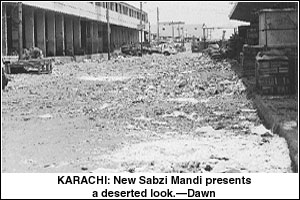 KARACHI, May 10: The shifting of Sabzi Mandi (Wholesale vegetable & fruit market) from University Road to the Super Highway 22km away from the main city has dashed the buyers’ hopes as higher transportation cost has offset the benefits of lower wholesales prices.
An estimated increase of over 200 per cent in transportation cost has almost offset the relief to the common man who is bound to pay phenomenal prices for greens and fruits.
A Suzuki Van charges Rs 400-500 as haulage for transporting vegetables and fruits to any city-destination as compared to Rs 100-150 two years back when Sabzi Mandi was situated at the University Road.
Similarly Mazda truck owners are now charging Rs 1,500-1,600 to transport commodities within the city as compared to Rs 500-800 they used to charge two years back when the market was at its old place.
The shifting of Sabzi Mandi has also created a big disparity in retail prices as vegetable dealers, doing business in posh areas, demand Rs2 to Rs3 per kg more because they have to pay a higher haulage than the dealers based in the middle income group areas.
That is why if the wholesale price of onion ranges between Rs 2-3 per kg it is retailed at the rate of Rs 4-5 per kg in the areas like Nazimabad, F.B. Area, North Nazimabad, Karimabad etc. But in posh areas like Defence and Clifton the retailers charge Rs6-7 per kg. When the Sabzi Mandi was situated at the University Road, there was hardly such big variations in prices as retailers had no excuse for demanding higher prices on the pretext of higher transportation cost. The situation has changed now.
“Higher transportation cost is the main reason of rising prices of essential commodities besides it has also created a marked disparity in rates from areas to areas,” Chairman Falahi Anjuman Wholesale Vegetable Market, New Sabzi Mandi, Haji Shahjehan told Dawn.
Regardless of the prevailing diesel rates, transporters have kept their rates unchanged.
The shifting of the wholesale market has so far provided only one benefit to the mega city of over one million population. It has lessened movement of heavy traffic on the University Road as heavy trucks, carrying fruits and vegetables from the interior of Sindh as well as from other provinces directly reach the new Sabzi Mandi. An estimated 1,000-1,500 trucks, each loaded with at least 30 tons of commodities come daily to new Sabzi Mandi.
On the other hand, the main sufferers of the Sabzi Mandi shifting, are the regular buyers who used to buy greens and fruits in bulk quantities for weekly consumption. Besides, the old Mandi also used to witness the hustle and bustle of hundreds of buyers daily till late night.
“The irony is that the new Sabzi Mandi has lost the old buyers,” Shahjehan said adding that currently the new wholesale market only witnesses the presence of buying and selling agents, wholesalers, retailers, encroachers etc upto 10-11 a.m. and then it portrays a deserted look.
Buyers have to think twice before going to new Sabzi Mandi as their cars and other vehicles consume a lot of fuel oil not worth less than Rs 120-150. So, many consumers give up the idea of visiting new Sabzi Mandi.
Many market people observe that it was the right decision of the government to shift the Sabzi Mandi to a remote destination as it was causing traffic jams at the University Road besides polluting the environment of the adjacent areas.
They think that there must be two to three Sabzi Mandi situated in the outskirts of the city to cope up with the requirement of over a million people.
The old Sabzi Mundi was basically set up for the wholesalers, agents etc at the University Road on 17 acres of land. But with the passage of time retail business started here because of its ideal location.
The new Sabzi Mandi, despite having been set up on 100 acres, is only catering to the wholesalers instead of the end-consumers who feel inconvenient in frequenting this place.