0
0

ANKARA, March 1: The Turkish parliament on Saturday voted against allowing US forces to deploy on its soil as Arab leaders “completely rejected” any strike on Iraq.
The Turkish parliament, facing widespread opposition to a US-led invasion of Iraq, voted narrowly against a US request to deploy 62,000 US soldiers in southern Turkey.
The Turkish rejection of the US troop deployment followed days of foot-dragging that had exasperated US military planners.
Turkey, bitter over uncompensated trade losses in the wake of the 1991 war, has been seeking multi-billion-dollar aid to offset the damage a new conflict might inflict on its ailing economy.
Washington has offered Ankara a grant of six billion dollars, part of which could be used to obtain commercial loans of up to 30 billion dollars.
Turkey is also seeking a pledge that the Kurds in northern Iraq — beyond President Saddam’s control since 1991 — will not be allowed to break away from Baghdad, a prospect that could encourage separatism among its own Kurds.
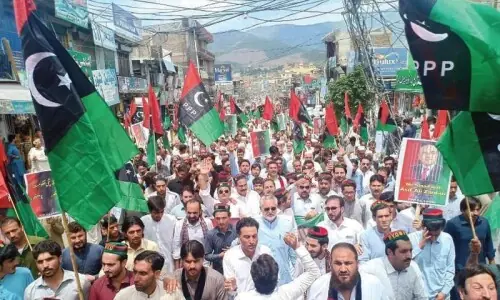
Saturday’s stormy debate was held mostly behind closed doors as some 50,000 people demonstrated across town in the largest anti-war demonstration in Turkey during the current crisis.
IRAQI OPPOSITION: Key talks between a US envoy and Iraqi opposition groups seeking to stake a claim to the leadership of a post-Saddam Iraq, ended in an acrimonious dispute on Saturday.
The showdown at Salahaddin, a town in Kurdish-majority northern Iraq, was over US plans to install a military government, control the country’s oil fields and allow in Turkish troops, the officials said.
Topping the list of arguments between many of the delegates and US President George Bush’s envoy, Zalmay Khalilzad, was a US plan to place an American commander in charge of Iraq for an interim period.
“We told him that if America thinks it was treated badly in Somalia, how does it think it will be treated in Iraq? After all these years of suffering, why should we live under foreign occupation?” said Warith al-Kindi, a spokesman for a major faction.
US President George Bush said in his weekly national radio address on Saturday: “The United States has no intention of determining the precise form of Iraq’s new government. That choice belongs to the Iraqi people. Yet we will ensure that one brutal dictator is not replaced by another.”
“All Iraqis must have a voice in the new government, and all citizens must have their rights protected,” he said.
PUTIN IN BULGARIA: In another development on Saturday, Russian President Vladimir Putin arrived in Bulgaria, a non-permanent member of the UN Security Council, which has moved into the “undecided” column amid debate on the new US-backed Security Council resolution.
A resolution needs nine votes to pass while avoiding a veto by any of the five permanent members — mooted when Russian Foreign Minister Ivan Ivanov said on Friday that Moscow would wield its veto power “where world peace and stability is at stake”.
The resolution, sponsored by the United States, Britain and Spain, has so far found scant support in the 15-member council, with Pakistan, Bulgaria, Angola, Cameroon, Chile, Guinea and Mexico sitting on the fence. —AFP