0
0

ISLAMABAD Feb 27: The United Nations High Commissioner for Human Rights (UNHCHR), Sergio Vieria de Mello, has emphasized that the best way of resolving territorial dispute is through negotiations.
Mr de Mello is on a brief visit here to open an Asia-Pacific workshop on regional cooperation for promotion and protection of human rights.
He was speaking at a press conference about the human rights commission’s response to the widely reported “brutalities of Indian military army”. He reiterated that as the UN had also affirmed, human rights should be respected in any fight over such disputes.
The UN high commissioner said he came from Brazil which through history had learnt that the “best way to resolve a dispute is through negotiations and in any fighting or terror, human rights should be respected”. However, he said, if there was any interference from this side of the line of control (Jammu and Kashmir), it must cease.
He said he had conveyed his views to the Indian government as well concerning the so-called anti-terror law, POTA. He said he had told the Indian government that preventing terrorism must not entail any violation of human rights.
Responding to another question, the UN human rights high commissioner, while dealing with the need to adopt tolerance, said he had stressed in his talks with university students here that in a world that lived in fear, in anxiety and in uncertainty about its future, tolerance was an essential component of the international relations system.
He recalled that soon after assuming his office long before he came to Pakistan he had stated that he was extremely concerned about new forms of religious intolerance, new forms of racists, and political intolerance under the pretext of anti-terrorist actions.
He said he also regretted that we now find a new trend of vilifying Islam, of stereotyping Islam, of targeting individuals because they had a “certain passport or because they had a particular face”.
It was extremely dangerous, he stressed, because it would breed mistrust and lack of understanding. His office would take all possible initiatives to fight these new ugly forms of intolerance, he assured, and said he had offered available expertise to the government of Pakistan in fighting against intolerance.
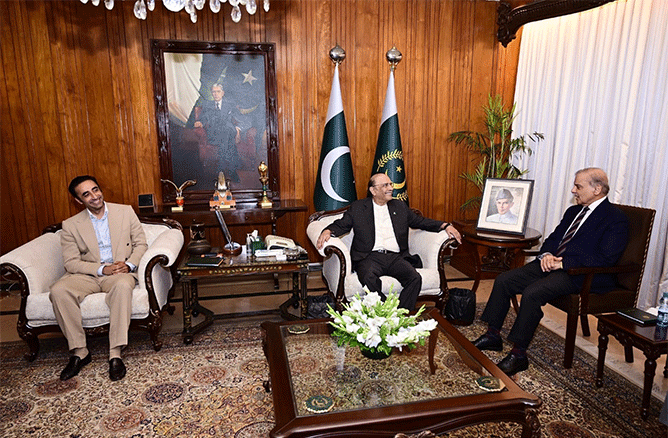
Sergio de Mello, who met the acting president and the prime minister during his visit, said he had expressed to them his concern about certain discriminatory legislations in Pakistan and informed them of his preoccupation with ‘some key issues and laws which discriminated’ against women. He proposed that they needed to be looked at again and accordingly revised.
He said he recognized that reforming laws required long-term efforts in terms of education in order to change attitudes. But, a change in prosecution of these crimes, he emphasized, was a key requirement and observed that he received the assurance that that was the policy of the government at the federal and provincial levels. He said he was also informed that efforts to reform police and prosecution in this respect and to make them more sensitive to human rights were also underway.