0
0

KARACHI, Dec 31: Local industrialists and businessmen are optimistic about the improvement in business environment and expansion, sales, earnings and market share in the year 2003.
They say that the economic performance in the last three years, specially the macroeconomic stability, has provided good prospects to the new civilian government to further improve the economic indicators of the country.
However, executives of multi-nationals, despite foreseeing good hopes in 2003 relating to stability in sales, earnings and market share, offer some reservations on various issues.
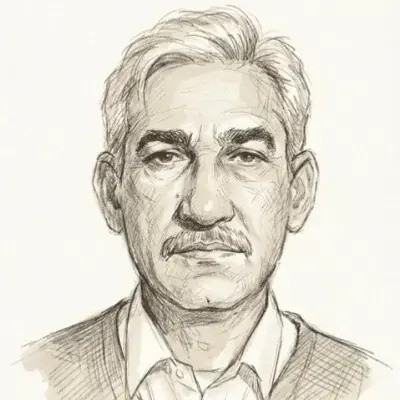
President Karachi Chamber of Commerce and Industry (KCCI), Shaukat Iqbal says, “he is cautiously optimistic about improvement of business prospects in 2003.”
Pakistan has achieved macroeconomic stability and optimal growth in GDP, export and production. “It means that since we are at a low level of economic equilibrium, we have only to go up and prospects are bright provided we maintain political stability, ensure law and order situation and implement the economic reforms and policies in letter and spirit.”
On prospects of business expansion, the KCCI chief says that there is every likelihood that business houses will not only expand business but will also go for balancing, modernization and renovation (BMR) in 2003.
He says that in 2003 textile exporters will be able to gain more market access particularly in the European Union states due to cut in duties by the EU and greater market access accorded by the US.
He was of the view that once the economy starts moving upward, sales, production and share of local industries will improve. However, there will be several industries, which will be swept away by the competition in 2003. Industrialists should now have to increase their labour and capital production through better techniques to make their mark in the highly competitive scenario.
Shaukat says that the military government has failed in some areas which the new government has to tackle. He says that the military government has failed to restore warranted level of business confidence. The cost of doing business is very high due to higher tariff rates of utilities, POL products, telecom tariffs, multiplicity of agencies and delay in sales tax and duty draw backs.
The most important impediment in industrial growth and exports, in order to generate employment, is the inadequacy of physical and human infrastructure and law and order situation, the KCCI chief said adding that the government can do well by investing in public works/ infrastructural developments and involve private sector.
Former president, Federation of Pakistan Chambers of Commerce and Industry (FPCCI), S.M. Munir that business prospects are bright in 2003 as the macroeconomic stability has provided a backup support to the Jamali government to bring the economy at a take- off stage.
Lowering of fiscal deficit, arrival of huge home remittances, rising forex reserves, increasing revenues and exports earnings in the last three years will definitely have a good impact on the economy in 2003, he says.
“Return of democracy will also encourage industrialists to expand their business and undertake BMR,” Munir says adding people are heavily making their investments in stock markets and real estate that is why scrips of various companies and property prices are shooting up.
“I think the confidence of local investors have restored now as people in various areas of the country are setting up various projects particularly in weaving and denim sectors besides heavily investing in BMR in textile sector. It will help to some extent overcome unemployment situation as it will open more job avenues,” he says.
He urged the political government to frame such policies which can tackle the rising unemployment situation in the 2003 and try to come with a package which could improve the economic health of the poor people.
On export front, he said that exporters would face no problem in the European markets in 2003. However, they are facing problems in the US markets and the government should try to resolve the problems of exporters.
Vice-President, Engro Chemicals Pakistan Limited (ECPL), Parvez Ghias says, “I see growth in corporate earnings in 2003 due to the recent performance of the economy which has gained a good measure of overall macro-economic stability.”
Budget deficit has fallen and inflation rate is below five per cent. Public expenditure on development has begun to rise as a percentage of GDP, remittances from abroad and exports appear to be growing, current account deficit is down, the rupee has strengthened, interest rates are continuing to fall and debt reduction strategy is ahead of schedule, he adds. All these factors together with increased aid disbursement and substantial debt reduction received after 9/11 have resulted in improvement in the credit-worthiness and all contributing to good future prospects, he says.
“I see stability in earnings, sales and market share in our urea business during 2003,” Engro’s vice president says adding that margins are expected to remain under pressure on account of sizable product inventories and higher cost of feed gas. Engro’s urea market share up to September 2002 was 20 per cent as compared to 19 per cent for the same period of last year.
Ghias says that company has no plans for urea capacity expansions or balancing, modernization and renovation (BMR) during 2003 as indigenous production is expected to exceed demand for next few years. In 2002, the company undertook plant reliability and energy conservation projects that has enabled us to become more energy efficient.
On improvement in business environment in 2003, he says the reinstatement of democracy is a welcome development. It should have a positive impact if the new government is able to effectively perform and manage the debt dynamics, investment and job creation, social and development spending. He hopes that given the stakes involved, all political players — both the government and the opposition — will be more responsible than in the past.
On future investment plans, Ghias says that the Fertilizer Policy announced by the government in 2001 is not conducive to investment in new expansions and the policy even as announced has not been fully implemented. As a result of this, the Company is, however, looking at investing abroad and has signed a memorandum of understanding (MoU) with Oman Oil Company for setting up a fertilizer complex in Oman so that excess demand of urea could be met from there.
On changes in economic policies, he says that the previous government has done well to bring macroeconomic stability to the country. It is essential that the new government builds on the gains achieved and continues to take business leaders in confidence in framing new policies to bring fixed capital investment and boost exports.
From January to September 2002, Engro earned net income of Rs854 million as compared to Rs706.6 million in the same period of 2001. Revenue stood at Rs6.6 billion in Jan-Sept 2002 as compared to Rs4.8 billion.
Chairman and Chief Executive, Shell Pakistan Limited (SPL), Farooq Rahmatullah says that with deregulation of fuel oil and recently high speed diesel (HSD), the market has opened up to imports of these products, which in itself shows an accelerated market activity.
“We hope to further increase our market share in 2003,” he says that his company is responding positively to the challenges presented by a deregulated environment. Profits are mainly dependent upon international oil prices and the fixed margins on oil products. Shell is the market leader of motor gasoline and it has imported four vessels of HSD in 2002 after deregulation from September 2002.
On investment and business expansion plans, he says the company is increasing its nationwide presence by investing in another 22 fuel stations besides making infrastructure investment to bring at par with global standard.
Shell is the second largest investor in White Oil Pipeline Project (WOPP). In 2002, the company extended 60 per cent of its shares in the pipeline. The project will be completed by the end of 2003. Shell opened more CNG sites in 2002, taking the number to 44.
To a query whether business environment will improve in 2003, Shell chief says actually other countries in the region (currently undergoing deregulation) are looking towards Pakistan to provide them a model for the process. It is hoped that the forward policies of the President’s economic agenda would be continued by the new government. He says that business activities have increased despite September 11 tragedy and the tense border situation.
Farooq Rehmatullah said that Pakistan’s business environment has many outdated and cumbersome procedures — federal as well as provincial — that impede business investment growth. In this context, he adds, what is particularly needed is the condition in the implementation agreement between the government and the independent power plants which are constrained to buy fuel oil from only state owned entity. This in a way nullifies the spirit of deregulation and the customer continues to be deprived of price benefits, which may arise due to competition.