



 0
0

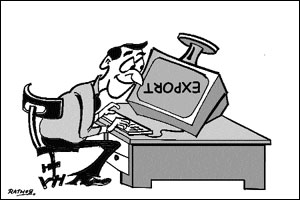 During the last 50 years, our emphasis has been on agriculture, simple manufactures, packaging and assemblies rather than on high-tech value-added production and export. In the early years after Independence, there was some justification for this policy, but after some time it should have been changed.
In today’s globalization of the economy, the country’s economic policy should be export-oriented. While with low productivity, high interest rates, poor transport system, less emphasis on skilled labour and a host of other factors, we have not adopted the proper approach of efficiency and reduction in input costs, with the result that we have been facing trade deficit for a very long time and have not been able to achieve export targets in many areas.
Some efforts in the direction of information technology and reduction in interest rates, etc., have recently been made, but the need of the hour is an overall revision of the economic and financial policy by the government and the private sector to meet the global challenge.
After the separation of the former East Pakistan, the rupee was drastically devalued from Rs4.76 to a dollar to Rs11.00, raising the prices of all commodities.As a result, industrialization suffered a major setback as the country was not only dependent on the import of machinery and a large number of input items but had to bear higher labour, fuel and transport charges. All cost and income benefit calculations had to be redone.
Nationalization of industry after the separation of the former East Pakistan, without planning for managerial skill to run those efficiently, was a major error. One example will illustrate the point. Banks serve as the backbone of the economy. Before nationalization, these were performing an excellent job, there were fewer defaults and the banks were showing profit.After nationalization the condition of the banks became miserable. Despite huge financial assistance by the government, golden handshakes, (which regrettably were not always done honestly and many honest and capable managers and others were forcibly retired), nationalized banks are running at a loss and high interest rates and service charges are recovered from honest parties to cover the loss from the defaulters.
The efforts now being made by the Ministry of Science and Technology in various directions, particularly in the field of information technology and e-commerce are laudable. Information technology has wide application and the developed countries are utilizing it profitably in many directions. Through electronic transactions and payments, trade becomes much easier, fast and convenient.
A very interesting initiative, which is likely to have a far reaching impact on economic development of the country, is a programme entitled science and technology for economic development (STED) under which joint projects are being initiated between public and private sector for technology based production of high value-added goods. Sustained efforts with the utilization of modern tools are needed in the country in the public and private sector and such collaboration should be extended to other areas.
Coming to industry, one major problem in the country with regard to production of goods has been that industrialists plan production without first doing market research to determine the demand, quality and price of one or more competing products in the market. Even in a closed market, the product may or may not sell but in the international market it is very difficult, if not impossible, to compete if the product is not upto the mark,qulity-wise and price-wise and aggressive marketing strategy is not adopted.
Sometimes, a better quality product captures the market, though its price may be higher, while in other situations, with lower price one may be able to sell a product in large quantity. It depends on appropriate marketing strategy in the international market. At one time Japan successfully adopted the policy of lower price to catch the world market, though at that time its products were inferior in quality to the relevant competing international product. Even today, some countries adopt this approach in the international market.
In yet another case, a product may sell in greater quantity, depending on the purchasing power of a large number of consumers. Second-hand PCs being purchased on a large scale at cheaper price in the country are an example.
OUR ADVANTAGE: Let us analyze the advantages that we have in the international market:
I.The Mid-East and Asian markets are closer to us than to many other far off countries. Reduced transport charges and easier personal contacts should be taken advantage of.
2. Our labour costs are cheap, enabling us to produce at cheaper cost per unit. In this respect let me explain a personal experience. I wanted to buy a watch in Switzerland.. Considering duty-free availability at Geneva airport, I tried to buy one there.
To my surprise, it was more expensive than the same model at Geneva city. On my enquiry for the reason, the sales girl told me that it was genuinely made in Switzerland while the one being sold in the city had been manufactured in Hong Kong at low cost. On my further enquiry how the city watch was said to be ‘made in Switzerland’, she said that it was manufactured under license, and strict quality standards were being followed, so it was referred as ‘made in Switzerland’. Through arrangement with some manufacturers, we can likewise utilize our services with cheaper labour, but will have to train the labour to be skilled.
A safe international market over a period and the transfer of technology through this arrangement would be of great benefit to the country. Such contacts also lead to a number of other long-term associations and the image of the country being able to produce high quality goods is enhanced.
3. Our cost per unit in terms of foreign currencies is much less. By relying more on local raw materials and machinery, the cost per unit can be reduced further.
DISADVANTAGE: Apart from quota and non-quota restrictions imposed by some industrialized countries on our products, due attention has not been paid by us towards standardization of our products. In international market, this is a must.
Our performance in market research and marketing has also been a major factor in limiting our exports. This is being emphasized to stress that while planning export, we should pay greater attention to standardization, market research and marketing.
Over a long period, a large number of cases have been reported that exporters have supplied poor quality goods. But neither our embassies in the countries concerned nor the government of Pakistan has taken any action against the parties concerned. This has a very bad overall effect as the news spreads and other importers avoid importing from our country. Unless severe action is taken promptly against such practices, not much can be achieved in the export sector.
Our experience with large industries has not been very successful in the past due to lack of managerial skill and bureaucratic interference. We should better set up medium or small size industries, specializing in particular products. A number of countries are adopting this technique and it should be thoroughly studied and applied, with suitable modifications where required.
ON-JOB TRAINING: On-job training on a large scale is essential to produce skilled manpower not only for licensed production and transfer of technology, but for all products. This is one very important area which has not been given due attention in the past. Private sector should be encouraged to train skilled manpower in each industry on a large scale.
Modern management techniques and Information Technology have to be utilized for better quality. Cost-effective production, with reduced interest rates and efficiency in other sectors is essential, without which we may be unable to achieve our export target.
Joint venture is another way to enter the market of another country, as the other party of the joint venture is likely to be interested in increased trade in its own country. With joint venture,foreign exchange would also be easily available.
WEB SITE: In today’s world, a good web site is a must. Through it information about the product, its quality, price, availability, etc. can be viewed anywhere in the world. Every industry and an exporting organization should have its own web site. Care should be taken that it should not be a copy of another similar web site. The web site should be frequently updated.
E-COMMERCE: It is a step in the right direction that the government has introduced e-commerce and is trying to regulate it. Through electronic transactions and payments trade becomes much easier, fast and convenient. However, strict control on quality and honesty in financial transactions is essential to make E-commerce a success.
International exhibitions are a great help in the export of a product. Regular participation in country-specific or international exhibitions should be arranged more frequently. However, only genuine businessmen or industrialists should be sent to such exhibitions.
Briefly, the world is wide open and chances of exports from the country are there but we have to improve and make the best use of our advantages over others. Simultaneously, we should try to overcome the disadvantages like inefficiency, high interest rates, higher input costs and bureaucratic delays and interference.
With proper planning, competitive quality, reduced cost, market research and aggressive marketing, we can not only achieve the export target but exceed it, getting out of the debt trap.




























