0
0

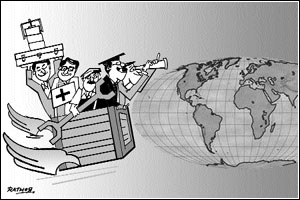 “The true test of civilization is not census, or the size of cities, nor the crops... but the kind of person the country turns out.” Ralph W. Emerson.
Pakistan has a large pool of skilled manpower.It is cost-wise cheaper, considerably efficient and reliable, and can easily adapt to different cultures and conditions across the globe. According to recent estimates, there are about 3.678 million overseas Pakistanis the world over, many of whom occupy senior positions with the public and private sectors in the host countries.
Amongst them, majority is of emigrants registered under the Emigration Ordinance, 1979. Overseas employment promoting agencies have provided, during the years 1971 to 2002 (April), overseas employment to 4.508 million Pakistanis. Out of these, it is estimated, about 2.500 million emigrants are still working abroad. The annual remittances of the emigrants, a significant component of the economy of Pakistan, remained in the range of one to two billion dollars through formal channels,
So far, the government issued over 2,000 licenses to the individuals, groups and companies engaged in the business. Currently, there are only 868 overseas employment promoters (OEPs), mostly in the province of Punjab. The OEPs in private sector, though large in number, could not develop corporate culture during these years due to lack of capital and human resources at their disposal. These enterprises are not managed by qualified professionals and do not have requisite in-house facilities. The ex-servicemen welfare organizations are an exception, which have both, the necessary resources and the expertise for the processing and selection of Pakistani manpower for overseas jobs.The Fauji Foundation is the most significant OEP. Since 1978, the Fauji Foundation has provided overseas employment to 5,745 persons. In all, province-wise, Punjab enjoys 50 per cent share in the total export of manpower through the OEPs, followed by the NWFP (25 per cent) and Sindh (11 per cent).
Generally, the OEPs in private sector do not enjoy credibility and reputation as there have been numerous cases of corruption, malpractices and irregularities such as contract substitution, providing substandard manpower to foreign clients, and alike. The exploitation of candidates is common, which are heavily over-charged. Then, a few unscrupulous recruiting agents are involved in sending Pakistanis on fake travel documents, to the extent of being engaged in the smuggling of human beings. Despite the governmental checks, the situation persists since the seventies, rather has aggravated; these agents having meanwhile adopted modern methods and techniques. The gravity of the situation can be measured from the fact that the licenses of as many as 15 OEPs were cancelled, during January 2000-March 2002 only on account of malpractices. A few of the OEPs even prefer to recruit manpower from Bangladesh, Sri Lanka or Nepal, if available cheaper in a particular category, in comparison to Pakistan.
Due to the irregularities and malpractices committed in the sub-sector in the seventies, which tarnished the image of the nation and the state, the government decided to bring about control in the business of overseas employment. Thus, Overseas Employment Corporation (OEC) came into existence in 1976, under the Ministry of Labour, Manpower and Overseas Pakistanis. The early 1980s were the best for OEC as it arranged overseas jobs, annually, for as many as 10,000 to 14,000 Pakistanis. Since then, the performance of the corporation remained marked by ascents and descents, sending job-seekers abroad in the range of 2,000 to 8,000 persons a year. So far, it has provided jobs to over 123,000 persons - from illiterate labourers to highly qualified professionals - all over the world.
It is the primary responsibility of the government to check the high rate of prevalent unemployment and underemployment in the country, and to provide opportunities for additional jobs exploring new avenues. Overseas employment is the major source of absorbing Pakistani workforce, and it has the promising potential to grow. The present government has recently taken various measures. These include restructuring of institutional infrastructure on modern lines, improving labour market information system to develop inventory of national manpower, undertaking international market studies to identify potential markets and strengthening the role of the community welfare attaches’ stationed abroad. These are yet to be translated into action plans. Still, a lot more can be done towards promoting overseas employment, particularly in achieving the ambitious target of providing overseas jobs to 100,000 persons annually set by the government recently.
Middle East, or the Arab Gulf Cooperation Council countries are the major markets for Pakistani manpower, where about 96 per cent of the emigrants were provided jobs. Though declining in recent years, Pakistan still has significant share in the total migrant workforce in the UAE (30 per cent), Saudi Arabia (17 per cent), Qatar (18 per cent) and Kuwait (9 per cent). These states, despite current adverse policy measures, continue to offer good prospects to Pakistani professionals. Saudi Arabia and the UAE have already relaxed the visa conditions for Pakistanis imposed earlier in the wake of September 11 events, and job demands from these countries are currently under process.
Middle East will remain the prime market for Pakistani manpower. The demand for unskilled and semi-skilled labour is though saturated there. The current and future requirements are those of skilled or technical persons and professionals. These are needed in the fields of agriculture, construction, maintenance, engineering, cement, fertiliser and steel industries, oil refining, telecommunication, tourism, electronic media, seaports, airports, highways, utilities and other infrastructure projects. Employment opportunities also exist in the professions of accounting, banking, information technology, economics, water resource management, teaching, medicine and nursing.
Pakistan has to adopt a dynamic strategy, with focus on consolidating - and then developing further - its Middle East market, by way of matching the required job demands with the suitable persons who are to be trained and groomed specifically for this market. Skilled manpower is a field in which Pakistan should have developed an edge by now. Our technical institutes and universities turn out skilled persons by the thousands annually and these are the workers Pakistan should concentrate on. Fortunately, the academic standard of professional institutes here is fairly high.
This needs to be backed up with value adding features like knowledge of Arabic, English, French and other languages, familiarity with domestic conditions, discipline, teamwork and a work-oriented approach instilled in the emigrants. Similarly, Pakistani professionals are of considerable quality, and are qualified to help strengthen the development base of the host countries. They however need to observe international standards and respective country’s social and legal framework.
The business of manpower export, especially in today’s world economy, should know no bounds, as the world is headed towards development of all strata of economic well-being. The potential new markets - that is other than the Middle East - include any and all friendly countries having a future outlook on their development. The countries such as Libya, Yemen and Brunei Darussalam are satisfied with the hard work and adaptability of the Pakistani worker, and may prefer to employ them for various development projects in oil and non-oil sectors. Surplus manpower, mainly teachers, professionals and hi-tech personnel can gainfully be employed in Malaysia, Nigeria, Syria, Morocco, Uganda, Kenya, Sudan, etc. Again, Germany, the USA and the UK require a considerable number of foreign workers in the fields of IT, engineering, teaching and medical. Pakistan can mobilise its resources to seek a reasonable share in these markets. This requires strategic marketing based on a thorough analysis of the economic and political situation in these countries, as well as identifying and creating a niche for Pakistani manpower. The dynamics of the employment business in present times revolve, not so much around the demand, but on the competition between suppliers. We face fierce competition from other developing countries in the region. Pakistani manpower has to develop a competitive edge, identifying the categories in which the nation is better placed in comparison to India, Bangladesh, Sri Lanka, etc. In order to compete with these countries we may target and develop new and upcoming categories and occupations required by the overseas markets, such as, printing and packaging, aircraft maintenance, cargo warehousing, jewellry making, plantation management, hotel and tourism, etc.
There is a need for effective enforcement of Pakistan emigration law and rules. Also, amendments in the existing rules can be made with the objective to minimize malpractices and to develop corporate culture in the business. For example, the procedure for grant of license to operate as OEP should be made stringent. Only the enterprises registered under the Companies Ordinance, 1984 be considered for grant/renewal of licenses, or otherwise comprehensive documentation of the company and its sponsors be collected, and their performance strictly monitored. Performance parameters for the OEPs should be defined, with benchmarks, and other aspects closely monitored, including periodic performance audit.
It is time for the government to consider reformulation of the emigration policy in view of the current demographic, political, economic and technological developments in Pakistan as well as in overseas markets.