0
0

9/11: the missed opportunity
THE terrorists who attacked the United States on September 11 were obviously mortal enemies of America. They wanted to do great damage to the country and to the people they had come to hate. In this they were remarkably successful. But their attacks also had an impact they could not have envisioned or intended.
The attacks produced waves of sympathy for America. While “much of it poured from predictable sources, albeit in unfamiliar garb — the Queen ordered the guards at Buckingham Palace to play the ‘Star-Spangled Banner’; NATO members invoked Article V in the name of collective defence, but plenty came too from some unlikely places. When Iranian mullahs, French editorialists and Chinese Communist Party officials rush to express support for America, you know something large has happened to international relations.”
Over the longer term, however, the terrorists’ assaults raised two important questions: what did they wish to accomplish by attacking the World Trade Centre in New York and the Pentagon and what has been the impact of their action in the United States and in the world abroad? As can be expected, there are many views on these two subjects. In the words of author Cynthia Ozick, the fundamental connectedness of events that result from human actions “burst upon Americans with horrific force when we understood, in a flash of fire and ash, the suicidal hijackers’ single-minded motive. Their purpose was merciless, venom.”
The debate on the terrorists’ motives started soon after the attacks and continues to this day, a year after the event that so shook America. There is a full spectrum of views on the subject. On one extreme is the interpretation that absolves America of all responsibility. To quote from Cynthia Ozick once again: the terrorists’ hatred “was not for what we have done or have not done; it was for what we are.” The terrorists, according to this view, were so enraged by American values, its culture and its place in the world today that they were prepared to sacrifice their lives to make their point.
There are a sufficient number of Americans who believe otherwise and think that the terrorists’ attack was provoked in part by the way the United States was conducting its affairs in a highly integrated world. According to a senior editor of an American newspaper, by ignoring a long list of genuine complaints on the part of many people in the world, “and denouncing an enemy that hates us for what we are, not for what we say and do — or they think we do — President Bush has created an all-purpose bad guy whose existence allows him to sidestep any examination of American policy.”
The bad guy image painted of Osama bin Laden was used to provide cover for some erosion of civil liberties ordered by the Bush administration. These included the attachment of “enemy combatant” status to some American citizens which took away from them the right to engage legal help or to examine the evidence presented against them. It also included ordering the deportation of hundreds of illegal immigrants without due legal process.
On September 5 and 6, the United States hosted a high level conference on anti-Americanism. This “was an unusual step indicating the depth of American concern about the increasingly globalized phenomenon,” wrote the novelist, Salman Rushdie, in an article contributed to The Washington Post. Rushdie reminded his readers of what Britain’s Guardian newspaper had described the American personality — “a type of personality which is intense, humourless, partial to psychobabble and utterly convinced of its own importance.”
But our concern in interpreting the broader meaning of 9/11 is not only to understand what Americans think were the motives behind the attacks by the terrorists. Even more important is the way America actually responded to those attacks. If 9/11 really changed America and with it the world, the change came from the reaction to that event.
The United States’ initial response to the terrorist attacks was understood with compassion around the globe. There was also broad support for the war against global terrorism declared by President George W. Bush soon after the attack. The president, in his address to the United States Congress on September 20, captured the nation’s — and perhaps also the world’s — sentiments in well chosen words. “In the sacrifice of soldiers, the fierce brotherhood of firefighters and generosity of ordinary citizens we have glimpsed what a new culture of responsibility could look like. We want to be a nation that serves goals larger than self. We’ve been offered a unique opportunity, and we must not let that moment past.”
But America under the stewardship of the Bush administration allowed that moment to pass. As The New York Times put it in an editorial that appeared on September 8, 2002, three days before the observance of the first anniversary of the tragedy: “Most of us had expected the country to be a different place by now and the fact that it is not can be attributed largely (though by no means exclusively) to Mr. Bush’s failure to leverage the political and moral capital September 11 provided.”
Several other people asked equally searching questions as The New York Times did in its editorial. Dramatist Tony Kushner, the author of a powerful play, ‘Homebody/Kabul’, staged after 9/11, wrote about tragedy’s paradox — any tragedy, not just the one America lived through on September 11, 2001. “Tragedy’s paradox is that it has a creative aspect: new meaning flows to fill the emptiness hollowed out by devastation.” But what were the meanings that rushed into the feeling of emptiness caused by the terrorists’ attacks? Kushner, and others like him, asked many questions.
Are we dedicated to democratic, egalitarian principles applicable to our own people as well as to the people of the world? “Do we understand that ‘our own people’ and ‘the people of the world’ are interdependent? Will we respond with imagination, compassion and courageous intelligence, refusing imperial projects and infinite war. The path we will take is not available for prediction... Urgency is appropriate but not an excuse for stupidity or brutality... We are all engaged in shaping the interpretation, and in the actions, we are all implicated.”
The Bush administration — and to a lesser extent most important segments of the American society — was to interpret 9/11 as a defining moment in the country’s history. To take just one example of the depth of the US response to the terrorists attacks, on September 6, 2002, a date close to the first anniversary of the attacks, the US Congress met at Federal Hall in Wall Street in New York for an hour-long session. This was the first time the US Congress had returned to New York after its opening session more than two centuries ago.
The idea of holding such a symbolic session originated with The Daily News, a city newspaper, and was introduced as a resolution by Representative Charles Rangel of New York. According to an editorial in The New York Times, the Congress’ motive for returning to the city that served as the nation’s first capital is to demonstrate solemn empathy over the events of last September 11.” But, warned the newspaper, concerns about global terrorism must not take America away from the path it had charted for itself and which it encouraged the rest of the world to take.”
This was not only the case for staying with the principles of governance with which the United States had long been associated but also with the evolving structures of global economy and finance. “In contemplating the coming decades, Congress should remember that international finance will be changing rapidly, and that the future can be secured only by adapting to a world of unfolding new rules, ideas and technologies,” the newspaper went on to say.
There were two troubling aspects to the response of the Bush administration to the 9/11 tragedy. One, the tendency on the part of the American president to use moral absolutes — good and bad, evil and virtuous, friend and enemy — in looking at the world around him. There were glimpses of this approach in his September 20 address to the US Congress. “Either you are with us or against us,” Bush had then said. The full import of this approach was to become clear later as America began to craft its view of the world in light of the events of September 11. This was the second troubling aspect of the American response.
President Bush’s first few pronouncements following the attacks seemed to indicate that he was prepared to dispense with his propensity to go alone without worrying about the rest of the world. This approach was held in abeyance for a while but only for a while. According to Robert G. Kaiser, an associate editor of The Washington Post, “Beginning with the December 2001 decision to withdraw from the 1972 Anti-Ballistic Missile Treaty, a succession of policy choices revived the administration’s reputation for unilateralism and infuriated old allies...
“The ABM Treaty decision particularly upset the French and Germans who considered the pact the foundation of nuclear arms control. It was followed in January by Bush’s announcement in his State of the Union speech that Iran, Iraq and North Korea constituted an ‘axis of evil.’ This infuriated Europeans trying to build bridges to Iran, and South Koreans and Japanese trying to work with North Korea. The administration stuck by the term, although it never explained how these three unconnected nations constituted an axis — ‘an alliance of two or more countries to coordinate their foreign and military policies’ according to one dictionary definition.”
The most telling consequence of 9/11 therefore, was to stall the move towards globalization, a process that was welding together the world’s nations in pursuit of a common purpose — betterment of mankind’s condition. This was developing into a project in which the rules of behaviour for nations as well as individuals were being crafted by near-universal consensus. Countries were prepared to shed some of their sovereignty to allow the birth of a new world order.
This is not to say that this process did not have opponents. There were bloody protests against globalization in Seattle, Washington, Prague and many other places. But those involved in these protests belonged to the fringes of the evolving global society. They did not represent the majority of the world’s citizens. Unknowingly, of course, and unfortunately for the world, Osama bin Laden and his Al Qaeda produced an environment which helped the anti-globalization forces to realize their purpose.
Joint electorate? Not quite
THE restoration of joint electorate after a lapse of 25 years has not been without problems. Many among the beneficiaries of a single electoral list wish a few of the profitable aspects of separate electorates had been retained.
For many others the joy at the change was extremely short-lived. Above all, the powers that be do not seem to be aware of their obligations under the system of joint electorate.
The system of separate electorates, against which a large number of citizens had agitated for years, describing it as the root cause of a dangerous division of the people and a whole regime of discrimination on the grounds of belief, was done away with on February 27, 2002.
The axe fell on it in the form of a 22-word sentence placed as section 7 in the Conduct of General Elections Order, 2002: “The elections for the members of the National Assembly and the Provincial Assemblies shall be held on the basis of joint electorate.” A number of consequential steps became imperative. The separate lists of voters belonging to different denominations had to be scrapped and a single list of all voters regardless of belief prepared.
It became possible for a Joseph Francis to see his name on the electoral list preceded and followed by a Muslim name. Some were so overjoyed at the change that they trudged to the polling stations on April 30 to say yes to the question posed in the referendum. Since this event did not require any voters’ list, every voter believed that he was on a single common roll.
The belief was not unfounded. Earlier, on April 2, the Election Commission, under the signatures of all five of its members, had issued a directive prescribing Form 4 for the registration of both Muslim and non-Muslim voters. The form did not require anyone applying for his name’s inclusion in the voters’ list to mention his religion. The forms prescribed under the Electoral Rolls rules of 1974 and used in the past five elections became obsolete. There was no room for creating a separate roll for non-Muslims.
The situation changed suddenly on June 17, 2002, with the promulgation of the Conduct of General Elections (Second Amendment) Order. It inserted sections 7-B and 7-C into the original order and authority’s commitment to joint electorate was gravely compromised.
Section 7-B is a classic exercise in inanity. Its heading says: “Status of Ahmadis etc. to remain unchanged.” (The use of ‘etc’ is unnecessary as nobody other than Ahmadis is mentioned in the whole paragraph) What it says is simply this: Notwithstanding Section 7 of the Conduct of General Elections Order, under which joint electorate had been revived, the status of Ahmadis “shall remain the same as provided in the Constitution of the Islamic Republic of Pakistan”, that is, they will continue to be treated as non-Muslims. That, however, was never an issue during the preparation of a single voters’ list.
Section 7-C says that if anybody complains to the Revising Authority that a person who “has got himself enrolled as a voter” (there is no reference here to enrolment as a Muslim voter) is not a Muslim, that person will be required to state his “belief regarding the finality of the Prophethood of Muhammad (peace be upon him).” In case this person refuses to sign a declaration on this point or fails to appear before the Authority, “he shall be deemed to be a non-Muslim and his name shall be deleted from the joint electoral rolls and added to a supplementary list of voters in the same electoral area as non-Muslim.”
Somewhat cleverly this order does not refer to a non-Muslim voters’ list, and only mentions a ‘supplementary list of voters’. However, the meaning is clear.
As a result of this amendment, we now have a list of voters in which there is no column for religion and only the heading says: “Final electoral list for non-Muslim under article (sic) 7-C of the order for elections 2002.”
It has been learnt from official sources that in the regime’s view the Ahmadis will suffer no discrimination in terms of polling and candidacy — they can vote for a candidate for a general seat and also contest such seats. A small concession was made to clerics to avoid delay in election. That explanation does not satisfy the Ahmadiya community and they have declared that if their status as voters has not changed, their decision to stay away from the polls also remains unchanged.
Regardless of what the Ahmadis say or do, it is a fact that legislation is often judged not by what it says in general terms but by what it excludes or exempts. The moment a separate list of non-Muslim voters is prepared, however small it may be, a serious deviation from the principle of joint electorate takes place. This keeps the division of citizens in political matters in place, which is precisely what the system of joint electorate seeks to abolish. It will also obstruct the minorities’ return to mainstream politics.
Similar to the effect of Sec 7-C of the election order is the implication of the oath each candidate is required to take.
This declaration has three sections. The first affirms the nominee’s consent to be a candidature, and includes a declaration that he suffers from no disqualification. The second section requires the candidate to swear loyalty to the Quaid’s declaration and to Pakistan and includes a pledge “to preserve Islamic ideology which is the basis for the creation of Pakistan.” It also requires the nominee to distinguish himself from Ahmadis. The third section includes declarations that the nominee is not a defaulter.
Everything in this oath except for the first section is unnecessary, to say the least. When a person says that he does not attract any of the disqualification provisions, which are all inscribed in the Constitution, the LFO, and the Election Order, the third section becomes redundant. As for preservation of the ‘Islamic ideology which is the basis for the creation of Pakistan,’ this expression, coined by Gen Ziaul Haq, is contrary to historical evidence and hence does not enjoy unanimous support in the country.
A fresh oath to deny one’s being an Ahmadi is unnecessary because every Muslim holder of an Identity Card has made this oath (and every Muslim passport holder, too) and nobody can be a candidate without possessing an Identity Card. How many times in a single and short lifetime is a person required to declare his faith?
It is true that this oath is not a new innovation; it has been prescribed for candidates for over a decade. The question is whether this form should have survived the restoration of joint electorate. Again a problem has been unnecessarily created by having three proformas for candidates’ oath — one for candidates for general seats, another for candidates for non-Muslims’ special seats, and a third for candidates for women’s reserved seats.
A lot of botheration and some paper could have been saved by prescribing a single oath for all categories of candidates and limiting it to the first section of the present text.
All dead are equal
SEPTEMBER 11 is the death anniversary of the Quaid-i-Azam. Once a day of remembrance and a public holiday, the day is now observed as an afterthought. In a way it is a good thing because we are spared the platitudes and hypocrisy which one felt was insulting to the memory of a man who had an altogether different vision of the country he had founded.
September 11 also happens to be the day Salvador Allende of Chile was killed and replaced by General Pinochet. There is little doubt how that regime-change was engineered and at whose behest. Henry Kissinger, the patron-saint of diplomacy through the use of military force, had noted: “I don’t see why we need to stand by and watch a country go communist due to the irresponsibility of its own people.” That’s what he thought of democracy.
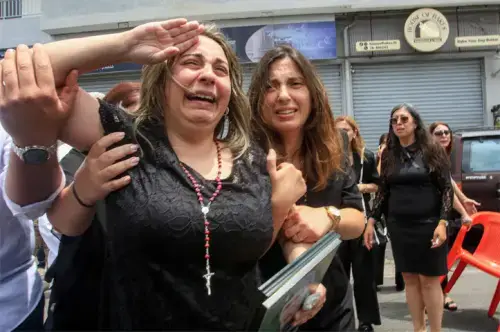
But our thoughts turn to another September 11 and whose anniversary was observed last week and BBC, CNN, Sky News and Fox News devoted their entire programming to it, a solemn, tearful coverage as the Americans relived their grief. There is a difference between private grief and public sorrow but the two were intertwined as the Americans observed a one minute silence and prayed for the 3,025 people who had died in the terror attacks, a year earlier. It was very moving and one felt for the families who had lost their dear ones, not Americans alone but from other countries as well, including Pakistan, a conclusive proof that terrorism respects no national boundaries.
When commercial airliners, hijacked, crashed into the twin towers of the World Trade Centre and the Pentagon, it was seen, in conventional terms, as a declaration of war, much like Pearl Harbour, but unlike Pearl Harbour, this was an unseen enemy, one that could not be pinpointed on an atlas. It needed a different response, that is to say, other than a military response, one that would not just avenge the deaths of the 3,025 but would target terrorism in all its forms.
The goal should have been to look into the causes of the visceral hatred that had spurred the suicide-attacks. Terrorists had acted before September 11, 2001 and Al Qaeda was no stranger to the United States. In a way, the United States itself had spawned it when the Soviet Union had invaded Afghanistan. But that is history though the lessons of that history are proving costly.
The United States and its allies, Pakistan is one of them, went after Osama bin Laden and the Taliban who were giving him sanctuary. This specific objective became more general as bombs rained down on Afghanistan and special forces hunted down the Al Qaeda, something that is ongoing. Thousands of Afghans were killed as towns and villages were reduced to rubble. The Taliban fled or are hiding out and a new government was installed in Afghanistan.
Has peace returned to Afghanistan? Is the misery of the people over? Not yet, and not in the foreseeable future. In American football, there are two teams, one, offensive, the other defensive. One team scores the touchdowns and the other prevents the opponents from doing so. Perhaps, the United States needs two teams, one to win wars and the other to win the peace. Incidentally, no silence was observed for those thousands of Afghans killed. They come in the category of ‘collateral damage’ and ‘collateral damage’ does not have a human face.
The war against terror may have a beginning but it has no end. We are not even able to say whether the number of terrorists has diminished or whether, more alarmingly, has actually increased. Terrorism is not a definable enemy. If the United States decides to go to war against Iraq, at the end of it, will it have more friends than enemies? Someone should be doing the calculations, the cost-benefit ratio.
Those who have most borne the brunt of September 11, 2001 have been the Muslims living in the United States, acknowledged, in a roundabout way, by President George Bush himself. He went out of his way to appeal to the people of the United States to reject anti-Muslim bigotry. “All Americans must recognize that the face of terror is not the true face of Islam,” He said. Whether his appeal will be heeded is another matter. The media in the United States has done much to brainwash the American people. If an average American was to be given an ‘association of ideas’ test, they would identify a terrorist as a Muslim.
There is further the widespread Israeli propaganda against the Palestinians and by suggestion against the Arabs who happen to be Muslims. To simple minds, this is proof enough. Much more is needed than just appeals. Those spreading hatred against the Muslims are guilty of hate-crimes. And hatred is the core of terrorism.
Homeland security should take in hate-crimes. Muslims living in the United States are not the enemy. Those spreading hatred are. This is a fine distinction but it must be made if terrorism is to be fought. It cannot be fought by witch-hunts. It reduces the stature of the United States. Peace on earth, goodwill to all mankind should not be confined to Christmas.
Spare a thought, therefore, for all the dead. Finally, they are equal.
Signing books is half the fun
IT is not as easy to sell a book as one might think. The honourable and ethical writer will degrade and humiliate himself, sell his soul to the sales department of his publisher or the devil, or both.
This is one day in the life of an author who will remain nameless, and these are his notes:
11:30 a.m. Arrive at bookstore. Books are on a bridge table in back of the store. Asked if they would move the table to the front. Manager says it’s never done but he will make an exception.
11: 45 a.m. Sit at table with four pens. Ask manager if he read the book. He says, “No, I can’t read every book in the store.”
12:00 p.m. Told manager to have his security guard stand next to me when I sign books because my fans can get unruly.
12:15 p.m. Awfully quiet in the store. One lady comes up to me and asks where the Martha Stewart books are. “I don’t know. Would you like to buy this book? It’s more sexy than Martha Stewart.” She sniffs and moves on.
12:30 p.m. Asked manager if he was sure he advertised in the newspaper. He replies, “Of course I did. There is no sense having a book signing if no one hears about it.” The manager tells the security guard he is no longer needed.
12:45 p.m. A man comes up to the table and picks up a book. He opens and reads the jacket and then looks at me. I’m very excited — I have a live one. Then he starts to read a chapter. Then he looks at me again. Then he puts the book down and walks away. A deadbeat if I ever saw one.
1 p.m. A lady comes by with her 10-year-old son. She says to him, “You see that man sitting there? He is a writer. Not like the Harry Potter books, but still a writer.”
The son asks, “Can we buy his book?”
The mother says, “It’s not for children. But you can get his autograph in case someday he becomes famous, like Dr. Seuss.”
1:15 p.m. Man comes up to table and says, “Do you remember me?” I say, “I think so.”
He says, “Then what is my name?”
“I’m thinking,” I say.
“VMF-113. Marine Corps. World War II. We slept in the same tent.”
“Of course. How could I forget? You’re Drum.”
“No I’m not. I’m Sullivan.”
“Right. How about buying a book?”
“How about giving me a complimentary one for old times’ sake?”
The manager says, as he watches me sign it, “That will be charged to you.”
2 p.m. I say to manager, “I might as well sign the unsold copies.”
The manager says, “You can’t do that. If you sign them, we can’t send them back to your publisher.”
I say, “Thanks for asking me to the store.”
He says, “Thanks for coming. As we say in the book business, You win some and you lose some.”— Dawn/Tribune Media Service
Asia 2015: challenges and opportunities
ASIA is home to more than three billion people which is about 53 per cent of world population. It took the world more than a million years to reach a total population of one billion people; Asia has added that many people during the past three decades alone.
Today, several Asian economies have income levels approaching those of the industrial countries, and others are rapidly catching up. This does not mean however that poverty has been eradicated from the region. On the contrary, almost one billion Asians, or roughly one-third of the region’s total population, live in absolute poverty.
Notwithstanding these facts, economic and social transformation has taken place in Asia at an unprecedented peace. People in Asia are richer and more educated now than 35 years ago. Economic growth has driven this transformation. Until the first half of 1997, a crucial analytical and policy question in economic development centred on how Asia grew so fast.
The post-World War II development of Asia is the greatest success story of sustained economic growth. The high rates of growth of per capita income that began to unfold in Japan, spread to other parts of Asia. Along with their rapid increase in per capita income, Asian region succeeded not only in reducing income equality but also in improving human welfare and all the subordinate indices, such as education, health, housing, etc, dramatically. This remarkable experience has occurred over a period long enough to rule out this being an accident or a freak development.
Economic prosperity in Asia has not been shared equally by different countries in the region. South Asia, for example, has lagged behind East Asia in economic and social transformation. Most of Central Asia and parts of South-east Asia have abandoned failed models of central planning only recently, and therefore face the special challenges of economic transition. East Asia, on the other hand, has soared economically, grew at an average rate of almost seven per cent per annum over the last 35 years. The result has been a remarkable rise in prosperity. The average per capita income of East Asia was only 17 per cent of the US level some 35 years ago; it is almost 60 per cent now.
Much of East Asia’s success can be ascribed to the fact that the countries in the region succeeded in maintaining macroeconomic stability in a sustained manner. Low inflation, low budget deficit, even surplus in many cases, large current account deficits with the gap mostly financed by non-debt creating inflows, in the shape of foreign direct investment, and a stable exchange rate regime — these have been the major elements of their successes. These countries also pursued consistent and transparent policies; trade and investment regimes were quite open; saving rates were high (above 30 per cent of GDP) and the governments were themselves the large savers.
East Asia’s rising prosperity also owes heavily to its investment in people. Eight out of ten people in East Asia are literate. Beside investing in people, East Asia laid emphasis on building and strengthening institutions and markets because these are the prerequisites for sustained growth. High rates of literacy permitted the flow of educated and disciplined workforce in a sustained manner. Good governance was at the core of economic and social transformation. And above all, economic and political stability played an important role in East Asia’s prosperity.
South Asia, on the other hand, is a laggard in Asia today. East Asia and even South-east Asia have moved far ahead. China has fast emerged as a world class economic power, having enjoyed a double-digit growth for over two decades. By contrast, South Asian economies have found it difficult to sustain a six per cent growth over a longer period of time. Poor growth performance has given South Asia the dubious distinction of being home to the largest number of the world’s poor. While South Asia contains 22 per cent of the world’s population, it accounts for only two per cent of the world’s income. The per capita income at less than $ 500 is lower than that in many regions in the world.
Over half a billion or one-third of South Asian people are living below the poverty line. In other words, nearly 46 per cent of the world’s poor live in South Asia. Furthermore, the highest number of the world’s illiterate live in South Asia and women have only about half as many years of education as men. There are more children out of school in this region than in the rest of the world, and two-thirds of this wasted generation is female.
In short, the story of South Asia is that of missed opportunities. No one but the people, the leaders and the governments of South Asia are responsible for this backwardness. Although the countries in the region have made enormous strides in the last 50 years, they have not to date harnessed their full potential.
This is an era of globalization. While globalization increases opportunities by providing access to the bigger and richer world markets, it also entails a cost for those who do not prepare themselves to face the challenges ahead. Asia will have to prepare itself to meet the future challenges — the challenges of information revolution, rapid technological change, and banking. At present, Asia is lacking in many of these areas. One thing is clear. The most technological innovations will have to be imported rather than produced in Asia. The countries that are well integrated into international production networks and widely exposed to market trends abroad, will be much better placed to benefit than those that remain less integrated.
East Asia grew at a much faster rate for a very long period of time. There is a school of thought which believes that high and sustained economic growth of East Asia is largely input-driven (supply of labour and availability of capital) rather than gains in efficiency. The first and foremost challenge for East Asia is to prepare itself for a technological revolution, especially in information technology. In the future, East Asia will have to rely less on input and more on technology.
Second, during periods of high economic growth, East Asia witnessed a rising proportion of their working age (15 to 64) population in total population. It is now witnessing declining proportion of working-age population. Unless it moves towards technological mode of, rather than labour-intensive, manufacturing, East Asia will experience slower growth in the future. Thus, it is imperative that East Asia prepare itself for moving up the value chain and rely more on science and technology.
Third, the countries with low levels of income will have the potential to grow fast and catch up with richer countries. As the gap in income levels reduces, so does the gap in growth rates. Several East Asian countries are fairly close to income levels of mature economies and, therefore, are not expected to grow at the “miracle rates” in the future. Japan reached that stage some time ago and its growth rate has declined.
Fourth, East Asia learned its bitter lesson for not responding to the rapidly changing global environment. A wide-ranging structural reform in the areas of banking and finance, exchange rate, legal system, and along with investment in people to manage technological revolution are vital for sustaining economic prosperity that they acquired through hard work in the past.
South Asia, on the other hand, has different types of challenges to face — the challenge of improving governance, reducing poverty, accelerating growth, and improving social indicators. While the structure of population in South Asia is such that the share of working-age population is rising, there is enormous potential for them to catch up in years ahead. However, it will depend on how this region manages its affairs in the future. Good governance will facilitate participatory, pro-poor policies as well as ensure transparent use of public funds, encourage growth of the private sector, promote effective delivery of public services, and help establish the rule of law.
In the 1990s, some South Asian countries launched wide-ranging structural reform programme which paid dividends. To prepare itself for the future challenges South Asia must undertake wide-ranging second-generation reform in the areas of privatization and deregulation of prices, governance, banking and financial sector, tax reform and trade and tariff reform. In addition, it must remove irritants which impede investment and growth in the region. It must improve its infrastructure, particularly, roads, highway, ports, communications and utilities.
In Asia, some are living in comfort and plenty, while many are living in abject poverty. This is neither just nor acceptable. South Asia has fallen behind the rest of the world, of course, to a larger extent, of its own making. Should South Asia be allowed to remain poor? Should the hope and opportunity of our young hearts to be snatched away? The answer is certainly in the negative. It is the collective responsibility of all stakeholders to help fight poverty. Together with strong support from East Asia and other developed world South Asia can succeed in reducing poverty in the next ten years.
The key to success for the South Asians lies in getting their act together and strengthening their economic ties. Developed countries can then help South Asia by removing its liquidity constraints through enhanced development assistance, by providing market access, and debt relief. The quest for peace in the region must receive greater attention as this would be the sine qua non for sustainable growth.
The writer is Pakistan’s minister for finance and economic affairs.