



 0
0

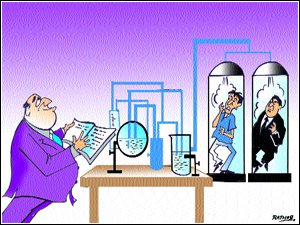 It is a happy news that Pakistan would finish the borrowing business with the IMF. The announcement was made by Finance Minister Shaukat Aziz on April 2 at Washington, where he was having talks with the IMF, saying that Pakistan will seek no more loan from the IMF under the Poverty Reduction Growth Facility (PRGF).
This resolve, however, does not exclude borrowing from the World Bank which has now offered Rs1 billion loan on almost zero interest. So, we will continue to remain in the multilateral lender’s net.
Although a pretty thick cushion of foreign exchange reserves has been built up, partly by an unconventional method, and the State Bank can take care of the country’s current account needs, the requirement of foreign funding to undertake those development projects that are on the anvil or on the drawing board does not vanish. So borrowing is an inescapable necessity. But, perhaps, from now onward, lenders would be diversified.
It is hoped that the country will be free from the strings attached to loans that have hitherto restricted its freedom from action, having entrapped it in so many loops, as has been the experience of doing business with the IMF.
It may be worthwhile suggesting that a fundamental shift in the country’s economic policy should be effected. It would be to the greatest good of the country if the pros and cons of following the directives of the multilateral lending agencies, almost under duress, are examined and changes in the present policy made, at least experimentally in the first instance.
In fact, if one were to look critically at the IMF/WB’s celebrated paradigm, one would know better. It is the same beaten track which American capitalism has traversed.
It is no more than purely business corporates’ and self-sustaining outlook applied to an impersonal and complex entity - fiscal management of an overpopulated, underdevel-oped country of the Third World.
The paradigm is: balance the budget and avoid deficit at all cost, and, to achieve it, overburden the poor population with all kinds of taxes and levies. Even 15 per cent GST on medicines should be recovered and all financial benefits to individuals and groups be withdrawn retrospectively.
Senior citizens, having retired from service years ago and having opted to receive only half of the pension, should be deprived of the other half which was surrendered in lieu of a lump sum amount to be set off after a lapse of about 14 years whereafter the surrendered portion of the pension was to be restored automatically when the retiree turned 75.
These are some of the merciless measures dictated by the IMF to keep the budget balanced. But what is pitiable is our finance minister’s willingness to implement these dictates without a whimper.
To digress from the main theme for a moment, it would be proper to clarify that a part of our present problem may not be attributed entirely to the prescribed paradigm which has been steering our government’s domestic policy but the global economic situation - the fall-out of 11/9.
Now that ‘globalization’ is the catchy slogan, there is globalization of recession also, because the blow received by the United States has shaken all other economies. Yet another factor is Japan’s economic troubles arising from its banking sector’s woes.
So, the world’s two foremost economic engines - the United States and Japan - which had accounted for more than 45 per cent of the global output before the September catastrophe, are either stationary or moving ahead at snail’s pace.
The American economy is now showing signs of recovery but the Japanese have yet to pull themselves out of the quagmire.
Sooner or later, the global economic picture will brighten and Pakistan’s exports/imports and domestic production will also, hopefully, grow.
Also, home remittances from the expatriates abroad would grow as the ‘hundi’ business is likely to be under clamp. In such a comparatively relaxed environment, our economic managers can think of changing course and trying other paradigms.
The President’s future vision for Pakistan, as articulated by him in mid-April, in the course of a pre-arranged interview with journalists, is that of “a prosperous, progressive and viable state”.
Can he not think of a new economic policy? No more down- sizing, selective privatization (sparing the family silver like the enormously profitable PTCL and the PSO), enhancing government’s role in infrastructure spending to create jobs and entice private sector to invest, lowering taxes even though inflation goes a little higher than 3 per cent.
To justify downsizing, which is the most convenient tool in the hands of a bureaucrat assigned the task of ‘restructuring’, the President has reportedly said that his government can not give stipend to 140 million people, i.e. to keep them employed.
The question is if he cannot, who can? Not that the country is completely resourceless and the ‘believers’ have to beg Allah to send ‘manna’ from Heaven. It is all a question of priorities - feeding the people or maintaining an unaffordable defence apparatus.
Why not try to mend fences with the lone adversary through compromise instead of confrontation if the hungry 30 per cent of the masses living below the poverty line have to be given a square meal a day? As for privatization, it should be the option of the last resort, because to ‘groom’ any state undertaking for sale, downsizing is the pre-requisite, according to the norm established in Pakistan.
Let the loss-giving state enterprises come out of the red the way Pakistan Railways have done. Let Pakistan Steel learn from South Korea’s state-owned Pohang Iron and Steel Company (POSCO) which has been turned into a profitable concern by renovating its plant and machinery whereafter it is producing more, and avails of the higher steel prices in the world.
Why should we think of privatizing the public sector banks? Why not take the cue from China where the state enterprises owed $150 million to the four government-owned banks pushing them to the brink of collapse. The Chinese hit upon a strategy that is likely to deliver.
The government transferred these bad loans of the four banks off their books into the books of the four newly-formed loan recovery companies charged with making the loanees functional enough to repay the loans in easy instalments over an indefinite period of time.
As for greater public sector spending, this was the strategy that had paid off during Ayubian era which witnessed the setting up of industries in remote regions and opening up of the poverty-stricken areas of the Frontier and Balochistan.
This trend was condemned as ‘nationalization’, as opposed to private enterprise, and reversed by the American whiz kids who, descended upon the country in late sixties of the past century in the garb of ‘Harvard Group’. It is a known phenomenon that unless domestic investment is made in a big way, foreign investment does not come in
As for lower taxes-vs-higher inflation, there can be no two opinions that less taxes encourage investment. Let us cite a concrete example. Pakistani capitalists, who are not investing in their own country, have plunged headlong in establishing small industries and opening trading units in Sharjah’s newly set up Hamaria Free Zone, because there is total tax exemption - no corporate tax, no commercial levies like excise duty and sales tax etc.
So far, 10 Pakistani entrepreneurs have set up their manufacturing/trading units there. And what is happening in our country? The ‘Refrigerator Manufacturing Company’, a subsidiary of multinational Philips, producer of Whirlpool’ brand of appliances, has gone in liquidation and its assets are on sale under court’s supervision, because of two factors - very high lending rates, high taxes and recession in domestic market due to government’s lack of original thinking to improve the prevailing situation.
It is the experience of the South East Asian ‘tiger economies’, during 1985-96, that higher domestic spending, spurred by high rate of employment, high wages and reasonable taxes, helped them in economic take-off. So we have to choose whether to follow in the foot steps of western capitalism, purveyed by IMF/WB, or to take a leaf from the Eastern pragmatic socialism sponsored by China.





























