0
0

MADRID, June 7: European Union and East Asian foreign ministers joined hands on Friday to urge an end to India-Pakistan tensions, warning that both countries’ military buildup had “implications for the whole region and beyond.”
Separately in Berlin, German Foreign Minister Joschka Fischer chided India over human rights violations in Kashmir while EU external relations chief Chris Patten denied reports that the bloc was planning any aid embargo against Pakistan.
“This was a revelation to me,” Patten, told Dawn when asked if the reports of EU economic sanctions against Pakistan were correct. Patten said he had not taken part in any discussion on economic embargoes.
But European diplomats said the Union was discussing ways of applying pressure on Pakistan although the focus had not been on punitive measures.
EU countries were against any suspension of aid to Pakistan, believing instead that it was important to give Islamabad “positive incentives” to implement its anti-terror promises, the diplomat added.
“We are not talking of sanctions,” he underlined, adding that pressure would also be applied on India although “our leverage there is different.”
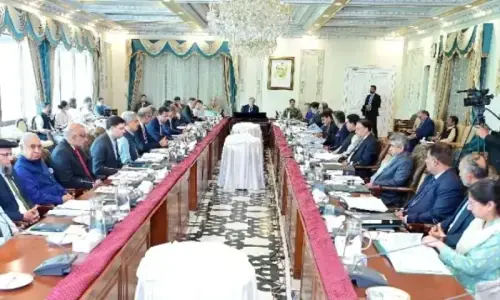
In a first-ever joint statement on India-Pakistan relations, European and East Asian foreign ministers — meeting within the ASEM framework — called for an immediate end to all terrorist activities in the region as a first step to de-escalate the situation between the two historic South Asian rivals.
The meeting welcomed President Musharraf’s commitment to counter terrorism but said ministers “earnestly looked to Pakistan to take urgent further steps to implement it.”
The EU had taken substantial economic action to help Pakistan but in return Europe expected Pakistan “to deliver” on its commitments to stop infiltration into Indian-controlled Kashmir, Patten insisted.
The ASEM statement urged both Delhi and Islamabad to take action to defuse tensions and “to reverse the present spiral of confrontation with unpredictable consequences.”
The two countries should resume immediate dialogue and strengthen cooperation to overcome the current crisis, the statement said, adding that the international community must reinforce efforts to stop an all-out war in South Asia.
Diplomats said the statement had been meticulously worked on over many hours, with East Asian countries arguing that it should be more balanced and Europeans insisting that Pakistan should be under increased pressure to comply with its anti-terror promises.
Neither India nor Pakistan are members of ASEM.
Germany’s Fischer, meanwhile, warned that “there was and is a severe human rights problem in Kashmir,” adding: “We have spoken again and again about this with the Indian side.”
Fischer noted there were problems on both sides of the Line of Control which divides Kashmir, insisting that “it is very important that amid all dangers that we do not forget human rights issues.”