



 0
0

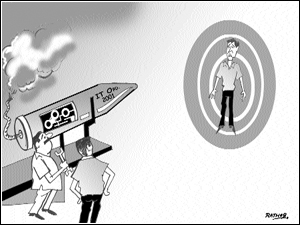 The Income Tax Ordinance, 2001, promulgated on 13 September 2001, is a bad law by all standards. There is a consensus between the official and non-officials that it needs to be abandoned.
It is agreed that even if its enforcement is inevitable then it must be thoroughly amended before it becomes operational on 1st July 2002. It is a unique piece of legislation that requires changes on a mammoth scale even prior to its operation. The CBR, after lot of criticism, has finally appointed one of its ex-chairmen to prepare a “compendium of amendments” that will be inserted vide Finance Ordinance, 2002 [expected to be announced in the 2nd or 3rd week of June, 2002] to make it workable.
Time and again it has been suggested that this Ordinance should be repealed. The proposed changes can easily be incorporated in the existing IT Ord, 1979, which has now a time-tested 22 years of existence. There is no need to promulgate and enforce a new Income Tax Law having only cosmetic changes here and there [with new jargon alone and in fact nothing new in substance]. Alternately, if it had become inevitable for the government to enforce a new law (as a prerequisite to obtaining foreign aid), then the better choice is to re-promulgate it as the IT Ord, 2002 instead of inserting innumerable amendments in a law that has yet to take effect. The amendments proposed so far by the stakeholders and approved by the CBR and the ministry of finance can be made public. The best way to make the new law workable would be to elicit public response on proposed amendments and after taking these into consideration, new IT Ord, 2002 can be promulgated with effect from 1st July, 2002. It would save the CBR from embarrassment and the public inconvenience in inserting a number of amendments in an existing law.
The present strategy to “improve” the new IT law through closed door bureaucratic process is not only against the principles of good governance and transparency, but also going to make it a law unacceptable to the taxpayers in general and the traders in particular. The Karachi Traders ( an alliance of market associations) in their meeting on 6 May 2002 demanded the CBR “to withdraw the new Income Tax Ordinance and restore the previous law with amendments proposed by different bodies”.
The alliance alleged that the CBR was adopting coercive policies to meet budgetary targets rather to encourage voluntary tax compliance through reforms. They are of the opinion that the present business scenario, complex laws and unstable tax policies would not help the government to meet its targets. They revealed the startling facts that out of Karachi’s 1,75,000 taxpayers, 1,00,000 had gone out of tax net. “It shows that the government claims for searching new taxpayers also fell flat, hence, the government is forced to reduce its sales tax target every quarter.
This reaction of the traders’ alliance should be an eye-opener for the CBR policy-makers. Their tax policies are forcing the businessmen to shift their capital elsewhere where no such tax harassment exists. The argument that such businessmen are not loyal to Pakistan is fallacious. Is our tax machinery loyal to Pakistan? Our taxmen are forcing the people to leave the country. They are harassing businessmen for self-aggrandisement. They are creating an atmosphere of terror and yet the traders are blamed for tax avoidance and evasion. Can these acts stated to be in the interest of the State? Since they filled the ballot boxes for the referendum, is it enough proof of their loyalty with the State? The government will have to realise that present tax apparatus needs to be overhauled (not by hiring local consultants on market wages or paying huge amounts to foreign “experts” out of loan secured from foreign donors) but by taking the taxpayers into confidence. There is an urgent need for education and facilitation of taxpayers instead of coercive measures.
The CBR is asking even petty businessmen to start maintaining books of accounts with effect from 1st July 2002. This process should have been done in phases and not at one go, without giving ample time to the businessmen. The promulgation of the draft rules through Statuary Regulatory Order (SRO) No.168(I)/2002 on 26 March 2002, introducing changes in book-keeping in the existing Income Tax Rules, 1982, to be effective from 1st July 2002, is yet another move by the CBR in the wrong direction. These requirements of book-keeping are going to create a number of new obligations for the businessmen. There is no cavil about the fact that tax collection and culture cannot be improved without proper documentation, but first of all the stakeholders need to be educated, facilitated for the process of change and taken into confidence. The CBR officials want to do it unilaterally that would result in antagonism between the taxpayers and tax collectors and create difficulties in implementing even the well-meaning policies. These rules have the following flaws:
* mandatory requirement of keeping books of accounts for all businessmen and professionals, who earn even marginal taxable income, is absurd, unjustified, expensive and impractical. It will give leverage to tax collectors to harass these small taxpayers by checking their books of account and taking their cases out of the Universal Self-Assessment Scheme. Can you force a taxi driver or a panwala to keep books of accounts?
* prescribing peculiar books and documents is against the established principles of international accounting, as international accounting standards only explain principles and not any specific manner in which accounts are to be kept. According to judicial principles, every person has a right of keeping the accounts in a manner that is best suitable to him and the only condition is that the profits and gains should be deducible from these as per established norms and practices of accountancy. The CBR has violated these judicial pronouncements in the draft rules.
* In the case of corporate entities there are certain statutory requirements under the relevant laws to maintain certain books and documents. The CBR has tried to bypass them or posed more obligations on these corporate bodies, which could have easily been avoided by asking them to adhere to the requirements already available in their case.
The CBR is bound to implement these draft rules, as this is one of the conditions of the IMF’s first year Pakistan’s Poverty Reduction and Growth Facility (PRGF) Programme with the Structural Performance Criteria (SPC) that requires the CBR to: “Publish rules and regulations including for record keeping under the universal self-assessment scheme for income tax to become effective from July 1, 2002. Timing (March 31, 2002). The proposed rules intend to lay down new requirements for every taxpayer doing business for the maintenance of documents/record-keeping with effect from July 1 2002 are thus on the command of foreign masters. While acting on the dictates of the IMF, it was not a condition also to act illogically, irrationally and without applying mind. How CBR thought of making book-keeping necessary even for the small shopkeepers in town and villages, who file returns declaring tax between Rs. 50 to 500 is simply inconceivable.
It is strange that on the one hand the CBR has substantially burdened business houses and other taxpayers with plethora of record-keeping and documentation and on the other, reasonable time has not been allowed to them to adopt the new rules. The CBR wizards think that by just promulgating rules they will achieve everything. Time and again voices have been raised against this rather callous attitude of the CBR of neither consulting the stakeholders before imposing new tax obligations nor giving them sufficient time to fulfil them.
The other shocking aspect of this exercise is that Income Tax Rules 1982 have been amended with effect from 1st July 2002, whereas from the said date the new income tax law is going to take effect and these rules are going to be redundant. The CBR has yet not promulgated the new Income Tax Rules in conformity with the new Income Tax Ordinance promulgated on 13 September 2001 [The CBR dismantled a time-tested 22-year old Income Tax Ordinance, 1979] and at the same time substantially amended the old rules, which are in the process of being repealed. This shows a confused thinking on the part of the CBR. If they do want to implement new Income Tax Law then they should stop making any amendments in the existing rules but should rather concentrate on framing new rules as very little time is left for the commencement of the new financial year.
At a recent seminar, the Member (Coordination), CBR, made some amusing [for some shocking] remarks that if the new rules under the Income Tax Ordinance 2001 could not be promulgated by 1st July 2002, then the existing Income tax Rules, 1982, framed under the Income Tax Ordinance, 1979, would remain in force. One would like to know what is the impediment in the way of the CBR to frame and promulgate new rules. Those who have read the new Law certainly know the existing rules would not be compatible with it and a lot of contradictions and dichotomies are going to surface, if the same are retained vis-a-vis implementation of the Income Tax Ordinance, 2001 drafted by an Australian expert.




























