0
0

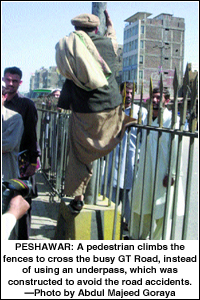 PESHAWAR, March 27: Free movement of pedestrians has become a Herculean task in the cantonment area, as vendors, hand-cart pushers and double car parking leave no or little space to passers-by in the narrow streets of this busy area.
From the main Saddar Road to GPO, vendors, selling variety of items, have encroached upon pavements on both sides of the roads, posing difficulties in the way, specially, of women, school going children and aged people.
The shopkeepers at the narrow lanes inside Saddar area, permanently park their vehicles in the middle of the road, causing problems to the people going on foot as well as those driving cars in these lanes.
Many shopkeepers have repeatedly demanded of the authorities concerned to ban entry of vehicles to Liaqat bazaar, Fawara Chowk and Taipu Sultan Road to provide much-needed space to the visitors. But still all these illegal and unethical practices go unchecked from the authorities.
Actually, presence of the Afghan refugees in the NWFP has led to increase in the number of vendors and small-time shopkeepers, who can start their business with a little investment. The officials concerned, who thrive on taxpayer’s money, are supposed to take cognizance of the situation, but they take bribe from these vendors, help the menace flourish, and, thus, the sufferings and difficulties are increasing with every passing day.
A few policemen take round thrice a day to collect bribe from the small-time shopkeepers, according to the size and quantum of their businesses. Mobile vendors— selling socks, woollies, towels, fruits, crockery, electronic appliances, cigarettes, chocolates and other items of daily use— add to the mess.
“I earn only 50 per cent for myself, half of my profit goes into the pockets of the officials who have facilitated my business,” said Murad Ali, 28, an Afghan selling electronic goods in the Cantonment area. “They cannot take action against us, as we pay them handsomely and regularly,” said another man selling wrist watches.
Juice shop owners have laid chairs and tables right in the middle of the road at the exit of Liaqat Bazaar and on footpaths of the most frequented Saddar Road. One has to push many people to go ahead walking on these footpaths which often develop rows between the shoppers and vendors.
“We cannot have a dirty and congested place like Peshawar, even on the outskirts of Canada. What has happened to Peshawar? It was very clean and neat city when I first visited it way back in 1985,” said a radio journalist friend Margaret Even, who was in Peshawar a little while earlier to cover the events emanating from the Sep 11 terrorist attacks.
Double car parking has also aggravated the crisis. Traffic police deployed to regulate traffic seem committed to do nothing to end the difficulty of the pedestrians.
The people riding latest model cars do not care about rules and regulations, and the main duty of the traffic cops, it seems, is to haunt taxi drivers and passengers vehicles to extract bribes from them.
Sometime back, Peshawar Cantonment Board, taking advantage of the situation, had levied a car-parking tax on vehicles in Cantonment area. And it had even awarded the contract for car-parking fee, but in view of the tremendous public pressure, newspapers’ reaction and internal differences among the officials concerned, the idea was dropped.
“Majority of the new cars, we know, are owned by officers and well-off people, therefore, we cannot stop them for checking for fear of being reprimanded by our seniors,” said a traffic head constable.
He said this had happened several times that he or his other colleagues dared to stop or check the documents of limousines-owners which ultimately landed them in hot waters.
“The government has indeed done extensive legislation and appointed battalions of manpower everywhere in the country to facilitate the masses but what is needed is to implement all those laws to check the activities of the officials concerned. This is what we call good governance,” said a bureaucrat-turned shopkeepers.