0
0

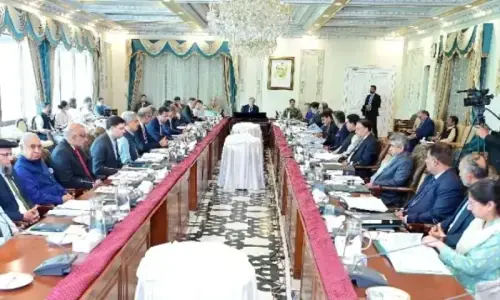
BARCELONA, March 16: The European Union leaders on Saturday issued their sternest call yet for an end to excessive Israeli military action against Palestinians.
With escalating Middle East violence dominating an EU summit dominated by domestic economic reform issues, leaders of the 15-nation bloc thrashed out a bold and detailed plan for creating an independent Palestine, living in peace with an Israeli state withdrawn to pre-1967 borders.
As anti-capitalist protesters continued to clash with riot police in Barcelona, France blocked swift implementation of EU plans for a swift deregulation of all energy markets in the 15-nation bloc.
But in an extensive Middle East declaration, EU denounced Israel’s use of “excessive force” against Palestinians.
Although they dropped earlier plans to ask Israel to abide by the fourth Geneva Convention which sets strict rules for protecting civilians in war situations, leaders insisted that Israel must abide by international law.
European leaders said their overall objective in the Middle East was two-fold: “The creation of a democratic, viable and independent state of Palestine, bringing an end to the occupation of 1967, and the right of Israel to live behind safe and secure boundaries.”
The EU promised it would continue to aid Palestinians and bolster “the economic basis of the future state of Palestine”.
Israeli security operations have so far destroyed almost $20 million worth of EU-financed Palestinian infrastructure.
EU leaders backed Saudi Crown Prince Abdullah’s land-for-peace initiative which is expected to be endorsed by an Arab League summit in Beirut later this month.
The summit steered clear of a formal statement on Iraq despite US pressure for Europe to join Washington in any future military action against Baghdad.
European Commission President Romano Prodi admitted that there were “differences of view” between the US and the EU on policy towards Iraq.