



 0
0

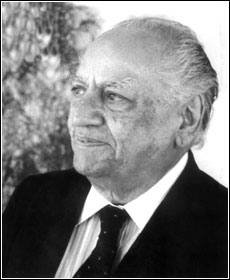 ISLAMABAD, Feb 12: Glowing tributes were paid to great revolutionary poet Faiz Ahmed Faiz by intellectuals, educationists and poets on the occasion of his birth anniversary at the National Library auditorium here Tuesday.
Writers, artists and poets, in their recollections and impressions shed light on the great poet’s commitment to his ideologies, his qualities of head and heart. They said he stood out for both his lofty ideal, literary contributions and humbleness.
Poets Ahmad Faraz and Iftikhar Arif, writers Munnu Bhai, I.A. Rehman, Khawaja Masud, Alamgir Hashmi expressed their views.
The function was presided over by eminent humorist Mushtaque Ahmad Yusufi who treated the diverse audience to an engrossing and humorous piece of writing that brought out the distinctive qualities of Faiz as a poet and as a human being.
Mushtaque Yusufi spoke at length reading from his prepared text and previous writings about Faiz’s life as an exiled in England.
The audience gave him a standing ovation for a rib-smashing hour of sparkling wit.
Prof Khwaja Masoud in his erudite address called Faiz Ahmad Faiz the most lyrical of Urdu poets and yet his verse presents a happy fusion of revolutionary thought and poetic beauty.
His message is of hope for the down trodden and the weak.
The government is going to play more dymaic role in the promotion of literary activities as a first step towards which the information ministry has launched the Faiz Number of Mah-i-Nau with befitting fanfare at the function.
Attended by the information secretary, Anwar Mahmood, in his capacity as a Faiz lover, the celebration of the revolutionary poet’s birthday amounted to his belated recognition and inclusion in the state pantheon alongside Allama Iqbal and others.
Senior journalist and human rights activist I.A. Rahman, who was one of the speakers at the function, hoped that the recognition would translate into policies reflective of the poet’s progressive thought.
Mr Rahman expounded on the role Faiz Ahmad Faiz played in making journalism a comprehensive activity guided by clear policy objectives. It was different from the pamphleteer approach of pre-partition journalism and the present commercial industry approach that tends to cater to all tastes and sensibilities. Faiz as editor of Pakistan Times and Imroze established traditions of truth and honesty and pursuing an editorial policy.
Tahir Mohammad Khan dwelt on the period of the Sixties when the poetry of Faiz had begun to impact at the awareness level and his verses had become part of the educated parlance. The era of the first dictatorship recorded this impact by his incarceration. Faiz seemed to have integrated thought, ideology and objectives in his verse. People were beginning to realize that prayers could not bring about change alone.
Munnu Bhai regaled the audience with his witty comments on the decline of education. He said governments by not according due respect to teachers like Faiz, Sufi Tabbassum and Hameed Akhtar Khan had deprived education of its noble status in society.
A unique but valuable audiovisual presentation on Faiz by Zaheer Qidwai was a highlight of the celebration.
Sajida Iqbal, director-general of the ministry’s films and publications department, had worked hard to arrange this very lively afternoon and in bringing out the special issue of Mah-i- Nau with the collaboration of the Academy of Letters. Tributes showered on Faiz on birth anniversary. — Mushir Anwar





























