



 0
0

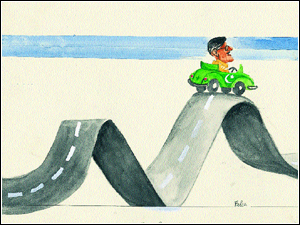 Now that there have appeared visible signs that the two low intensity wars which Pakistan had been fighting unofficially, one across it northern borders in Afghanistan and the other across the LoC inside the Indian Held Kashmir, are about to come to an end, it is time to take a new look at the national economy.
The reasons why most of the solutions that were used to overcome the country’s economic problems in the last 15 years or so had failed was, these solutions were for peace time economic problems whereas Pakistan was facing war-related economic problems. That is why perhaps we never succeeded in our privatization efforts although Pakistan was perhaps the first country in the region to adopt this policy. This is again the reason why no IMF programme could be completed in the country except the last one. And even this one while reaching successful completion miserably failed to revive the economy. In fact at the end of this successful programme the economy had gone into deeper recession. In fact the economic rewards for our help in the war against terrorism following the September 11 tragedy actually saved us from the fate of Argentina whose economy was clearly stifled to death by the IMF programmes. Now that the country’s economy is seen to be returning to its peace-time position, the official economic managers should put to beneficial use the lessons learnt in the past with regard to economic relations with the donors, especially the US.
Nations help each other in their respective national interests. There is,indeed, no such thing as a ‘free lunch’. This is more true when two countries are seen cooperating in the economic field. When the US went to Europe with its post-war reconstruction programme or when it crossed the Pacific to help rebuild a war-torn Japan, in both the cases it had in mind one single national objective—to contain communism by helping these two entities become front-liners of capitalism by providing them investment capital, technologies and markets. An element of economic quid pro quo was too overwhelming in this arrangement as the expanding economies of Europe and East Asia took the US prosperity to newer heights almost within a life-time.
The US objective in offering a generous helping hand to Pakistan to overcome its economic birth pangs in 1952 was also the same—to contain communism—but with a difference. The instrument of assistance used here was aid and not trade. And even when Pakistan was actually designated as a front-line state in 1981 and it served as a conduit of the last war between capitalism and communism in Afghanistan for ten long years, the instrument of assistance used by the US had remained aid and there was little or no attempt to help Pakistan stand on its own feet through investment and trade.
Perhaps the US had reasons of its own for denying Pakistan what it had offered to Europe and East Asia for their role in the long drawn war between capitalism and communism. Perhaps Pakistan did not have the socio-economic capacities, the wherewithal which both Europe and Japan had possessed even after having been destroyed by wars, to take advantage of the US offer if it had come, of investment and trade. And perhaps trade itself was not such a priority in the economic scheme of things in the Pakistan of 1950s and 1980s. Perhaps Pakistan’s number one national objective of acquiring the needed defensive capacity to ward off the perceived aggressive designs of India was being adequately met by the US economic and military assistance. Also, in those days the emphasis was on import substitution rather than export growth. And the import substitution policy had sprung out of the self-defeating concept of universal self-sufficiency. So, aid was being used by Pakistan to sustain costly manufacturing sectors and for subsidising imports of what was not being fabricated domestically by keeping the value of the currency at an artificially high level. And exports were confined to half a dozen primary products led by cotton, the earnings from which were hardly enough to pay for our escalating import needs.
This policy became suddenly unsustainable when the US stopped its generous assistance after the 1965 war with India. Perhaps this was one of the factors which led to Pakistan’s dismemberment in 1971. The US came back to Pakistan with generous assistance once again in 1981. But this time again Pakistan’s priority remained the same—security against the Indian threat. So the aid was used to buy weapons, finance attached imports and sustain costly domestic manufacturing sector in the name of import substitution. The US on the other hand perhaps had its hands full as new independent and economically down and out countries were emerging in the Eastern Europe with the collapse of the Soviet Union. So it walked away from Pakistan as soon as the USSR disappeared in thin air and by 1990 it had a valid reason to impose strict sanctions under the Pressler amendment. This is considered to be the major factor for the rise of jihadi culture in the country.
Nobody knows now where all the unencumbered billions which this country had received during the ten-year long Afghan war had gone. Mind you politicians were not ruling the country during this period. When President General Zia died in an air crash in August 1988 the country was left with nothing on the ground or in the kitty to show for those billions but a heavy debt, both foreign and domestic. During the next ten years when all sources of concessional assistance to Pakistan had stopped the country for the first time had to go to the commercial market and borrow at very punishing rates to repay the debt acquired in the 1980s thus doubling and trebling the total debt by 1999.
The US has come back to Pakistan once again with generous offers of aid following declaration of global war against international terrorism. As the past experience has shown, simple aid no matter how generous has done nothing to reduce Pakistan’s dependence on dole. As a matter of fact, the more generous the aid the more adverse has been its impact on the overall national economy. And when the flows of such dole are cut off on one pretext or the other, a default becomes inevitable. And when desperate attempts are made seek donor help to avoid the ignominy of default a number of countries have been known to have been forced to compromise on their national objectives, even sovereignty and economic independence. So, the official economic managers who are now engaged in discussing the aid modalities with the donors, especially the US would do well to keep the past experience of the country with simple aid and that of Europe and East Asia with aid envisaging in addition investment and technology transfer as well as generous access to markets for recipient’s goods.
While Pakistan would like in its self interest to get the nature of aid changed from dole to development, how would this change serve the interests of the US? In other words what US national objectives would be served by such a change of nature in aid? Well, in the first place Pakistan continues to be a major player in the region which is perhaps still the most important source of narcotics eradicating which is one of the most important national objective of the US. Secondly, the threat of resurgence of extremism in forms other than jihad in Pakistan cannot be ruled out as long as the country continues to remain socio-economically hard up.
Elimination of extremism from societies which have been fertile grounds for their emergence in the past is one of the major objectives of the present US-;led global war against international terrorism. Thirdly, simple dole to Pakistan has been known to have been diverted in the past from social and other sectors to military purposes. And this practice has been known to have distorted national priorities forcing the ruling elite in this country to maintain a perpetual eyeball-to-eyeball confrontation with India which have already resulted two full fledged wars and one serious conflict. In recent weeks the US has made it very clear time and again that it would not let the two nuclear powers of South Asia to go to war. This US objective too would be served if Washington were to re-orient its economic relations with Pakistan on the basis of trade rather than aid. With the private sectors in the two countries joining hands to generate wealth, a political lobby would be created within the ruling elite in Pakistan against wars and in the US business circles against Pakistani goods. And at the same time the US promise that it would not let the two nuclear powers to go to war should minimize, even eliminate Pakistan’s concerns about India’s military hegemony.





























