0
0

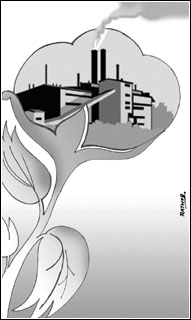 TEXTILE sector has a very large share in the pie of Pakistan’s exports and GDP. This sector earns 65 per cent of total foreign exchange and about 40 per cent of the work-force is employed in this sector.
In the year of 2000-01 the growth in quantity exported in textile sector was far more impressive. The registered growth ranged from 2.8 per cent (knitwear) to 38.2 percent (synthetic textiles). But Pakistan’s textile sector due to its precarious condition and performance is continuously in danger of losing its share in the world export and the GDP of Pakistan. Especially, the post quota period will prove real test of performance of Pakistan’s textile industry.
All analysts and world observers are cynical about the performance of Pakistan’s textile sector and shed their doubts about its ability to compete in the world market, especially, in the post-quota period. Presently, Pakistan has the tenth position among exporters of textile and its position is continuously declining in terms of value. China earning $39 bn at the top and India with $9 bn is the fifth.
This article explores potentials of Pakistan’s textile sector and its prospects in the period after abolition of quota restrictions.
The fortune of Pakistan’s textile sector in the global economy depends on its ability to adjust itself with up-to-the-minute requirements and new demands of the world. It is a well-established fact that the textile sector of Pakistan has potential to compete in the world market but it’s also correct that this does not look possible in the present circumstance. Pakistani textile sector is in jeopardy due to its own performance and the policies that come from the government for this sector.
Despite the fact that the textile sector earns major portion of foreign exchange, the government has done very little to protect it. Pakistan’s successive governments have failed to give sound policies and strategies for the interests of this sector. Even the government has not created a textile ministry. Only ad-hoc measures in the past have been taken to tackle the problems of textile sector.
Pakistan’s textile sector is facing problems on many fronts, like: ginners don’t have lint cleaners and other devices that reduce trash level, crops destroyed due to weeds which cause loss of 31 to 40 per cent yield, and cotton is still picked by hands due to unavailability of low cost machinery for this purpose. The failure of this sector to establish downstream industries is also a big handicap, this sector is facing. The downstream industries could earn many times more foreign exchange than our raw products earn.
Among the development countries, the major share of textile trade will go to the NIC (newly industrialized countries) like South Korea, Taiwan, Hong Kong and Singapore, Further more the next beneficiaries will be middle income groups like Brazil, Argentina, Indonesia, Thailand, Malaysia and the Philippines. China may be the major gainer if it joins the WTO. Among the developing countries, Pakistan and the rest of the countries will enjoy very little benefit.
The strength textile and clothing of Pakistan and other developing countries lies in their indigenous cotton, cheap labour, and new generation of entrepreneurs. The developing countries would have to enhance their performance in those areas where they enjoy comparative advantage to compete with the developed world. For this purpose there is need of improvement in various areas.
The main requirement is that government should exercise its authorities for an effective mechanism to check and regulate the market forces and ensure a fair return to cotton grower. To achieve this purpose, a textile ministry is necessary. A separate ministry of textile will co-ordinate among different sub-sectors and regulate the market forces for the betterment of the sector as a whole.
The following suggestions can prove vital for the textile sector of Pakistan:
The government should restore the hedge market instead of revitalizing the Cotton Export Corporation. The government should safeguard the interests of small farmers. That means creation of a commodity fund contributed for and managed by farmers themselves. This contribution should be on per bale basis.
Individual farmers, traders, and spinners are facing many problems. To avert these problems Pakistan needs an integrated cotton policy consistent with the needs of both textile and clothing industry.
The government should devote greater funds for research in cottonseeds, which could improve quality and staple length.
For this purpose, the cotton research institutes at Multan and Sakrand and the Pakistan Cotton Standard Institute (PCSI) are central, but some of their varieties have failed. They need to do more research for better result.
The integrated pest management (IPM) may prove effective in the use of pesticide because its indiscriminate use harming the environment and human health. For removal of cotton weeds there should be environment friendly methods.
Planting patterns such as row spacing, and flat bed or ridge bed method can play an important role in checking cotton weeds.
As there are strong trading groups in the west like the European Union and North American Free Trade Association, intra-regional trade may also be beneficial for South Asian countries.
Pakistan’s textiles can have a big market in India and other Asian countries.