0
0

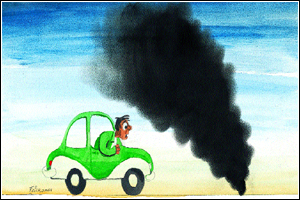 THE war against Afghanistan has hijacked Pakistan’s economy. As long as it would last the economy would seemingly remain a hostage to the conflict. The longer its lasts the more serious would be its implications on the economy.
As it is, even before the September 11, Pakistan’s economy was held hostage by two low intensity wars going on for over 10 years across the country’s northern and southern borders. And now with the sudden and dramatic escalation of war in Afghanistan, things have really become grossly precarious notwithstanding the promises of increased aid flows from the rich partners in the international coalition against terrorism.
In the first flush it had seemed as if it had all happened for the benefit of Pakistan’s economy. Many thought the war against Taliban would be over in a matter of days and then things would start looking up for our economy. But with the war entering into its third week, these happy thoughts seem to have been replaced by nightmarish scenarios.
No new investment is coming in as no new orders are being booked by importing countries. Massive lay-offs are just around the corner. As a result revenues are likely to fall to all time low by the end of the year. Meanwhile, the burden of refugees on the country will increase manifold impacting seriously on the already very low state of our infrastructure and other assets.
Winter is just around the corner which would force more and more Afghans towards Pakistan making it even more impossible to stop their entry into this country. The promises that have been made so far by the international community by way of economic pledges in the shape of increased aid flows and access to their markets are still promises. But even if they are met, these are hardly likely to make any dent in an economy being ravaged by the vagaries of war.
The social disruption that is going to follow from all these developments would have its own negative impact on the economy causing it to slow down further.
These disruptions may even extend to our agriculture sector which is already facing increasing shortages of irrigation water. Food shortages would mean an increased dependence on imported food which would more than nullify the advantage that we hope to take from the increased attention the donors are paying to our needs. Meanwhile, the growing anti-Muslim and anti-Arab sentiments in the rich countries which at the moment are thriving in the backdrop of September 11 happenings and the anthrax threat would more likely than not impose undeclared but stricter economic sanctions against all ‘ suspect’ countries.
And Pakistan, first because it is a Muslim country and secondly because of the growing impression in the West that the people here are in full agreement with the policies of Taliban, thanks to TV pictures being relayed by the CNN and BBC, would perhaps suffer the most as we are neither oil-rich like the Iranians, Iraqis and Libyans, nor are we as self-sustaining economically as the Malaysians and Indonesians. The economy will suffer even more seriously if the war ends in a stalemate with the international coalition losing patience and walking away from the scene leaving Islamabad to deal with the aftermath without any help or assistance. What would emerge would be more horrendous than what had followed the end of the earlier Afghan war of the 1980s.
The Durand Line will disappear in the dust of the retreating super power and Afghanistan will once again get trapped in a civil war and Afghans of all colours and hues —refugees, Talibans, bandits, smugglers—will be crossing over into Pakistan, each one pursuing his own agenda. Even if there is a quick victory the matter of establishing the proposed broad-based government is likely to take years because what the international coalition is proposing to do is to convert a tribal society which has this tradition of settling political scores through the barrel of gun into a democratic society overnight.
Even in the most civilized democracies it is very difficult to manage a coalition government. How can, then a tribal society which does not have even rudimentary knowledge of democracy handle a broad-based government which in effect means a coalition government of all ethnic groups residing in Afghanistan?
There is, however, one economic scenario which fits what many had thought would unfold in the wake of the launching of the war against Taliban and Osama Bin Laden—a dramatic increase in domestic economic activity, its expansion, more investment and more employment. But this scenario is completely dependent on how long the war would last and how it would end. If the war ends say by December this year and a government of consensus is established in that country by January next year with UN troops made up of armies from Muslim countries minus Pakistan and Iran, and rehabilitation and reconstruction work started without much loss of time then perhaps we could recoup the losses being suffered at this stage in a matter of two to three years if at the same time the aid flows and market access variables remain on the promised course.
In such a situation Pakistani economy is likely to get a boost even from the rehabilitation and reconstruction work that the world is contemplating for Afghanistan. The immediate impact of this would get reflected in the lessening of the burden of refugees on Pakistan. In fact, there is a likelihood that we would see a reverse migration with more and more Pakistanis with skills going over to Afghanistan joining the rehabilitation and reconstruction efforts.
If such a development comes to pass then the Pakistani entrepreneurs would be required to make the best use of the capacities they have already established and then quickly add to these capacities as well because in a matter of two to three years the demand on their production capacities would grow manifold as they will be required not only to meet the reconstruction and rehabilitation needs of Afghanistan but also to cater to the increased market access that the government is now trying to extract from the rich countries.
While planning for this, what appears to be an economy of peace-time, the official economic managers should also keep in mind the continuing negative impact of the Afghan Transit Trade (ATT) and the related smuggling on Pakistan’s economy. It would not be out of place here to suggest that various economic options to tackle this problem should be looked at this juncture so that when the time comes to move we would have something acceptable to sell to both the people of Afghanistan and the world on this score.
The best option which also appears logical in the context of the on-going economic globalization process is to establish a free-trade zone between the NWFP province of Pakistan and Afghanistan. This will greatly help the economy of NWFP and at the same time bring smuggling down to negligible level. A thriving NWFP economy would have a salutary impact on the entire economy of Pakistan. And there are also other dividends here as the establishment of peace in Afghanistan is certain to open up the markets of Central Asia for this country and would as well at the same time offer to Central Asia the markets of South Asia, Middle East and Africa for their fossil fuels and quality manufactures through our ports and land route resulting in mutual benefits.