0
0

 THE war against terrorism has left the world tottering at a time when it was already suffering recession. The world’s symbol and model of economic strength— the US— was passing through a rough terrain when September 11 gave it another jolt.
Pakistan was deep down in the dumps and its economy further collapsed as the Twin Towers crumbled. The effort and investment required for reviving Pakistan’s economy would be no less gigantic and demanding than raising the Towers again, considering everything, perhaps more. The challenge of building Pakistan’s economy, now in tatters, is greater, more complex and more daunting than those of the New York for constructing a new set of towers.
The US can count on its reservoir of means be they its own wealth or its capacity to exploit the world with its immense power whereas Pakistan has to rely on a variety of external (exports, higher and consistent inflow of foreign aid), natural (shortage of water, weather conditions) and internal (revenue collection) factors. Harnessing them for productive results is beyond the scope of human beings, let alone faltering managers of fiscal affairs who are tuned to short-term solutions.
Whatever the commerce minister’s declarations, exports have declined and a change in the scenario is not in sight in the foreseeable future. His assurances have no bearing on hard facts, here or elsewhere. Importers of Pakistani goods abroad are known to be undergoing a time of recession; they have gone out of pocket — their means have been scuttled if not that. Their customers are feeling the pinch. If importing countries do not quickly start breathing evenly, Pakistan’s exports would be labouring even more heavily. They would remain on the sliding down course.
That would produce negative fall-out and stretch the existing trail of hardship. Some export-based industries would be constrained to trim operations and consequently the size; the minor ones may be driven to the exit door. Our wages would record a cut in overall national earnings and an addition to the swelling ranks of the unemployed. Neither sphere has been in robust health for years. Further decline in either could be difficult to bear; together, they would be a heavy extra straw.
The industrial sector is in a state of stagnation for some time. No fault of the present administration though its policies have added to hurdles in its revival, or at least better performance. The needs of the sector have not been met because the administration started with suspicion of its motives and subjected some of the sector’s top men to unwarranted rough treatment. That did not make for conditions conductive for encouraging the sector. Businessmen have been similarly alienated.
Streamlining of the system was undeniably over-due but the government’s methods of implementing the policy were crude and ended up antagonising the business community. Neither was the policy precisely worked out; details were left vague and that resulted in the persistence of the problem that has been the bane of revenue collection: the authority to interpret rules and adjudicate problems unilaterally remained with officials.
As a result of gross mishandling of the GST issue, distrust between the government and the community of vital taxpayers has deepened. This segment is not to defendable but what happened was that known basic causes of the malaise were not removed, neither was the system’s efficiency and trustworthiness enhanced.
The government’s taxation policies and levying of GST are an example of the road to hell being paved with good intentions. The simplistic uniformed administrators were taken down the garden path by the tax collection establishment that has the reputation of being both cunning and corrupt. The sum total is an immensemess. More unfortunately, an adamant administration is not willing to admit its mistakes and insists on proving that its policy is in the best interests of the country.
One realizes the predicament of the government; many of its decisions are IMF-dictated. It is a measure of regret that officials have lacked the capacity to clearly and specifically identify pitfalls to the agency and surrendered without an effort to convince foreign experts of the local context of management of policies forced on Pakistan. Whether it is their failure or unfair pressures of IMF, the result is negative. The community that can pay has been antagonized. That should read fall in revenue.
The investment scene was almost barren when the army took over two years back. It has become even more infertile since then. The demonstrated distrust of the authorities of the business and industrial segments has been an additional negative factor blocking investment; this is particularly true of foreign investments. What any investor would want is stability of the system in which he was making an investment. No assurances from the government can satisfy people on this count. Investors make their own assessments and they are not sentimental people. They are guided by pros and cons. The current lay of the investment land is anything but encouraging and investors consequently are watching for positive developments.
The issue that escapes the authorities is that the stability of a regime is not the same thing as the stability of the systems of government. The present administration is a period of transition; this is the government’s own definition as well as the verdict of the court that gave it permission to rule. Unless this issue is clarified to the satisfaction of investors, there can be little hope of generating fresh industrial activity; financing would remain frozen for new projects.
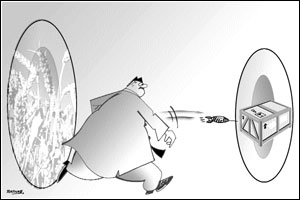
The area on which the government can concentrate fruitfully and which holds the best hope for the country’s economy is agriculture but it continues to remain mismanaged— oppressively and exploitatively managed. An additional constraint has arrived in the form of water shortage. Only nature can bail us out as far as water is concerned. It hasn’t been favourable for some time. But the farmers have fought the odds courageously and rewardingly.
However, the government can still do something. It can build the confidence of the farming community that is in a state of despair after the last wheat crop that left them high and dry. Cotton is another crop that has, despite the worldwide slump in the community’s prices, the potential to resuscitate Pakistan’s economy. Reports about the present crop are good. If the farmers receive their rightful share, they would be better motivated for the crop next year. A fair deal to them would improve ground conditions for the next wheat crop too. Focus on edible oil crops can also result in a substantial contribution to the economy.
Agriculture has always been described as the backbone of Pakistan’s economy but it has been treated as a dispensable limb. Time has come to give the sector its due because agriculture produce is Pakistan’s only consistently reliable resource, particularly as the problems we have on our hands at this point in time would not vanish soon. They are certain to persist and would not be solved by any amount of foreign help, even if it is in the form of laid and not loans.